


More news on this day
Air travel across the U.S. West faced fresh turmoil as SkyWest, Southwest and American Airlines racked up thousands of delays and cancellations affecting an estimated 3,770 flights tied to San Francisco, Los Angeles and Phoenix, straining already fragile summer schedules and leaving passengers scrambling for options.
Get the latest news straight to your inbox!
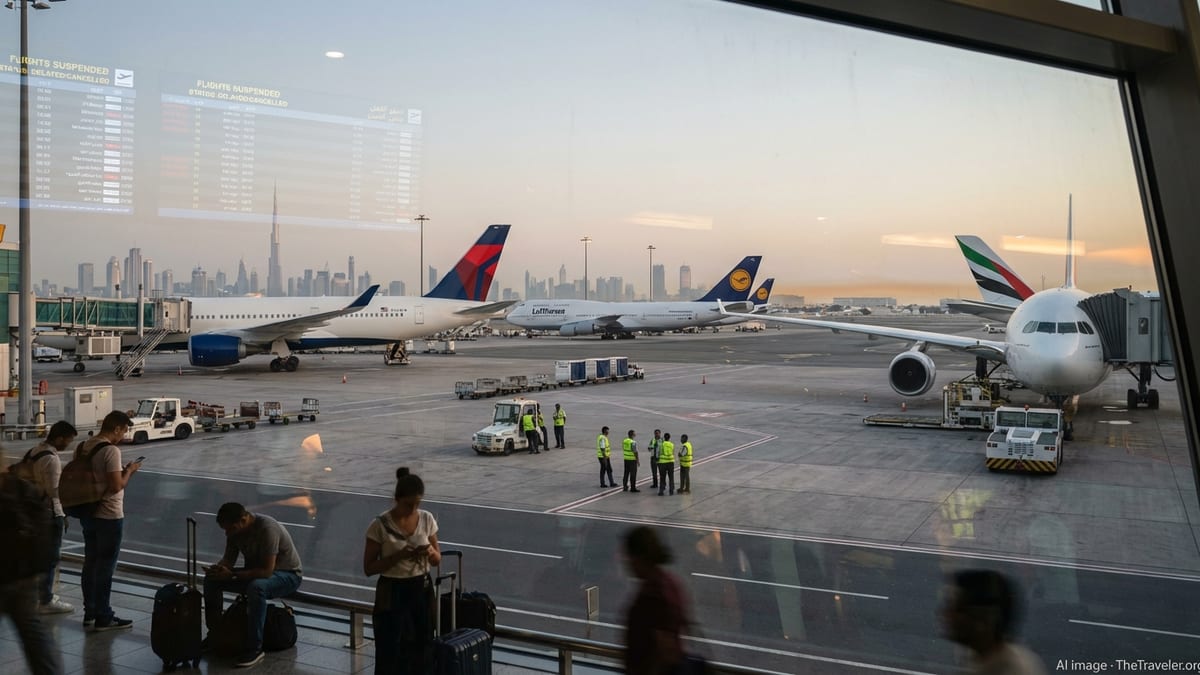
West Coast Hubs Struggle Under Wave of Disruptions
The latest disruption centers on three of the region’s busiest hubs: San Francisco International Airport, Los Angeles International Airport and Phoenix Sky Harbor International Airport. These airports serve as critical gateways for both mainline and regional operations, meaning localized problems can quickly ripple across national networks.
Publicly available operations data and aviation briefings show that San Francisco has been contending with extended air traffic management programs linked to runway work and persistent low clouds, leading to structural delay programs that can push back departures for hours. Similar constraints, combined with peak-season traffic, have added pressure at Los Angeles and Phoenix, where a tightly packed timetable leaves little room to absorb schedule shocks.
In this environment, a single system glitch, crew imbalance or weather cell can set off a chain reaction. Industry monitoring tools and airport advisories indicate that delays and cancellations over several days accumulated into roughly 3,770 affected flights connected to the three hubs, including late-night returns, early-morning departures and critical connections.
The disruption has touched both domestic and regional links, with travelers reporting missed connections, forced overnight stays and last-minute rebookings as airlines attempt to recover their schedules heading into the heart of the summer travel period.
SkyWest’s Regional Role Amplifies the Impact
SkyWest’s position as a major regional operator for multiple legacy carriers has magnified the scale of the disruption. The airline operates flights under brands such as American Eagle and United Express and maintains significant flying at San Francisco, Los Angeles and Phoenix. Its network funnels passengers from smaller communities into these hubs, where they connect to longer-haul routes.
When SkyWest’s operation encounters weather, staffing or air traffic flow restrictions at any of the hubs, the consequences often extend far beyond the large coastal airports. Flights to and from smaller cities can be consolidated, delayed or canceled, particularly during periods when aircraft and crews are out of position after earlier interruptions.
Recent aviation briefings reviewed by industry observers highlight days in May when San Francisco in particular experienced high levels of delay and ground delay programs, with SkyWest listed among the carriers exposed to cascading operational challenges. Under such conditions, regional flights tend to bear a disproportionate share of cancellations as airlines prioritize long-haul and high-demand trunk routes.
For travelers, that can mean that an apparently minor delay at a hub results in a lost commuter connection to a smaller destination, or a missed inbound regional flight that then leaves an entire onward itinerary in question.
Southwest and American Face Strains in Busy Summer Ramp-Up
The disruption also highlights the operational strain on Southwest and American as both carriers ramp up for a heavy summer schedule involving hundreds of thousands of flights nationwide. Reports tracking airline performance in May note that Southwest has seen pockets of degraded service this month, including short periods of systems issues, while American has been working to stabilize its operation after periods of elevated cancellations earlier in the year.
Network maps and schedule data show that both airlines rely heavily on Los Angeles and Phoenix, with Southwest additionally maintaining dense point-to-point flying up and down the West Coast and between Phoenix, Southern California and the Bay Area. When Phoenix or Los Angeles slows, late-arriving aircraft can quickly lead to rolling delays on subsequent legs, including flights into San Francisco that are already facing air traffic constraints.
American, which has been preparing what company leaders have described in public communications as a record summer operation, relies on a mixture of mainline jets and regional partners through hubs such as Phoenix and Los Angeles. Any mismatch between aircraft, crews and the published timetable can require preemptive schedule trimming, same-day cancellations or extensive rebooking as the airline works to avoid deeper meltdowns.
Analysts note that, even after airlines trimmed some flying to build more resilience into their operations, irregular events like technical glitches, thunderstorms or runway work can still expose the limits of those buffers, particularly on peak travel days surrounding weekends and holidays.
San Francisco Runway Work and Weather Add Structural Delays
San Francisco’s unique operating environment has been a recurring stress point this month. The airport’s planning documents and bond disclosures forecast meaningful schedule impacts linked to multi-year runway and airfield infrastructure projects, with an expectation that a portion of flights would face delays through at least October 2026.
Compounding that, San Francisco’s closely spaced runways and frequent marine layer conditions leave little margin during busy arrival and departure banks. When visibility drops or winds shift, air traffic controllers often need to slow arrivals, triggering ground delay programs that affect dozens of flights at a time. Carriers such as SkyWest, Southwest and American, which rely on timed connections through the airport, may then need to retime or cancel flights to prevent aircraft from sitting idle on the tarmac.
Aviation operations summaries from early May already showed days with high levels of delay at San Francisco linked to these structural limitations. The latest wave of disruptions appears to follow a similar pattern, with West Coast weather and construction-related constraints combining with airline-specific challenges to create widespread knock-on effects across the network.
Travelers connecting through San Francisco have reported particularly long waits on flights bound for or arriving from Los Angeles and Phoenix, as airlines juggle limited arrival slots and prioritize aircraft to keep the most heavily booked routes moving.
What Travelers Are Experiencing and How Airlines Are Responding
Across social media, aviation forums and airport information channels, travelers describe a familiar pattern of rolling gate changes, creeping departure times and sudden cancellations. Reports indicate that some passengers departing Phoenix for West Coast cities have faced same-day schedule changes, with flights shifted to later departures or rerouted through alternate hubs to work around local congestion.
In Los Angeles, passengers have recounted being rebooked onto earlier flights with very little notice, or being moved to different connections when inbound aircraft arrived significantly behind schedule. Some accounts describe crews timing out after long delays, forcing last-minute cancellations even after passengers had already boarded.
Published guidance from airports and airlines consistently urges travelers to check their flight status frequently, arrive early and be prepared for gate or schedule changes when irregular operations are unfolding. Many carriers, including Southwest and American, promote app-based notifications and self-service rebooking tools as a first line of response when large numbers of flights are disrupted at once.
Consumer advocates point to the importance of understanding each airline’s policies for compensation, meal vouchers and hotel accommodations in the event of significant delays or cancellations. While weather-related issues often limit what airlines will provide, operational or technical causes may open the door to additional support, depending on the carrier and the circumstances of the disruption.
Broader Concerns Over System Resilience
The latest turmoil affecting SkyWest, Southwest and American feeds into a broader conversation about the resilience of the U.S. air travel system as demand continues to grow. Recent months have seen several high-profile events in which technical failures or staffing shortfalls at individual airlines led to nationwide ripple effects.
In parallel, the federal air traffic control system has been operating under strain in several regions, and major hub airports such as San Francisco are implementing long-planned construction projects that, while intended to improve capacity in the long term, are adding short-term friction to day-to-day operations.
Aviation analysts note that airlines have taken steps since the widespread disruptions of recent years to build more slack into schedules, invest in crew technology and adjust networks to better match resources. Even so, the confluence of weather, infrastructure constraints and carrier-specific challenges evident in the latest West Coast disruptions suggests that the margin for error remains slim, particularly at complex hubs.
With the busy summer peak still ahead, travelers and industry observers will be watching closely to see whether SkyWest, Southwest and American can stabilize their operations at San Francisco, Los Angeles and Phoenix, or whether further rounds of large-scale delays and cancellations will test the patience of passengers across the West.