


More news on this day
A SkyWest-operated United Express flight from Fort Dodge, Iowa, to Chicago O’Hare diverted to Milwaukee, according to live flight tracking data reviewed on June 11, 2026, offering a fresh example of how regional operations and Midwest weather patterns continue to influence reliability across smaller Midwestern routes.
Get the latest news straight to your inbox!
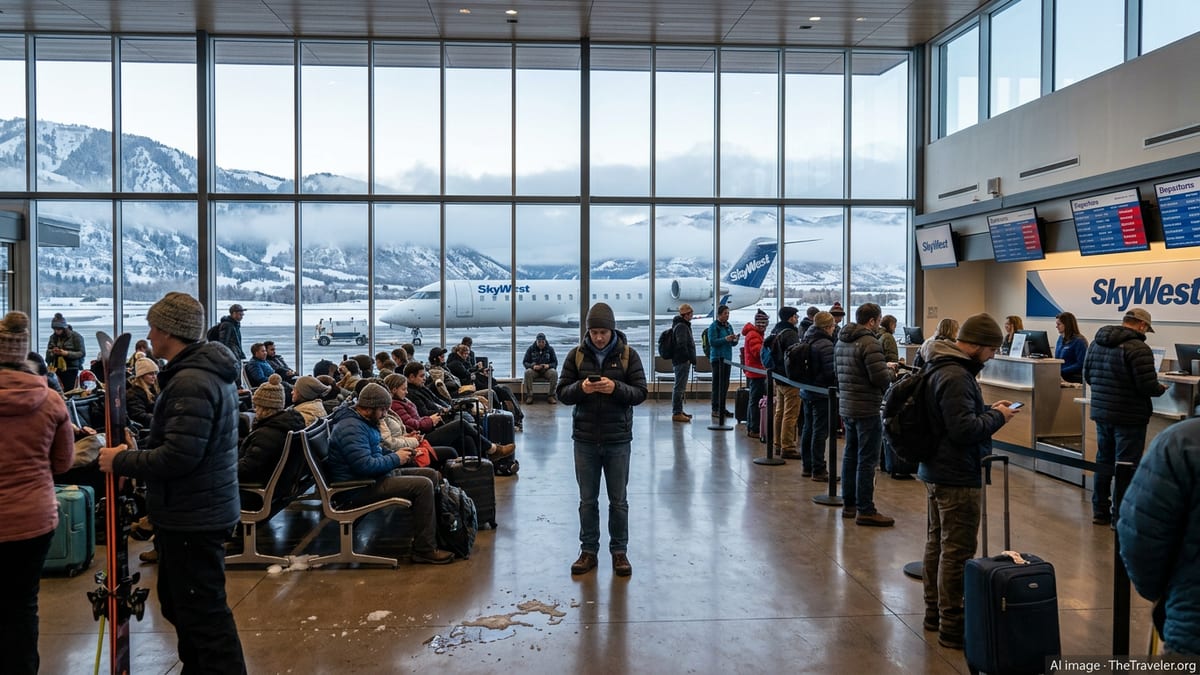
Regional United Express flight diverts en route to Chicago
Publicly available aviation data for SkyWest flight SKW5119 indicate that the Mitsubishi CRJ-200LR departed Fort Dodge Regional Airport on schedule for Chicago O’Hare before altering course and diverting to Milwaukee. The service operates under the United Express brand, with SkyWest providing regional flying on behalf of United Airlines using 50 seat CRJ-200 aircraft on shorter routes.
Tracking information shows the aircraft leaving Fort Dodge and climbing to cruising altitude on a route broadly consistent with the corridor to Chicago before the flight path turned toward Wisconsin for a landing at Milwaukee Mitchell International Airport. The diversion placed the aircraft roughly 70 miles north of its intended destination at Chicago O’Hare, a pattern consistent with other rerouted Midwest services when conditions constrain arrivals into Chicago.
Available airport and airline data reviewed on June 11 do not indicate any onboard emergency associated with the diversion. Instead, the pattern mirrors a wider operational picture in which aircraft headed for Chicago are periodically rerouted to nearby airports when weather, congestion, or air traffic management requirements limit arrivals.
Weather and traffic pressures around Chicago and Milwaukee
The diversion of SKW5119 comes amid a period of unsettled weather and air traffic constraints affecting the broader Chicago airspace. Recent regional coverage describes severe thunderstorms, strong winds, and ground stops at Chicago O’Hare and Midway that have forced holding patterns, delays, and rerouting of multiple flights into alternative Midwest airports, including Milwaukee. These conditions often prompt dispatchers and air traffic controllers to seek nearby diversion points to balance safety, capacity, and network recovery.
Milwaukee Mitchell International Airport frequently functions as a relief option for Chicago bound services because of its proximity, runway length, and ability to handle a mix of regional and mainline aircraft. Passenger accounts and social media posts from other airlines in recent months describe diversions into Milwaukee when low visibility, storms, or congestion make continued holding near Chicago impractical, with travelers then re accommodated or transported onward by air or ground.
On days with unstable weather across the upper Midwest, these patterns are particularly evident on radar and flight tracking platforms, where clusters of flights can be seen diverting to Milwaukee, Rockford, or other nearby fields. In this context, the rerouting of a small regional jet such as SkyWest’s CRJ-200 on the Fort Dodge to Chicago corridor fits into a familiar operational playbook used to maintain safety margins while limiting extended airborne holding.
Understanding the SkyWest CRJ-200LR operation from Fort Dodge
SkyWest operates the Fort Dodge to Chicago route for United as part of the United Express network, connecting smaller communities in Iowa and surrounding states to a major hub at O’Hare. The Mitsubishi CRJ-200LR, a long range variant of the classic 50 seat regional jet, is commonly used on these thinner routes where passenger volumes do not support larger mainline aircraft but frequent connectivity to a global hub remains important.
The flight numbered SKW5119 provides Fort Dodge travelers with same day access to United’s domestic and international network through Chicago. When such a service diverts, the impact can be more significant than on a large city pair, because passengers may rely on the single daily or limited frequency connection to make onward itineraries work. Rebooking options from a diversion point such as Milwaukee can involve either a short repositioning flight to Chicago, a new connection from Milwaukee, or ground transport if schedules are constrained.
Operationally, regional carriers like SkyWest must coordinate closely with their major airline partners when diversions occur. Aircraft routings, crew duty limits, and the availability of maintenance and ground support at the diversion airport all influence how quickly the flight can continue or how passengers are moved onward. For a CRJ-200LR, which typically operates short legs with tight turn times, a diversion can ripple through the rest of the aircraft’s scheduled flying day.
Passenger experience and onward travel after a diversion
Reports from previous diversions into Milwaukee for flights originally bound for Chicago suggest that passengers often face a mix of short term disruption and relatively quick resolution once the aircraft is on the ground. Some travelers describe being rebooked onto later flights from Milwaukee, while others are offered ground transportation to Chicago if onward connections from O’Hare are no longer viable that same day.
The experience for those on SKW5119 will depend on the timing of the diversion, aircraft availability, and connection windows at both Milwaukee and Chicago. Travelers with long haul connections out of O’Hare can be particularly sensitive to such changes, since missing a single departure can translate into extended layovers or even an unplanned overnight stay in a hub city or diversion point.
Consumer guidance from airline and airport information channels typically emphasizes the importance of monitoring flight status messages and mobile app alerts in dynamic weather situations, especially in regions like the upper Midwest where conditions can shift quickly. On days when Chicago’s arrival rates are reduced, passengers on regional feeders such as the Fort Dodge to Chicago service may benefit from allowing extra connection time or booking earlier flights to safeguard long haul itineraries.
Broader implications for Midwest regional reliability
The diversion of SKW5119 highlights ongoing challenges facing regional air service in the Midwest, where a combination of weather exposure, congestion at major hubs, and a leaner fleet of small regional jets can leave smaller communities vulnerable to disruption. Fort Dodge, like many regional markets, depends on a limited number of daily departures to connect residents and businesses to the wider air network, making each flight’s reliability particularly important.
As airlines continue to retire older regional aircraft and concentrate flying around larger hubs, some routes have seen reduced frequency or transitions to larger aircraft with fewer daily departures. In this environment, a diversion or cancellation can have outsized consequences compared with high frequency trunk routes. Events such as the SKW5119 diversion reinforce the value of resilient contingency planning, including clear communication to travelers and efficient use of nearby airports like Milwaukee as pressure valves during peak disruption periods.
For now, available information suggests that the SkyWest operated United Express link between Fort Dodge and Chicago remains an active part of the regional network, with the Milwaukee diversion appearing as a weather and traffic influenced outlier rather than a permanent routing change. Even so, the incident illustrates how quickly conditions across the Chicago airspace can reshape the travel day for passengers starting out from one of the Midwest’s smallest commercial airports.