


More news on this day
Commuter rail operator South Shore Line is adding an extra Monon Corridor train and keeping a reduced weekend and holiday schedule in place as recovery efforts continue from a late June freight train derailment that disrupted service between northwest Indiana and downtown Chicago.
Get the latest news straight to your inbox!
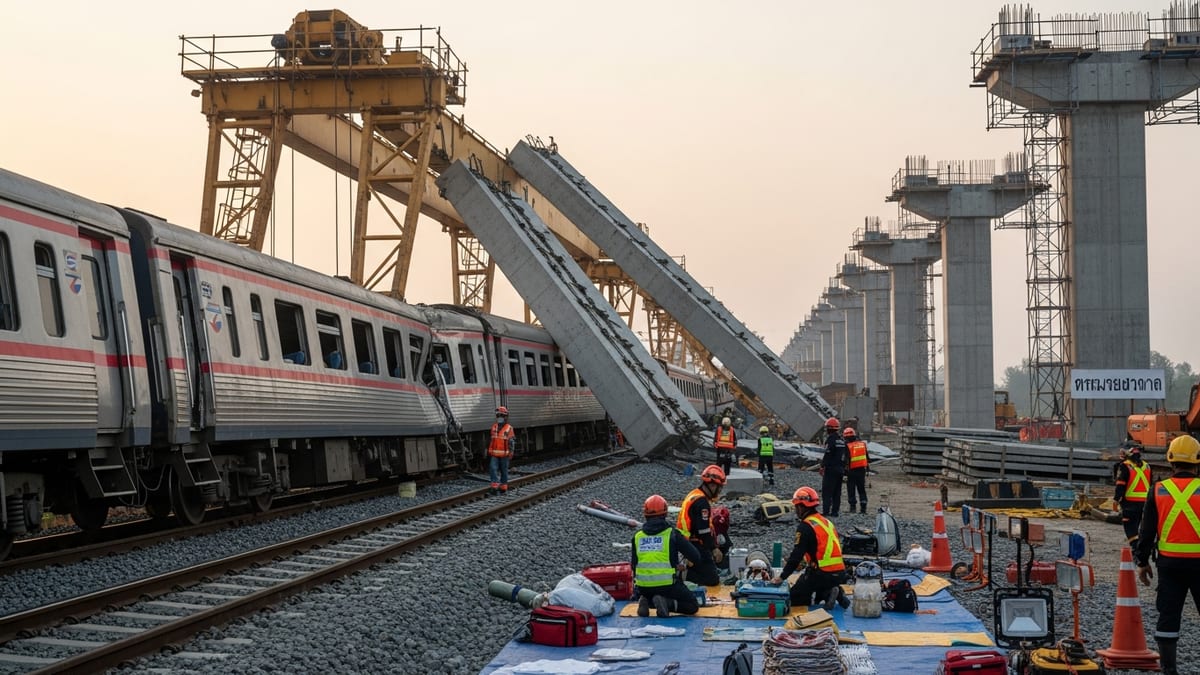
Weekend schedule persists after late June freight derailment
South Shore Line service has remained on a weekend and holiday timetable across both its Lakeshore and Monon corridors following a freight train derailment and associated power loss near East Chicago on June 24. According to published coverage and company bulletins, the incident initially led to a full suspension of trains, forcing thousands of regular riders to seek alternative routes into Chicago.
In the days immediately after the derailment, only limited service was available as crews worked around the damaged area, with priority placed on restoring basic power and signaling. Publicly available information indicates that normal weekday patterns have not yet returned, with the operator instead relying on a simplified schedule more commonly used on Saturdays, Sundays, and federal holidays.
The reduced timetable has meant fewer peak-period departures and more crowding on the trains that do operate. Regional media reports describe riders adjusting work hours, carpooling, or shifting to other lines and bus services while they wait for full South Shore frequencies to come back.
Extra Monon train added to ease peak crowding
Beginning July 6, the South Shore Line is introducing an additional Monon Corridor train in an effort to address crowding and limited options at key commuting times. Service alerts and local broadcast coverage describe the new train as an extra run layered onto the existing weekend and holiday schedule, rather than a full return to pre-derailment levels.
The Monon Corridor connects communities such as Munster and Dyer with Chicago’s Millennium Station, providing an important link for northwest Indiana riders who work or study in the city. By inserting an extra round-trip into that segment, planners appear to be targeting times when trains have been heaviest and replacement buses most strained.
Advisories indicate that the new train will make all regular Monon stops, offering some riders a more direct option than transferring between shuttles and through-trains. While exact timings are laid out in special schedules circulated by the operator, the overarching aim is to give commuters at least one more choice in each direction during the busiest parts of the day.
Bus bridge and modified patterns support limited restart
Alongside the added Monon train, the South Shore Line continues to rely on a temporary bus bridge to span the area affected by the derailment and power loss. Regional news outlets report that buses are filling the gap where tracks remain unavailable or where power systems are still being stabilized, shuttling passengers between operational rail segments.
These replacement buses have played a central role in the line’s limited restart, particularly for riders who typically use the Lakeshore Corridor between South Bend, Michigan City, and Chicago. In some cases, passengers board trains on one side of the disruption, transfer to buses through the impacted area, and then rejoin rail service closer to downtown.
Operationally, the arrangement has required revised stopping patterns and close coordination at transfer points. Published timetables highlight adjusted departure times to account for the added bus legs, as well as reminders to riders to allow extra time for connections and potential delays as recovery work continues near East Chicago.
Longer recovery timeline reflects complexity of derailment cleanup
The extended reliance on a weekend schedule and supplemental buses underscores the complexity of recovering from a freight derailment on a shared corridor. Industry guidance cited in recent coverage notes that derailment cleanup often involves specialized equipment, track reconstruction, overhead power repairs, and multiple rounds of inspection before full passenger operations can resume.
In this case, the June 24 incident not only damaged rail infrastructure but also disrupted the electrical systems that power the South Shore Line’s commuter trains. Publicly available information shows that restoring those systems has required phased work, with priority first on making the route safe enough for limited movements and then gradually expanding service around the damaged zone.
Transit observers point out that recovery can be particularly challenging where freight and passenger trains share the same or adjacent tracks, as is common across parts of northwest Indiana. Coordinating construction, freight movements, and commuter demand often leads to temporary compromises on schedules, such as the extended use of weekend service patterns now in place on the South Shore Line.
Riders adapt while watching for further service updates
For daily commuters, the addition of an extra Monon Corridor train offers some relief but does not fully offset the impact of reduced frequencies and longer travel times. Local reporting and rider accounts describe crowded platforms, busy replacement buses, and a continued need to build in extra time for any trip that crosses the affected segment.
South Shore Line advisories encourage passengers to check the latest schedules before traveling and to pay close attention to notices about bus bridges, adjusted station stops, and any incremental service changes. With recovery work still underway, riders remain alert to the possibility of further adjustments as more infrastructure comes back online.
In the meantime, the operator’s decision to bolster the Monon Corridor with an additional train suggests an effort to target relief where it may have the most immediate impact: commuters from northwest Indiana suburbs who have seen their usual fast, one-seat rides to downtown Chicago disrupted in the wake of the derailment.