


More news on this day
With corporate travel budgets stabilizing and road warriors again crisscrossing the United States, a handful of airlines are pulling ahead by investing in punctual operations, reliable Wi-Fi and premium services that appeal directly to business travelers.
Get the latest news straight to your inbox!
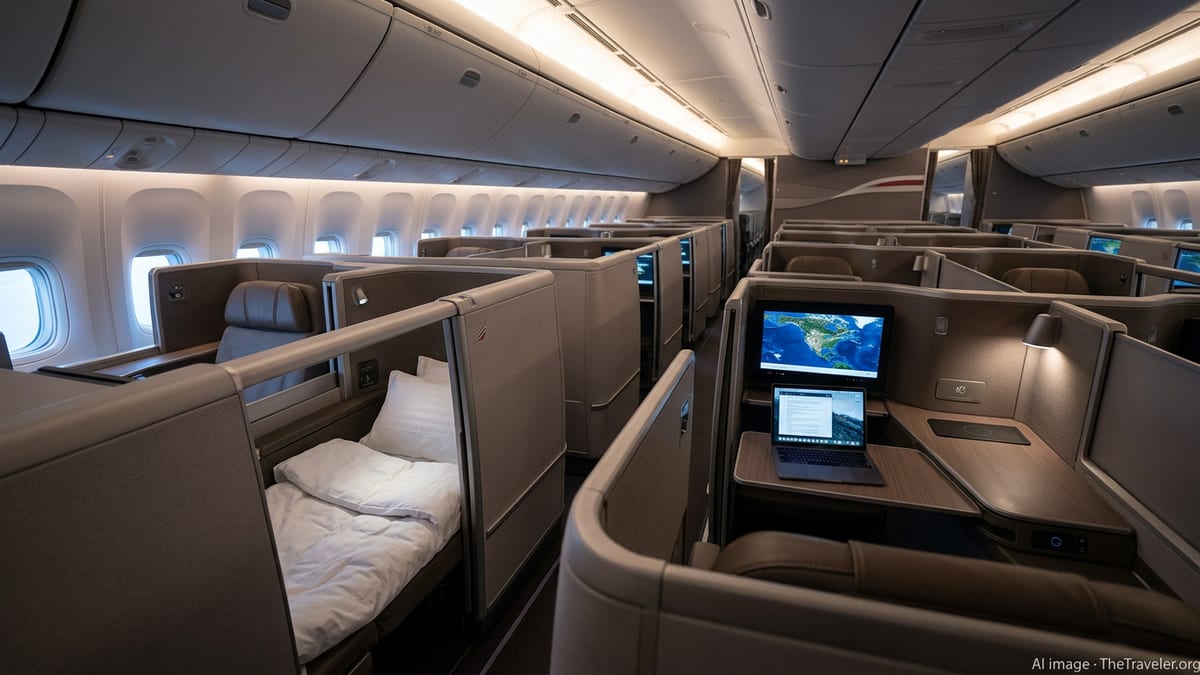
How Corporate Travel Priorities Are Shaping Airline Rankings
Recent corporate travel studies indicate that business trip volumes are still climbing, although at a more measured pace than the post-pandemic leisure surge. Travel managers report that when trips are approved, they are more likely to be tied to high-value sales, client meetings or complex projects, which intensifies the need for schedule reliability, productivity on board and flexible policies.
Published rankings and industry analysis for 2025 and 2026 show that airlines gaining favor with frequent business travelers typically combine strong on-time performance records with robust route networks, modern premium cabins and dependable airport lounges. Loyalty programs that reward frequent domestic and short-haul international trips also play a large role, as companies increasingly scrutinize total trip cost rather than headline ticket prices alone.
Using recent operational data from federal transportation reports, independent airline league tables and customer satisfaction studies focused on first and business class cabins, five US carriers consistently emerge as the most business-friendly options for the 2026 to 2027 travel cycle: Delta Air Lines, United Airlines, Alaska Airlines, American Airlines and JetBlue Airways.
Delta Air Lines: Consistent Leader for Road Warriors
Delta Air Lines continues to occupy the top tier of US airline rankings compiled by major travel publications, reflecting a balance of operational reliability and passenger experience. Evaluations released in mid-2026 again placed Delta first overall among US carriers, citing its strong showing across punctuality, customer satisfaction, cabin quality and network breadth.
Federal on-time performance statistics for early 2026 place Delta’s mainline operation comfortably above the industry average, a metric that matters acutely for travelers trying to make tight connections or same-day returns. Frequent flyers and corporate travel managers often point to the relative predictability of Delta’s schedule as a deciding factor, particularly in congested hubs where minor disruptions can cascade quickly.
For business-class customers, Delta’s ongoing rollout of upgraded premium cabins on long-haul and transcontinental routes, combined with a large lounge footprint in key US business markets, continues to attract higher-yield corporate traffic. The carrier’s loyalty currency is regularly rated as one of the more valuable among US programs, something companies consider when consolidating travel with a preferred partner.
United Airlines: Network Scale and International Connectivity
United Airlines has used its extensive hub network and strong international connectivity to position itself as a primary choice for companies with globally distributed teams. Industry rankings for 2026 place United among the top contenders, in some cases just behind Delta, reflecting improving operational metrics and a steady focus on premium products.
Recent Department of Transportation consumer and performance reports show United’s network achieving on-time arrival rates in the upper tier of US carriers, with mainline operations recording results that compare favorably to several domestic rivals. While not always first in punctuality tables, United’s consistency across multiple hubs gives it particular appeal for travelers based in cities such as Chicago, Denver, Houston, Newark and San Francisco.
For premium cabins, United has invested heavily in its flagship business product on long-haul routes and upgraded lounges in major business gateways. Coupled with a loyalty program that offers extensive earning and redemption opportunities on partner airlines, United has become especially attractive to multinational firms that need reliable links between secondary US cities and major business centers in Europe and Asia.
Alaska Airlines: Reliability and Loyalty Value in Key West Coast Markets
Alaska Airlines, while smaller than the three largest network carriers, consistently posts some of the strongest on-time performance figures in federal statistics. Early 2026 data show Alaska’s network operating at well above the overall US average for punctual arrivals, situating it among the most reliable domestic carriers for schedule-sensitive business trips.
Customer satisfaction studies focused on first and business class cabins have also placed Alaska at or near the top among North American airlines, crediting the carrier with a comfortable premium product and solid in-flight service. For business travelers based in cities such as Seattle, Portland, San Diego and Anchorage, Alaska’s combination of reliability and service quality makes it a favored option on regional and cross-country routes.
The airline’s loyalty program is often highlighted in expert comparisons for the value of its mileage redemptions, particularly on partner airlines. For small and mid-sized companies whose travelers regularly mix domestic hops with occasional international journeys, Alaska’s ability to earn and redeem across a network of partners can stretch travel budgets without sacrificing comfort or schedule flexibility.
American Airlines: Rebuilding Business Travel Credibility
American Airlines remains one of the largest carriers in the US by capacity and network breadth, particularly in the Sun Belt and along the East Coast. Recent financial and industry analyses note that American has been working to rebuild share in the corporate travel segment after prior distribution and pricing changes drove some high-value business to competitors.
Federal data place American’s on-time performance near the middle of the major US carriers, but reports suggest that targeted operational initiatives are narrowing gaps in certain hubs. For business travelers, American’s appeal rests heavily on its dense schedules in markets such as Dallas–Fort Worth, Charlotte, Miami and Phoenix, which can offer multiple daily options for short-notice trips.
On the product side, American has invested in its long-haul business-class cabins and upgraded lounges in several major hubs. While some expert rankings still place it behind Delta and United on overall premium experience, its scale and alliance partnerships continue to make it a practical choice for companies that value extensive domestic coverage combined with one-stop access to Europe and Latin America.
JetBlue Airways: Boutique Comfort for Coastal Business Travelers
JetBlue Airways rounds out the list as a preferred carrier for business travelers who prioritize in-cabin comfort, particularly on transcontinental and key short-haul routes. Independent rankings focused on first and business class regularly score JetBlue highly, with some 2026 assessments placing it at or near the top in North America for premium-cabin satisfaction.
JetBlue’s business-class offerings on select routes, including lie-flat seating and a strong reputation for in-flight Wi-Fi and entertainment, resonate with travelers who need to work or rest in flight. Although the airline’s overall network is smaller than that of the largest legacy carriers, its strong presence in Boston, New York and select West Coast markets makes it an attractive option in high-value corporate corridors.
Operational data show that JetBlue’s on-time performance trails that of the very best performers, which can be a consideration for time-sensitive travelers. Nonetheless, for many business flyers, the elevated onboard experience, competitive premium fares and customer-friendly cabin features make JetBlue a compelling alternative when schedules align.
Together, these five carriers illustrate how the US airline landscape for business travelers in 2026 and 2027 is being reshaped by a mix of operational discipline, targeted product investment and evolving corporate travel priorities. For companies and frequent flyers alike, choosing a preferred airline now hinges less on base fares and more on which carrier can reliably support productivity and comfort from door to door.