


More news on this day
A freight train derailment in Bucyrus, Ohio, on July 6 prompted an evacuation order for nearby residents after a tanker car tipped on its side, raising concerns about a possible hydrochloric acid leak and explosion risk in the immediate area.
Get the latest news straight to your inbox!
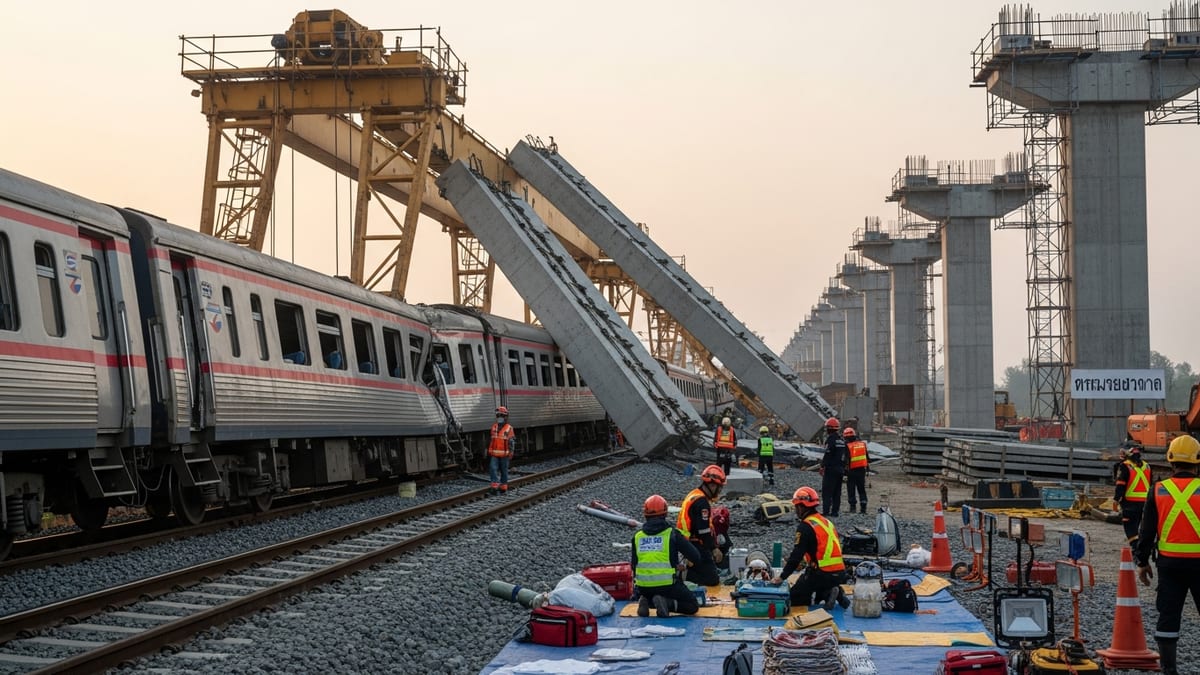
Evacuation Zone Established Around Derailment Site
Reports indicate that the derailment occurred near the intersection of Whetstone Street and Auto Avenue in Bucyrus, a small city in north-central Ohio. Several rail cars left the tracks, including at least one tanker that came to rest on its side, triggering a hazardous materials response.
According to publicly available information, residents within roughly one third of a mile of the derailment were instructed to leave their homes as a precaution. Local alerts advised people in the affected zone to evacuate immediately and avoid returning until emergency personnel declared the area safe.
Initial coverage from regional outlets noted that officials on scene treated the incident as a potential hazardous materials emergency because of the tipped tanker’s contents and its position. Responders moved to isolate the scene, close nearby streets and keep the public at a distance while assessments were carried out.
There were no early reports of widespread injuries in the surrounding neighborhood, but the evacuation order disrupted weekend plans and forced some residents to seek temporary shelter with family, friends or in designated safe areas away from the site.
Hydrochloric Acid Tanker at Center of Concern
Published information indicates that the tanker involved may have been carrying hydrochloric acid, a corrosive industrial chemical used in manufacturing and water treatment. Because of the potential for fumes and chemical burns in the event of a significant release, crews treated the rail car as a serious risk until its condition could be fully evaluated.
Local coverage stated that there were concerns about a possible leak from the tanker, though detailed measurements of air quality and liquid loss were not immediately available. Given the proximity to residential streets, the possibility of a release or ignition prompted conservative protective measures, including the evacuation zone.
Hydrochloric acid incidents are relatively rare but can have significant localized impacts. Guidance from federal environmental agencies on previous derailments in Ohio and elsewhere stresses the importance of limiting public access to any area where corrosive vapors or contaminated runoff might occur, especially in low-lying neighborhoods or near drainage channels.
In Bucyrus, emergency teams appeared to follow a similar playbook, focusing first on life safety and isolation of the hazard before shifting to detailed inspection of the tank car, product transfer options and track clearance operations.
Emergency Response and Ongoing Safety Checks
Regional news reports describe a sizable emergency response on the ground, including fire crews, police units and hazardous materials specialists converging on the rail corridor. Their early priorities included establishing perimeters, confirming what was in the affected cars and determining whether any chemical release had already begun.
Publicly available updates indicated that responders considered the possibility of an explosion if pressure inside the tanker changed or if ignition sources came into contact with vapors. This assessment contributed to the decision to keep people back and discourage onlookers from gathering near the tracks.
As the situation developed, crews worked to stabilize the tipped car, monitor atmospheric conditions and check nearby structures for any signs of contamination. Drone footage and ground-level imaging used in media coverage showed multiple cars off the rails but no large plumes of smoke or fire, suggesting that any leak, if present, was limited in scope at that stage.
Authorities overseeing the scene signaled that further information about the tanker’s integrity, the exact quantity of material on board and any necessary cleanup operations would be released after additional testing and inspection.
Bucyrus Incident Adds to Growing Rail Safety Scrutiny
The Bucyrus derailment arrives at a time of heightened public attention on freight rail safety, particularly in Ohio. High-profile incidents in recent years, including the 2023 East Palestine derailment and subsequent hazardous burn-off of chemicals, have fueled debate over train inspection standards, tank car design and routes used for transporting dangerous goods.
Recent technical reviews and policy discussions have highlighted concerns about how hazardous materials are placed within long freight trains and whether older tank car models are sufficiently robust in derailments. National investigative reports into previous accidents have urged railroads and regulators to speed up the adoption of safer equipment and more rigorous monitoring of wheel, axle and track conditions.
While the Bucyrus event appears more limited in scale than some earlier catastrophes, it underscores the reality that smaller communities along busy rail corridors may experience sudden disruption from derailments involving chemical cargo. For local residents, the combination of sirens, evacuation orders and uncertainty about what is in nearby rail cars can be unsettling even when the ultimate impacts prove contained.
Travelers moving through north-central Ohio by road or rail may also experience delays as rail operators and roadway managers reroute traffic around the affected line until cleanup work is complete and inspections confirm the tracks are safe for service to resume.
Travel and Community Impacts in North-Central Ohio
For visitors and drivers passing through Bucyrus, the derailment has practical implications. Road closures near Whetstone Street and Auto Avenue, as noted in regional traffic alerts, may affect local access routes, particularly for those using secondary roads to bypass busier highways in north-central Ohio.
Travel reports suggest that motorists should expect detours, slower speeds and potential congestion around the city while heavy equipment and emergency vehicles occupy key intersections and rail crossings. Commercial traffic, including trucks that typically use Bucyrus as a connector between larger interstate routes, may also be diverted temporarily.
Rail passengers using regional and national services that cross Ohio could see schedule adjustments if freight operations on the affected line are restricted. In previous derailments, freight congestion has sometimes had a knock-on effect on passenger timetables until the backlog clears and normal traffic patterns resume.
Within Bucyrus itself, the evacuation order has short-term consequences for residents and businesses inside the zone, but it also reinforces broader conversations about emergency preparedness in rail-adjacent neighborhoods. Publicly available planning documents from Ohio and other states emphasize the value of knowing evacuation routes, understanding local alert systems and having basic contingency plans for sudden industrial incidents along major transport corridors.