


More news on this day
United Airlines is deepening its commitment to Denver as a pilot training hub, completing the first phase of a large expansion at its existing flight training center while advancing plans for a second campus closer to Denver International Airport.
Get the latest news straight to your inbox!
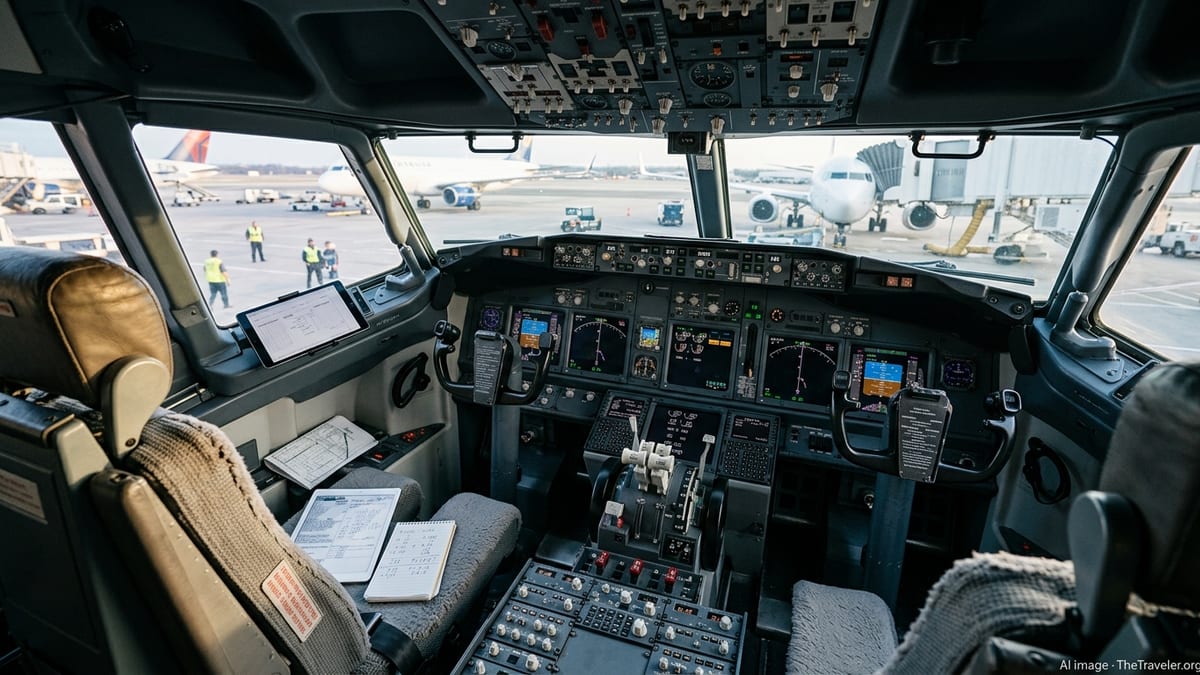
Largest pilot training center adds capacity in Denver
Publicly available information shows that United has finished phase one of an expansion project at its long‑standing Denver Flight Training Center in the city’s Central Park neighborhood. The complex, originally built in the late 1960s on the former Stapleton airport grounds, has grown into what the airline describes as the world’s largest single‑site pilot training facility.
The Denver campus now encompasses roughly 700,000 square feet across eight buildings and hosts more than 80 training devices, including full‑motion simulators and fixed training units. Reports indicate the facility can train up to about 860 pilots per day, supporting both new hires and recurrent training for crews already flying the airline’s fleet.
Recent coverage notes that since 2022 United has added around 40 new training devices as part of the expansion program. The mix of advanced simulators is intended to keep pace with a growing and modernizing fleet, as well as new aircraft types entering service over the next several years.
The Denver Flight Training Center remains United’s sole simulator‑based pilot training site, serving nearly 18,000 active pilots. All new pilots are routed through the facility for initial qualification, and existing pilots return regularly for proficiency checks and aircraft‑specific training modules.
Phase two to bring further growth by decade’s end
United’s current project in Central Park is organized into multiple phases, and publicly available documents describe the recently completed work as only the first step. The next phase is scheduled to begin in 2027 and is expected to be operational by around 2030, further increasing the number of simulators and classrooms on site.
The additional build‑out is designed to support a long‑term hiring plan that industry analysts say could see United’s pilot ranks grow well beyond today’s levels. As the airline takes delivery of new narrowbody and widebody aircraft later this decade, incremental training capacity is viewed as critical to bringing new crew members online without creating bottlenecks.
Expansion at the Central Park campus is also tied to technology upgrades. Newer full‑motion simulators allow for higher‑fidelity training scenarios, including detailed handling of new avionics suites and performance characteristics. This enables the airline to standardize procedures across its global network while satisfying evolving regulatory and safety expectations.
While the first phase primarily focused on adding devices and interior space, the upcoming work is expected to refine the campus layout, with more briefing rooms, debriefing areas and support services for pilots rotating through Denver for multi‑day training cycles.
Second campus approved near Denver International Airport
Separate from the Central Park expansion, land‑use filings with the City and County of Denver show that United has obtained zoning approvals for a new facility near Denver International Airport. In late June 2026, the Denver City Council supported a rezoning of roughly 114 acres at East 64th Avenue and Yampa Street, in the airport area, to allow for a mixed‑use planned development anchored by a United training and corporate campus.
Planning documents describe the new complex as a flight training facility and office site that will complement, rather than replace, the existing Denver Quebec campus. Early materials reference a multibuilding development with training infrastructure, administrative workspace and supporting amenities, though detailed architectural plans have not yet been made public.
The future campus is framed as a long‑term investment that will position United to consolidate additional functions in the Denver region. Observers note that the site’s proximity to Denver International Airport could make it attractive for certain operational and management roles that benefit from quick access to the hub’s terminals and maintenance areas.
City briefing materials also point to the project’s potential to spur job growth in the airport corridor. As the campus builds out over time, it is expected to host thousands of employees and visiting pilots, intensifying demand for transportation links, services and housing in nearby neighborhoods.
Economic and workforce impact for Denver
United has become one of Denver’s most prominent private employers, and the training center expansion underscores how closely the airline’s growth strategy is tied to the region. Company disclosures and local economic reports indicate that United hired more than 1,400 people in Denver in 2025 and plans to add over 1,000 more positions in 2026, spanning pilots, ground staff and support roles.
At the training center itself, nearly 1,500 employees are already based on site, handling everything from simulator operations and curriculum development to logistics and facility management. As additional simulators come online and the second campus progresses, that number is expected to rise.
Denver’s position near the geographic center of the continental United States, along with strong air connectivity through Denver International Airport, has made the metro area an efficient hub for airline training and crew deployment. Analysts point out that concentrating pilot training in a single large complex creates economies of scale while allowing for standardized instruction.
Local business coverage notes that the clustering of aviation activities around Denver has spillover effects, supporting hotels, transportation providers, restaurants and other services that cater to visiting pilots and staff. The rezoning for the new campus near the airport is expected to reinforce those trends, particularly as United’s broader expansion at Denver International continues.
Strategic bet on long‑term pilot demand
United’s investments in Denver come amid an industry‑wide focus on pilot pipelines. Airlines in the United States have spent the past several years rebuilding capacity, replacing retired aircraft and facing a wave of pilot retirements tied to mandatory age limits. Training throughput has become a core strategic concern, shaping where carriers place high‑value infrastructure.
Trade publications and aviation analysts describe United’s Denver training complex as a key element in the carrier’s “United Next” growth blueprint, which centers on adding new aircraft, densifying routes from hubs and increasing premium seating. The expanded simulator fleet allows United to introduce new aircraft types and configurations without stretching training schedules.
By pairing the Central Park expansion with plans for a second campus near the airport, United is signaling that Denver will remain at the heart of its pilot training network for years to come. As the next phase of construction begins and plans for the airport‑area campus crystallize, the city’s role in shaping the airline’s future workforce is likely to grow even more prominent.