


More news on this day
Hundreds of passengers across Europe are facing extensive disruption after a fresh wave of aviation turbulence led to 2,098 delayed flights and 141 cancellations, hitting major carriers including KLM, British Airways and easyJet and leaving travellers stranded at hubs in Paris, London and other key cities.
Get the latest news straight to your inbox!
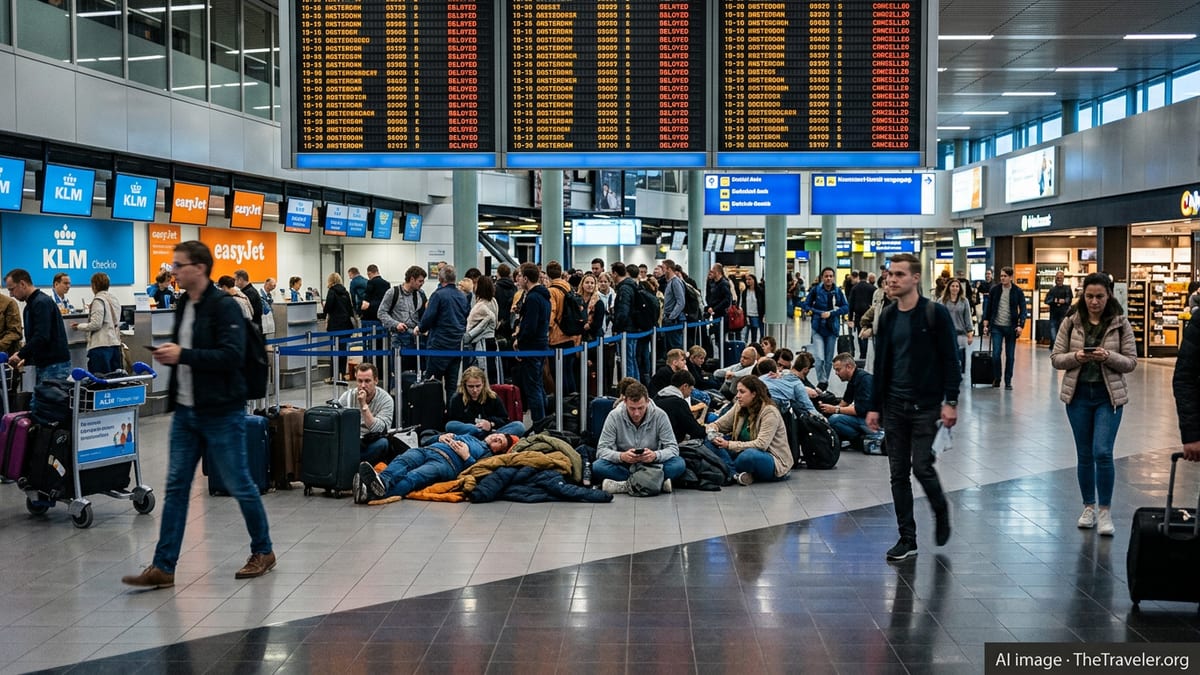
Multiple European Hubs Hit by New Wave of Disruptions
Major European airports experienced another day of operational strain as delay and cancellation figures climbed into the thousands, reflecting a pattern of rolling disruption that has characterised the region’s air travel in recent weeks. Publicly available data compiled from flight-tracking services and industry reports points to a combined 2,098 delays and 141 cancellations across European skies in the latest episode, affecting traffic in and out of Germany, the Netherlands, Russia and several neighbouring states.
London Heathrow, Paris Charles de Gaulle and Amsterdam Schiphol remain among the most heavily affected hubs, with crowded terminals, long queues and mounting missed connections for passengers heading to and from North America, the Middle East and within Europe. Regional airports in Germany and Russia have reported knock-on disruption as aircraft and crews fall out of position, forcing some carriers to trim schedules or consolidate services.
In this most recent disruption cycle, travellers have reported extended waits at boarding gates, frequent last-minute gate changes and a growing reliance on overnight hotel stays or overland alternatives as connections evaporate. With the summer travel season ramping up, even relatively modest operational issues are feeding into larger system-wide bottlenecks.
Although specific causes vary across airports, the cumulative effect is a sharp reduction in schedule reliability at a time when demand for European travel is strong, increasing the likelihood that individual problems at one hub can quickly cascade into a continent-wide challenge.
Major Carriers Scramble as KLM, British Airways and easyJet Affected
The disruption is impacting a broad mix of full-service and low-cost airlines, with KLM, British Airways and easyJet among those most exposed due to their dense European networks and dependence on hub operations at London and Amsterdam. Recent compilations of operational data show KLM at or near the top of daily delay and cancellation charts on several days in June, reflecting both its hub-and-spoke model at Schiphol and its role in connecting European passengers with long-haul routes.
British Airways, which relies heavily on London Heathrow as a global gateway, has faced recurring schedule adjustments this year, including temporary suspensions on some long-haul routes and periodic short-haul cancellations. When Heathrow experiences congestion or air traffic control restrictions, ripple effects tend to spread quickly through its European feeder network, increasing the risk of missed onward flights for passengers transiting through London.
easyJet, operating one of Europe’s largest low-cost networks, has been repeatedly highlighted in recent performance rundowns as a carrier contending with high volumes of delayed departures on busy intra-European routes. Its presence at airports such as Paris Charles de Gaulle, Amsterdam and major UK regional hubs means that any localised disruption can quickly manifest across multiple countries.
Other airlines, including Lufthansa, Ryanair, Air France and several Russian and Nordic carriers, are also being drawn into the turbulence as shared airspace constraints, airport staffing pressures and equipment availability issues combine to undermine punctuality. For travellers, the airline on the ticket is increasingly only part of the story, with many disruptions driven by shared infrastructure and airspace challenges beyond a single carrier’s control.
Germany, Netherlands and Russia Among Key Pressure Points
Germany, the Netherlands and Russia feature prominently in the latest figures on delays and cancellations, reflecting both their geographic importance and the concentration of hub airports within their borders. Frankfurt, Amsterdam Schiphol and Moscow’s major airports have appeared repeatedly in recent operational tallies, often reporting dozens of cancellations and hundreds of delays in a single day.
In the Netherlands, Amsterdam Schiphol continues to be a focal point of European aviation stress. Previous episodes in June documented hundreds of delays and dozens of cancellations in and out of Schiphol in a single day, stranding passengers traveling on KLM and its partners. The airport’s tight scheduling and high utilisation levels mean that any extended ground hold, weather issue or technical setback can quickly erode the resilience of its timetable.
Germany’s large hubs, including Frankfurt and Munich, are similarly exposed. Recent coverage of European aviation performance has highlighted cancellations and delays across both airports, with consequences for Lufthansa’s long-haul operations and for connecting traffic to smaller European cities. When disruptions strike these hubs, passengers bound for destinations across Eastern and Northern Europe can find themselves rebooked via alternative cities or stuck waiting for scarce seats on later flights.
In Russia, operational challenges and ongoing airspace restrictions continue to play a role. Industry roundups referencing Moscow’s main airports report cancellations and delays that feed into broader European statistics, particularly for services linking Russia with major hubs in Germany, the Netherlands and the UK. With routing options already constrained by geopolitical factors, even a modest number of cancelled or delayed flights can have outsized consequences for network planning.
Paris and London See Mounting Knock-on Effects
Paris and London, two of Europe’s principal aviation gateways, are experiencing significant knock-on effects from the continent-wide disruption. Recent summaries of flight performance in Paris have described several hundred delayed services and a steady trickle of cancellations at Charles de Gaulle and Orly, with major carriers such as Air France, easyJet and a range of European and transatlantic airlines forced to adjust their schedules.
In London, Heathrow remains at the heart of the turbulence, with prior reporting in May documenting days where more than a hundred flights were cancelled and nearly two thousand delayed across the wider European network. British Airways, which operates a high proportion of Heathrow movements, has frequently found itself at the centre of these disruptions, with connecting passengers particularly vulnerable when inbound flights from Europe arrive late.
Other London-area airports, including London City and London Gatwick, are not immune. Operational snapshots from June highlight rising delay numbers at these secondary hubs as congested airspace, staffing gaps and weather events compound the effects of schedule changes at Heathrow. For short-haul carriers such as easyJet and regional operators, this environment increases the risk of missed rotations and late-night arrivals.
Paris and London also serve as essential backup hubs when passengers are rerouted from disrupted flights elsewhere in Europe. This can strain resources further, as diverted flights compete for limited gate space, ground handling capacity and hotel accommodation for stranded travellers, especially during peak travel periods.
What Stranded Travellers Are Facing on the Ground
For passengers caught up in the latest wave of delays and cancellations, the experience often begins with a flurry of schedule-change notifications followed by hours of uncertainty at crowded terminals. Images and accounts emerging from airports across Europe in recent weeks describe departure boards filled with delayed and cancelled statuses, long queues at airline service desks and fully booked airport hotels.
Travellers stranded after missed connections in cities such as Amsterdam, Paris and London commonly report being rebooked on itineraries that add many hours, and in some cases an extra day or more, to their journeys. Indirect routings through alternative hubs, overnight layovers, and last-minute switches to rail or bus services have become familiar themes in first-hand accounts and consumer advocacy updates.
Airlines are operating within the framework of European air passenger rights regulations, which set out when travellers may be entitled to meals, accommodation or monetary compensation, depending on the cause and duration of disruption. However, recent commentary from passenger-rights organisations and online forums suggests that navigating these rules can be complex, with differing outcomes depending on the circumstances of each delay or cancellation.
With further periods of heavy demand expected across the summer, travel analysts note that today’s figures of 2,098 delayed flights and 141 cancellations fit into a broader pattern of persistent operational strain. For passengers planning journeys through Europe’s busiest hubs, the latest turbulence is a reminder to monitor flight status closely, build extra time into connections and prepare for the possibility that carefully laid plans may still be overtaken by events.