


More news on this day
South Shore Line commuter trains remained out of service on key stretches of track in northwest Indiana on Saturday, days after a late night freight train derailment knocked out power and damaged infrastructure along the busy corridor between East Chicago and Gary.
Get the latest news straight to your inbox!
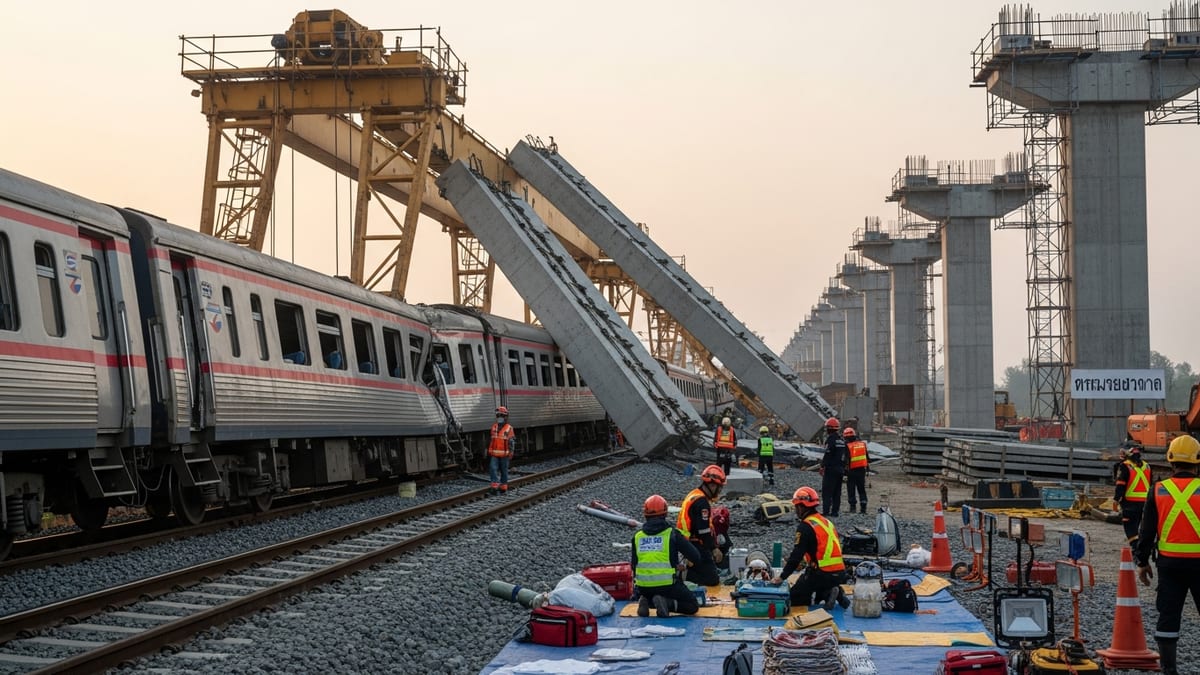
Derailment near East Chicago halts a critical commuter artery
Published reports indicate that a freight train derailed on Wednesday night near East Chicago, Indiana, toppling several cars and bringing down overhead wires along the shared freight and commuter corridor used by the South Shore Line. The incident cut power to the electrified line and immediately stopped passenger trains operating between Chicago and communities across northwest Indiana.
Coverage from regional outlets describes the derailment as occurring in a dense industrial section of track that carries both freight and commuter traffic, complicating the repair effort. Multiple freight cars reportedly ended up off the rails, with some leaning into or striking the steel structures that support the South Shore Line’s overhead catenary system.
The Northern Indiana Commuter Transportation District, which operates the South Shore Line, moved quickly to suspend trains through the affected zone. Publicly available service alerts show that normal through service between Chicago and Indiana stations was replaced by partial routes and bus connections while crews assessed the damage and began cleanup.
The South Shore Line is a key commuter link between downtown Chicago and South Bend, Indiana, with intermediate stops in industrial and residential communities across Lake and Porter counties. Even a short segment of unusable track can sever through service for thousands of weekday riders.
Service suspensions and limited alternatives for passengers
According to published schedules and alerts, the derailment triggered an immediate suspension of South Shore Line trains across the impacted stretch, effectively cutting service between East Chicago and Gary. Some trains were reported operating only on outer portions of the line, while passengers traveling to or from Chicago faced cancellations, delays, or transfers to substitute transportation.
Local coverage describes a patchwork of interim options, including limited train service on unaffected segments and bus bridges arranged to connect riders around the damaged area. However, available reports suggest that capacity has been significantly reduced, with fewer departures and longer travel times, particularly during peak commute periods.
Passengers who normally rely on direct electric commuter trains into downtown Chicago have been advised through public notices to expect extended trip times, altered stopping patterns, and possible crowding on the services that are still running. For many in northwest Indiana who use the South Shore Line as their primary link to jobs and schools in Chicago, the ongoing disruption has led to a scramble for carpools, telework arrangements, or use of nearby highways already prone to congestion.
Rail observers note that the incident comes at a time when the South Shore Line has been working to expand and modernize its service, including recent capacity and double tracking projects. The derailment and continuing suspension underscore how vulnerable even upgraded corridors can be when critical infrastructure is suddenly taken offline.
Extensive repairs under way on damaged power and track infrastructure
Reports from the scene describe a large scale repair effort focused on restoring the overhead power system and clearing damaged freight equipment. Crews using heavy machinery and bucket trucks have been working to remove derailed cars, rebuild support structures, and restring electric wires along the affected stretch of right of way.
Publicly available information indicates that multiple support poles and catenary structures were damaged or destroyed when the freight cars left the rails. In an electrified commuter corridor, these components are essential to delivering power to the trains, and replacing them requires both specialized materials and precise installation.
In addition to electrical work, track inspection and repairs are expected to continue until engineers are confident that rails, fasteners, and ballast can safely handle both freight and commuter traffic. Rail industry practice typically calls for detailed inspections and testing before any passenger trains are allowed back onto a segment that has experienced a derailment, especially when heavy equipment has been operating in the area.
Regional news accounts suggest that the complexity of the damage, combined with safety checks and coordination between freight operators and the commuter railroad, is contributing to the length of the shutdown. While some limited services have been able to resume on portions of the South Shore Line, full through service remains unavailable as of Saturday.
Timeline for restoring full South Shore Line operations remains fluid
Forecasts for when South Shore Line trains will fully resume through operations have shifted as crews uncover the full extent of the damage. Earlier estimates pointed to a partial restoration by the end of the workweek, but newer coverage indicates that significant constraints on service are likely to persist into the weekend as repairs continue.
Public communications from the railroad and local media reports stress that the restart of normal operations depends on the completion of structural repairs, testing of the overhead power system, and track certification. Any of these steps can encounter delays if additional damage is discovered or if weather and logistical challenges slow the work.
Transportation commentators note that, while derailments involving freight trains are relatively rare on shared commuter corridors, when they do occur they can have outsized impacts on public transit. The South Shore Line incident has effectively removed a key regional rail artery, leaving riders with fewer and less convenient alternatives until the infrastructure is fully restored.
Travelers planning to use the South Shore Line in the coming days are being encouraged through public channels to monitor service alerts frequently and to consider backup options, especially for time sensitive trips. With no firm end date yet for the suspension across the damaged segment, the situation remains fluid for commuters in both Indiana and the Chicago area.
Regional travel and economic ripple effects
The ongoing disruption of South Shore Line service is being felt well beyond the immediate derailment site. According to regional reporting, highway traffic into Chicago from northwest Indiana has been heavier than usual as regular rail riders shift to cars, carpools, or intercity buses. That added pressure is being noticed on key arteries used for both commuting and freight movement.
Businesses that depend on a reliable flow of workers from Indiana to Chicago, and vice versa, are also likely to experience short term impacts. Office managers, event organizers, and service sector employers may need to adjust staffing or scheduling to accommodate employees whose commute times have suddenly lengthened or become less predictable.
Observers point out that the prolonged suspension also highlights the interconnected nature of freight and passenger rail operations in the Midwest. A freight derailment in a shared corridor can abruptly sideline a high volume commuter route, reminding planners and riders alike that investment in resiliency, redundancy, and rapid response capacity is critical.
For now, travelers between Chicago and northwest Indiana face another day of uncertainty as crews continue around the clock work to restore the South Shore Line. Until repairs are complete and full testing is finished, commuter trains will remain largely sidelined, and the region will continue to feel the effects of a single late night freight train leaving the rails.