


More news on this day
Regional travelers across the central United States faced long overnight disruptions after Envoy Air flight ENY3933, operating for American Airlines, diverted into Kansas City instead of completing its scheduled arrival in Wichita, triggering hours of cascading delays and missed connections.
Get the latest news straight to your inbox!
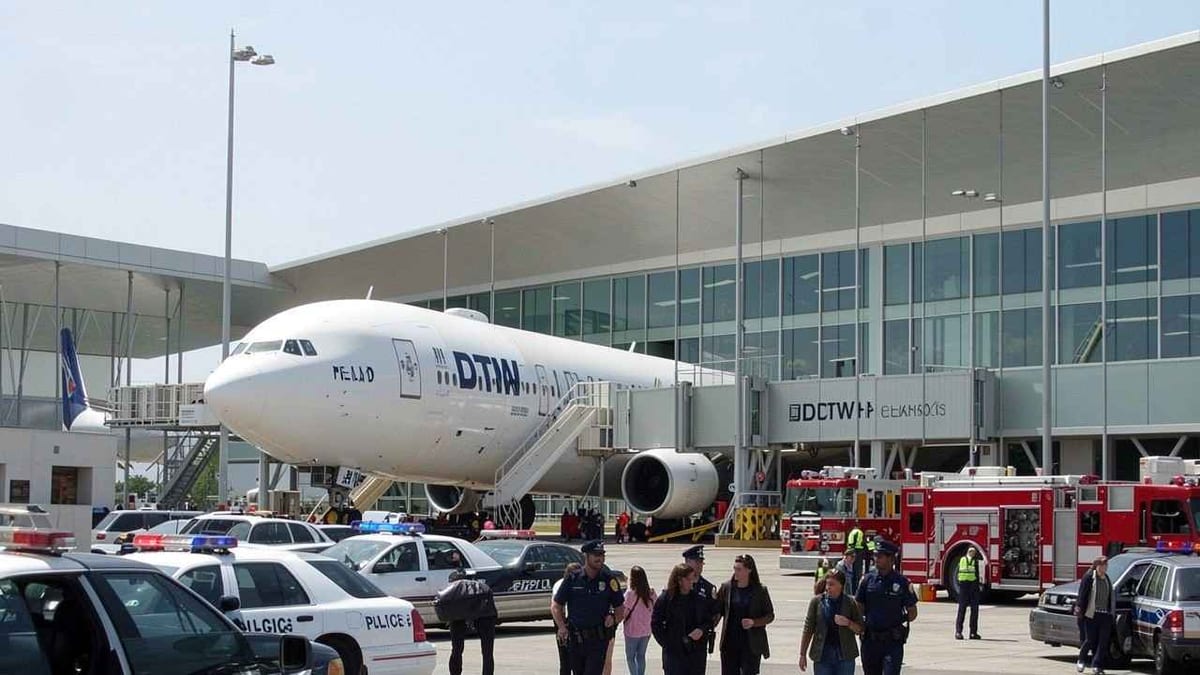
Unexpected Diversion From Wichita to Kansas City
Flight ENY3933 was scheduled to operate a routine regional service into Wichita Dwight D. Eisenhower National Airport but was rerouted to Kansas City International Airport late in the schedule, according to publicly available flight tracking data. The service, marketed under the American Airlines banner and operated by Envoy Air with a regional jet, had been due to arrive in Wichita late at night when the diversion unfolded.
Tracking platforms show the aircraft initially following its expected routing toward south-central Kansas before air traffic instructions and operational considerations redirected the flight toward Kansas City. Instead of a short final leg into Wichita, the jet proceeded north to Missouri, where it landed safely but significantly off its planned endpoint.
The diversion meant the aircraft never reached Wichita on its original timetable, reshaping the night for dozens of travelers who had anticipated a quick arrival followed by short drives or onward morning connections. By the time passengers were able to deplane in Kansas City, the scheduled arrival window for Wichita had long passed.
While formal post-incident documentation has not yet detailed the exact trigger, patterns seen in similar Envoy Air events this month, including weather-related reroutes and flow-control restrictions around major hubs, suggest a combination of regional storm activity, runway or airspace congestion, and crew duty-time limits likely influenced the decision to divert.
Four Hours of Overnight Disruption for Passengers
The unexpected landing in Kansas City set off an extended period of uncertainty and disruption, with many passengers experiencing an estimated four-hour delay before new arrangements were in place. For some, the night turned into a prolonged wait inside the terminal as airline teams and airport staff worked through options for transport, lodging, and rebooking.
Late-night diversions are particularly challenging on short regional hops, where onward flight options thin out quickly once the clock approaches midnight. With only a limited number of late departures linking Kansas City and Wichita, many travelers reportedly faced long lines at customer service counters and competing demands for available seats on the next morning’s services.
Families, business travelers, and students alike were left recalculating plans, from missed early-morning meetings in Wichita to lost hotel nights and rearranged ground transportation. Social media posts and regional aviation forums reflected frustration over the timing of updates, uncertainty about luggage handling, and questions about when replacement flights or buses would actually depart.
Despite the operational upheaval, no injuries were reported, and there were no indications of an in-flight emergency. The disruption instead unfolded on the ground, as passengers navigated changing information screens, irregular-operations policies, and the practical realities of trying to reach Wichita from a different city in the middle of the night.
How One Flight Exposed Regional Network Fragility
The ENY3933 diversion highlights the sensitivity of regional airline networks that link smaller cities like Wichita to key hubs. Envoy Air, operating under the American Airlines brand, is a primary connector for many Midwestern communities, running frequent short-haul services that feed into larger domestic and international routes.
When a single flight diverts or cancels late in the day, the ripple effects can be amplified. Passengers on ENY3933 were not only delayed reaching Wichita but also risked missing early departures the following morning. In some cases, a missed last-leg regional sector can add an entire day to a journey, even when the distance between cities is only a few hundred miles.
Publicly available scheduling and performance data for Envoy and other regional operators show that routes into Wichita and Kansas City form part of a tightly wound pattern of rotations. Aircraft and crews often operate multiple legs in sequence, meaning a disruption on one sector can force adjustments across several subsequent flights, including early-morning departures that rely on the same aircraft being in position overnight.
Aviation analysts note that such diversions also underscore the tension between safety-led decisions and schedule reliability. While route changes are frequently prompted by weather, congestion, or airfield constraints, the downstream impact to travelers can be significant in regions where alternative ground transport options are limited and late-night public transport is sparse.
Weather, Airspace Management and Operational Pressures
The ENY3933 incident comes amid a period of heightened operational strain on regional carriers in the central United States. Recent Envoy Air flights have already faced diversions and delays tied to convective weather bands, capacity constraints at major hubs, and high-density traffic control measures, according to industry reports and dispatch summaries.
Summer storm systems sweeping across the Midwest often force air traffic managers to compress or reroute arrival and departure flows. When arrival rates at key airports are reduced, airlines may face choices between extended airborne holding patterns and preemptive diversions to alternate fields with more stable operating conditions. In such circumstances, a diversion to Kansas City can offer more gate availability, maintenance access, and accommodation options than pressing on toward a smaller field late at night.
Operational data indicate that regional jets, including those used by Envoy, are especially exposed to these disruptions because they serve thinner routes with limited schedule redundancy. If the last flight of the night cannot safely reach its destination on time, there is often no backup service for many hours. Passengers caught in these scenarios may be reliant on overnight hotel vouchers, ad hoc bus transfers, or early-morning repositioning flights to complete what was originally a short hop.
While ENY3933 ultimately landed without incident in Kansas City, the decision to divert rather than continue into Wichita appears consistent with broader safety-first practices across the industry, where route planners and dispatchers weigh aircraft performance, crew duty limits, and dynamic radar returns against schedule promises.
Implications for Travelers on the Wichita–Kansas City Corridor
The disruption surrounding Envoy Air flight ENY3933 is likely to factor into how travelers think about late-night regional connections into Wichita for the remainder of the busy summer season. Frequent fliers on the corridor note that while statistics show a strong overall on-time performance for services linking Kansas City and Wichita, isolated events like this can have outsized personal impacts.
Travel planners increasingly recommend building extra buffer time into itineraries that rely on final-leg regional flights, particularly in months when thunderstorms, heat-driven turbulence, and airspace flow programs are more common. For business travelers connecting through major hubs to reach Wichita late at night, that may mean opting for earlier departures from origin cities or accepting longer layovers to reduce the risk of missed connections.
The incident also highlights the value of real-time flight tracking tools and airline mobile apps in providing early visibility into potential disruptions. Passengers monitoring ENY3933’s route on tracking platforms could see the shift toward Kansas City in near real time, offering a head start in exploring hotel availability or alternative transport options while the flight was still airborne.
As airlines, airports, and regulators continue to adapt to increasingly volatile weather and crowded skies, events like the ENY3933 diversion serve as a reminder that even short regional hops can quickly turn into multi-hour odysseys. For travelers in the Wichita and Kansas City markets, the episode reinforces both the resilience and the vulnerabilities of the regional aviation system that underpins much of the Midwest’s connectivity.