


More news on this day
As war and airspace closures choke traditional Middle East hubs, Southeast Asia’s aviation industry is moving quickly to pick up rerouted traffic between Europe and Asia, reshaping global long haul flows almost overnight.
Get the latest news straight to your inbox!
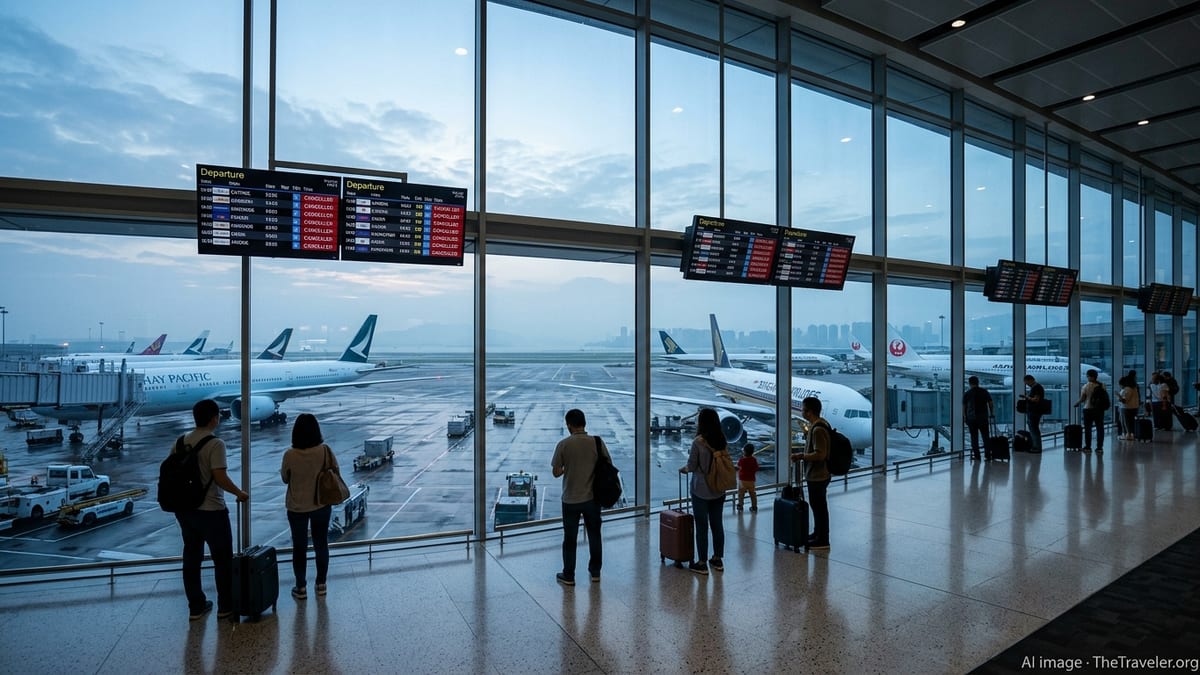
Detours Create Window of Opportunity
The Iran war that erupted on 28 February 2026 has triggered sweeping airspace closures across Iran, Iraq and much of the Gulf, forcing airlines to abandon long established corridors linking Europe and Asia through Dubai, Doha and Abu Dhabi. Publicly available route data and schedule filings show that many Gulf carriers have cut or suspended dozens of daily departures, creating a sudden gap on some of the world’s busiest long haul city pairs.
Industry analyses indicate that the shutdown of key Middle Eastern hubs has removed a significant share of global capacity, with some estimates pointing to more than half of the region’s available seat kilometres disappearing in March compared with a year earlier. At the same time, conflict zone advisories from regulators in Europe and Asia continue to steer airlines away from large swathes of regional airspace, keeping detours and cancellations in place well into the northern summer season.
For Southeast Asia, those disruptions are opening a rare window. Carriers based in Singapore, Bangkok, Kuala Lumpur and Ho Chi Minh City are re‑timing and, in some cases, upgauging flights to Europe and North Asia in an attempt to capture passengers who previously relied on Gulf stopovers. Network planners are focusing in particular on flows between secondary European cities and major Asian business centres that have lost their traditional one‑stop options via the Middle East.
Travel search data and fare trackers suggest that connecting itineraries through Southeast Asian hubs have become more prominent on booking engines since March, especially on routes from northern Europe to Australia, New Zealand and parts of India and Southeast Asia that were heavily served by Gulf “superconnector” airlines.
Hub Airports Position for Rerouted Traffic
Major Southeast Asian hubs appear to be positioning themselves as neutral, stable alternatives while the Middle East remains volatile. In Singapore, publicly available airport and slot data indicate that long haul departures to Europe are being prioritised in the peak evening bank, maximising connectivity for arriving passengers from across Southeast Asia, Australia and parts of China.
Bangkok and Kuala Lumpur are following similar strategies, leaning on their geographic location astride the Indian Ocean routes that now carry more Europe–Asia traffic. Published schedules show additional capacity on select European routes compared with the same period last year, even as some Middle Eastern services remain reduced or suspended.
Analysts note that these hubs benefit from existing infrastructure built during earlier expansion waves. Runway capacity, terminal space and transit‑friendly layouts allow airports to absorb displaced passengers more readily than smaller regional gateways. That capacity is proving valuable as airlines look for new one‑stop options that avoid conflict‑affected skies while keeping flight times and fuel burn within acceptable limits.
Public investor presentations by airport operators in the region highlight an expected uplift in transfer traffic for 2026, driven not only by passengers rerouted from the Middle East but also by cargo operators seeking predictable routings between Europe, South Asia and the Pacific.
Airlines Chase Yields as Gulf Capacity Shrinks
With many Gulf carriers curtailing operations, Southeast Asian airlines are seeing improved pricing power on long haul routes. Reports from fare benchmarking services show double digit percentage increases in economy and premium cabin fares on several Europe–Asia markets that can now be served via Southeast Asia or via longer detours around conflict zones.
Higher wholesale fuel prices linked to the Middle East crisis are eroding some of the financial gains, but the sharp reduction in one‑stop competition is helping airlines in Singapore, Thailand and Malaysia hold firmer on pricing than in recent years. Industry outlooks released in early June suggest that, while global airline profitability is under pressure from higher costs and war related disruptions, Asia Pacific carriers with diversified networks stand to outperform those heavily exposed to the Gulf.
Network planners in the region are also rebalancing capacity away from suspended Middle Eastern destinations toward Europe, South Asia and Australasia. Some Southeast Asian carriers have reduced or paused flights to certain Gulf cities while simultaneously announcing seasonal increases to European capitals and popular leisure points as they seek to lock in market share before Gulf competitors can fully rebuild their schedules.
At the same time, low cost and hybrid carriers based in Southeast Asia are exploring opportunities on shorter‑haul sectors feeding into the major hubs. Additional services from secondary cities in Indonesia, Vietnam and the Philippines into Singapore, Bangkok and Kuala Lumpur are intended to funnel more travellers onto the long haul flights now carrying displaced demand.
Operational and Strategic Risks Remain
The rapid shift of traffic patterns toward Southeast Asia is not without challenges. Longer routings to avoid conflict airspace often require additional fuel uplift and impose tighter weight limits in hot weather, complicating operations for airlines that are already stretching their widebody fleets. Crewing constraints, aircraft maintenance checks and limited spare capacity mean that any further disruption could quickly ripple through already tight schedules.
There is also the risk that the current demand surge proves temporary if a durable ceasefire takes hold and Middle Eastern hubs are able to restore their role as global connectors. Reports from industry consultancies stress that airlines making long term strategic bets on Southeast Asian hubs must balance near term gains against the possibility of Gulf carriers returning with aggressive capacity and pricing once conditions permit.
Regulatory uncertainty adds another layer of complexity. Conflict zone guidance from safety agencies is being updated frequently as the situation in the Middle East evolves, and insurers are reassessing risk premiums for overflight and airport operations on routes skirting the region. That environment makes it harder for airlines to plan schedules and commit to aircraft orders that will shape their networks for the next decade.
Still, the current crisis is accelerating structural changes that were already underway. As more traffic flows through Southeast Asian hubs, alliances, joint ventures and code share arrangements are likely to deepen, potentially cementing the region’s role as a long term counterweight to the Gulf superhubs in global aviation.
Travelers Face Longer Journeys and Higher Fares
For passengers, the shift is most visible in longer travel times and higher prices. According to published coverage from fare comparison sites, journeys between parts of Europe and Asia that once routinely involved a single short stop in the Gulf are now commonly routed through Southeast Asia or via extended paths over Central Asia and the Indian Ocean, adding hours to total journey times.
Economy tickets on some of these routes have risen by hundreds of dollars compared with pre‑conflict levels, while premium cabins are seeing even steeper increases amid strong demand and constrained capacity. Flexible fares and itineraries that avoid the most congested days of the week are becoming more important for travellers seeking to manage both costs and disruption risks.
Travel advisers and online platforms are steering customers toward Southeast Asian routings that offer greater schedule certainty than itineraries that still depend on partially restored Middle Eastern hubs. However, analysts caution that the situation remains fluid, and passengers are being urged to check booking conditions, connection times and airline advisories carefully when planning trips through the region in the coming months.
Whether Southeast Asia’s aviation sector can translate this turbulent moment into a lasting strategic advantage will depend on how long Middle East tensions persist and how quickly the region’s carriers and airports can adapt. For now, the balance of connecting traffic between Europe and Asia is tilting measurably away from the Gulf and toward the tropical hubs of Southeast Asia.