


More news on this day
Boston Logan International Airport experienced a fresh wave of schedule disruption on June 9, with four cancellations and 79 delays affecting major U.S. carriers and key transatlantic and domestic routes just as the summer travel rush accelerates.
Get the latest news straight to your inbox!
Broad Disruption Across Major Airlines
Publicly available tracking data for June 9 indicates that American Airlines, Delta Air Lines, JetBlue Airways, Southwest Airlines and United Airlines all reported delayed departures or arrivals at Boston Logan, with four flights cancelled and dozens more running behind schedule. The pattern reflects a broader strain on large U.S. carriers that has been building through early June, as tight aircraft rotations leave little margin when weather or airspace programs intervene.
Industry performance reports from the U.S. Department of Transportation show that the five carriers generally maintain on-time arrival rates around 70 percent in recent months, but are vulnerable to clusters of delays when multiple factors coincide. National aviation system constraints, late-arriving aircraft and air carrier-related issues typically account for a significant share of disruptions, a combination that again appeared to converge at Boston.
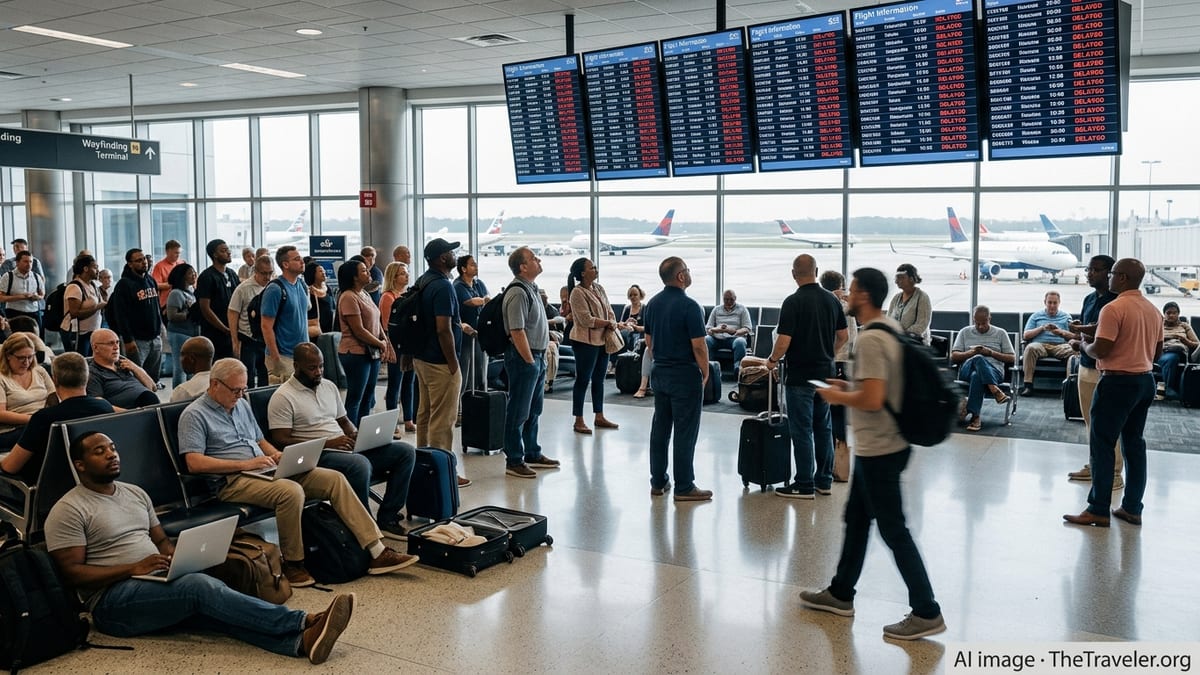
While the total number of cancellations at Logan remained limited compared with previous nationwide meltdowns, the high volume of delayed flights created ripple effects for connections and onward journeys. Passengers reported extended waits at departure gates and congested terminal areas as airlines reworked crew assignments and gate usage to keep aircraft moving.
Operational metrics from recent federal reports also highlight that late-arriving aircraft and air carrier delays together account for a double-digit percentage of all flight disruptions across major U.S. networks. When multiple large carriers experience those issues at a single hub on the same day, airports such as Boston Logan can quickly become chokepoints in the national system.
Transatlantic Links to London, Amsterdam, Rome, Tel Aviv and Zurich Affected
The latest disruption was felt most acutely on long-haul services, with publicly available schedules showing knock-on impacts to flights connecting Boston with key European and Middle Eastern destinations including London, Amsterdam, Rome, Tel Aviv and Zurich. Even modest departure delays on transatlantic routes can cascade into significant missed connections at onward hubs, particularly for passengers relying on tight transfer windows.
Boston’s links to London and Amsterdam serve as important gateways into wider European networks, and carriers operating these routes have already been managing heavy seasonal demand. On June 9, delayed departures from Logan reduced recovery time built into schedules, increasing the likelihood that aircraft would arrive late into Europe and subsequently depart late on return legs back to the United States.
Services toward Southern Europe and the Eastern Mediterranean, including Rome and Tel Aviv, have also entered peak season, with high load factors leaving airlines with limited flexibility to re-accommodate disrupted customers. When flights push back significantly behind schedule, options for same-day rebooking onto alternative services are often constrained, forcing some travelers to accept overnight delays or multi-stop routings.
Connections to Zurich, a key European banking and transit hub, were similarly affected by the operational strain. Longer-haul flights typically require coordinated crew scheduling, reserved airport slots and carefully managed maintenance windows, all of which become harder to maintain when an airport experiences a spike in delayed departures in a short timeframe.
Domestic Hubs from Toronto and Los Angeles to Chicago Hit by Knock-On Delays
The turbulence was not limited to international travel. Tracking services showed delayed departures and arrivals on Boston Logan flights serving major North American and U.S. hubs, including Toronto, Los Angeles and Chicago. Because many of these flights operate as feeder services into larger networks, disruptions in Boston had visibility far beyond New England.
Flights from Boston to Chicago and Los Angeles are critical for connecting New England travelers into nationwide and transpacific networks. When those flights run late or miss scheduled departure windows, entire chains of onward connections can be compromised. Passengers heading for secondary U.S. cities often face the greatest uncertainty, as they rely on narrow connecting banks through these key hubs.
Regional connectivity to Toronto also experienced strain as the day’s disruption unfolded. Cross-border flights are particularly sensitive to both air traffic flow programs and additional processing times associated with international arrivals. Even relatively short delays departing Boston can amplify once aircraft encounter congestion or staffing pressures at their destination airports.
Industry observers note that early June already saw a broader pattern of elevated delay counts across multiple U.S. hubs during periods of active weather and heavy traffic. The Boston experience on June 9 appears to fit into that trend, highlighting how domestic and near-international routes can quickly feel the effects of operational stress at a single airport.
Weather, Airspace Programs and Tight Schedules Combine
Data from national airspace monitoring tools showed that traffic programs were active across parts of the U.S. network on June 9, with flow restrictions and spacing requirements likely contributing to holding patterns and departure metering. Even when weather at Boston itself remains manageable, storms or congestion along common flight corridors can trigger delays that show up in local departure boards.
Boston Logan’s coastal location often exposes operations to shifting wind patterns and low ceiling conditions, factors that can require adjustments in runway usage and arrival rates. When such constraints coincide with peak departure banks, airlines may be forced to hold flights at gates or on taxiways while awaiting release times from air traffic control, pushing scheduled departure times later into the day.
Once an aircraft leaves its departure slot significantly behind schedule, the late arrival at its next destination can in turn delay its subsequent rotation. That pattern was visible on June 9 as select flights originating in Boston arrived late into onward hubs, creating pressure on crew duty limits and maintenance windows. The result is a familiar but difficult-to-break cycle in which an initial operational challenge grows into a day-long sequence of rolling delays.
Federal air travel consumer reports underscore how national aviation system constraints and late-arriving aircraft together account for a substantial proportion of delays across U.S. carriers. The situation at Boston Logan illustrates how those categories can interact on busy summer days, particularly when airlines are operating near full capacity with limited spare aircraft available for recovery.
Passengers Face Long Lines and Limited Rebooking Options
For travelers, the statistical picture translated into long check-in and security lines, crowded gate areas and limited options for alternative itineraries. With summer schedules already heavily booked, many flights leaving Boston on June 9 were operating with high load factors, restricting opportunities for same-day rebooking when original departures were cancelled or significantly delayed.
According to published guidance from airlines and consumer advocates, passengers caught in such disruption are generally advised to monitor flight status in real time through carrier apps, arrive early at the airport to account for potential bottlenecks and consider travel insurance or flexible tickets during peak seasons. The concentration of delays at Boston Logan highlights why such precautions can matter, particularly for travelers with international connections or time-sensitive commitments.
Recent federal data on airline performance shows that overall cancellation rates in the United States remain relatively low compared with some past summers, but that the number of flights arriving late continues to be significant on busy travel days. The four cancellations and 79 delays recorded at Boston Logan on June 9 capture how even a modest number of scrubbed flights, when combined with a high volume of late operations, can create an experience that feels like chaos for those in the terminal.
With peak summer still ramping up, operational patterns at Boston Logan and other major hubs will be closely watched by passengers and industry analysts alike. The events of June 9 serve as an early signal that the 2026 vacation season may again test the resilience of U.S. airline networks and the patience of travelers who depend on them.