


More news on this day
Train operator Southeastern is warning passengers to travel only if absolutely necessary this week, as a record-breaking heatwave and rare red extreme heat alerts trigger widespread disruption across the rail network in London and the South East.
Get the latest news straight to your inbox!
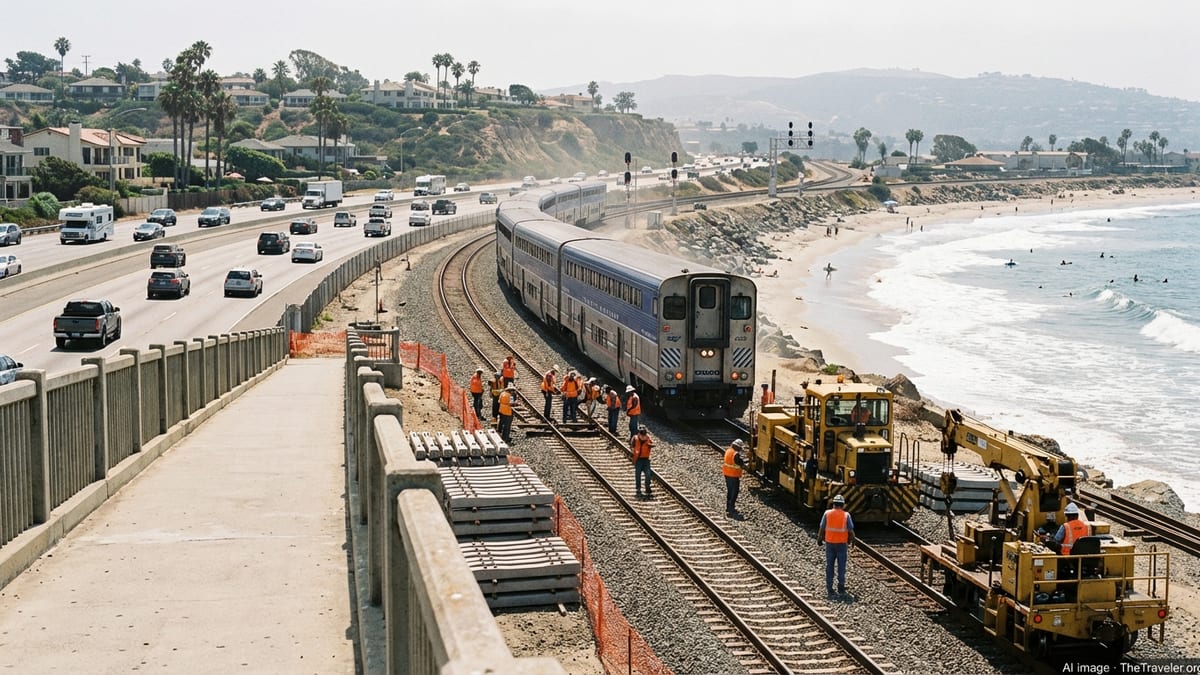
Red alerts and record temperatures hit rail services
The Met Office has issued a red extreme heat warning for parts of central, southern and southeastern England, with forecasters indicating that temperatures could climb towards the high 30s Celsius and potentially challenge existing June records. Publicly available information points to several regions facing a two to three day spell in which maximum temperatures are expected to exceed 37 degrees, with very warm nights offering little relief.
The UK Health Security Agency has also published red heat health alerts, reflecting concerns that the current heatwave poses a risk to life, even for otherwise healthy people. Guidance notes that the combination of high daytime temperatures, elevated humidity and warm nights can place severe strain on transport, power and other infrastructure, alongside direct impacts on health.
Within this context, national railway coordination bodies have advised operators across England and Wales to prepare for significant disruption. According to recent coverage of the developing situation, rail companies are being encouraged to scale back services, impose speed restrictions and communicate clearly with passengers about the risks of travelling during the hottest periods of the week.
As one of the principal commuter operators into London, Southeastern is among the companies most exposed to the conditions in the red warning zone. Its routes serving Kent, East Sussex and south-east London run through some of the areas expected to experience the most intense heat.
Southeastern urges essential travel only
In line with national guidance, Southeastern has updated its passenger information channels to advise customers to travel only if their journey is absolutely necessary on the worst affected days of the heatwave. The operator is drawing attention to the potential for severe disruption, including cancellations, emergency speed restrictions and last-minute alterations as temperatures peak.
Publicly available travel advice states that passengers who do need to travel should check journey planners repeatedly on the day of departure, rather than relying on earlier assumptions. Timetables are being amended at short notice and individual services may be withdrawn if track temperatures or overhead line equipment are deemed unsafe.
Southeastern’s stance reflects a broader message being shared by rail operators in the region. Other networks have already confirmed reduced timetables and are warning that trains that do run are likely to be busier, slower and more prone to delays. Reports indicate that the intention is to run fewer but more resilient services, in an attempt to avoid sudden breakdowns during the hottest part of the day.
For commuters and leisure travellers in the South East, the call to restrict journeys to essential trips marks a notable shift from normal summer operations. It underlines the extent to which extreme temperatures are now a key operational risk for the UK’s largely Victorian-era rail infrastructure.
Why extreme heat is so disruptive to the railway
Engineering guidance shared by rail infrastructure managers explains that steel rails can be significantly hotter than the surrounding air, often rising 15 to 20 degrees above the recorded temperature. During a heatwave, this can push rail temperatures into ranges where track buckling becomes a realistic possibility, especially on older sections of line or where maintenance is already planned.
To reduce the risk, network controllers impose speed restrictions so that passing trains exert less lateral force on the rails. While this approach helps protect safety, it also lengthens journey times and constrains capacity, as fewer trains can pass through critical junctions and bottlenecks.
Overhead power lines and third-rail systems can also suffer in sustained extreme heat. High temperatures may cause wires to sag, leading to an increased risk of them being struck by trains, or trigger faults in substations and trackside equipment. Air conditioning systems on trains can struggle when carriages are full and the ambient temperature is close to or above their design limits.
These factors combine to make timetable planning during a heatwave particularly challenging. With the present hot spell following an already warm spring, ground and track temperatures are starting from a higher baseline, raising the likelihood of cumulative impacts on the network over several successive days.
Passenger safety and practical travel advice
Public health and transport guidance issued for the current heatwave stresses that anyone who must travel should plan ahead carefully. Passengers are being encouraged to carry sufficient water, wear light clothing, use sunscreen where appropriate and allow additional time to complete their journeys in case of disruption.
Information shared by health agencies highlights the symptoms of heat exhaustion and heatstroke, including dizziness, headache, nausea and confusion. The advice stresses the importance of moving to a cooler place, hydrating and seeking medical assistance if symptoms do not improve. Travellers caught in crowded or stationary trains may be particularly vulnerable if ventilation is poor or air conditioning fails.
Southeastern and other operators are directing customers to use official journey planners and operator-specific channels on the day of travel, rather than relying on printed timetables. If services are severely affected, passengers may be able to defer trips or use tickets on alternative days, in line with each company’s temporary arrangements for extreme weather.
For those who can avoid travelling, remote working, rescheduling meetings or postponing non-essential trips are being presented as the safest options until the most intense phase of the heat subsides and the red warnings are lifted.
Climate trends and pressure for rail adaptation
The present heatwave comes after a sequence of unusually warm seasons in the UK, including what official climate summaries have described as record or near-record springs and summers. Long-term assessments indicate that episodes of extreme heat are becoming more frequent, more intense and longer lasting, increasing the strain on transport networks built for a cooler climate.
Rail unions, passenger groups and industry commentators have been using recent hot spells to highlight the need for accelerated investment in climate resilience. Proposals commonly mentioned in public discussion include upgraded track components designed for higher temperatures, improved overhead line engineering, more robust air conditioning on rolling stock and better shading at stations.
Policy debates around rail modernisation are likely to sharpen as disruptive weather events become more common. The latest red heat warnings and associated travel restrictions are being cited as further evidence that adapting the network to a warming climate is no longer a theoretical concern but a day-to-day operational necessity.
For now, Southeastern’s request that customers travel only when absolutely necessary underscores how profoundly the current heatwave is reshaping movement across London and the South East. As temperatures climb, the operator and its passengers face another test of how well the region’s railways can cope with conditions that were once considered exceptional but are increasingly part of the summer landscape.