


More news on this day
Southwest Airlines is rolling out a complimentary wine perk on select U.S. routes at the same time it raises checked baggage fees again, creating a mixed picture for travelers weighing costs against in-flight comfort.
Get the latest news straight to your inbox!
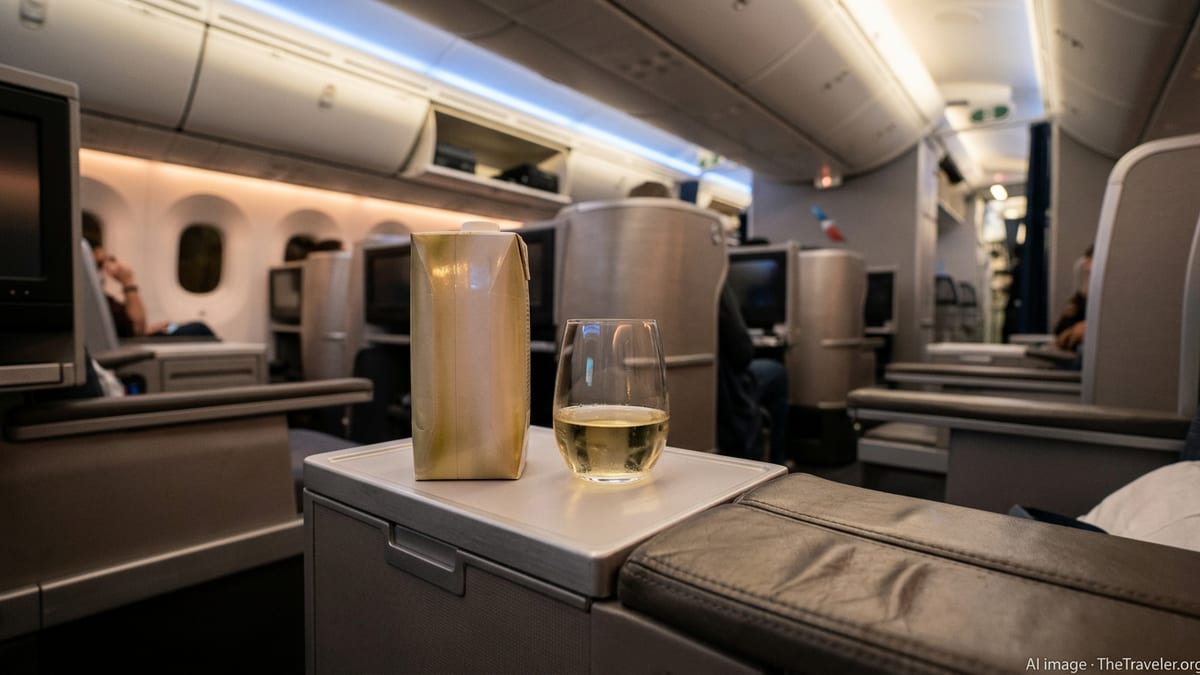
Free Wine Perk Targets Select Routes and Cabins
Recent industry coverage indicates that Southwest is testing a new complimentary wine offer on a limited number of domestic routes, with the benefit tied to specific fare types and elite status tiers. The move aligns Southwest more closely with full-service rivals that use free alcoholic beverages as a differentiator in certain cabins while continuing to operate largely as a low-cost carrier.
Early details suggest that complimentary wine is being provided primarily on longer domestic flights and higher fare bundles, including select Business Select and Anytime tickets, as well as for some Rapid Rewards elite members. On most other tickets, alcoholic beverages remain available for purchase in keeping with Southwest’s existing buy-on-board model.
The trial is understood to focus on standard single-serve bottles of red and white wine, with options varying by route and availability. Other alcoholic drinks, such as beer and spirits, are not broadly included in the complimentary offer and are still typically sold separately.
Public information indicates that Southwest is using the wine perk as a way to add perceived value for higher-spending customers while it adjusts its broader pricing model. The airline has been reworking fare bundles, add-ons, and onboard services since it moved away from the long-standing practice of offering two free checked bags to most passengers.
Checked Baggage Fees Rise Again In 2026
The wine rollout comes as Southwest raises checked baggage fees for the second time in less than a year. For tickets booked on or after April 9, 2026, widely cited fare information shows that the fee for a first checked bag on most routes has increased by 10 dollars to approximately 45 dollars, with the second checked bag now around 55 dollars.
Reports from financial and travel outlets note that the hike follows the initial introduction of checked bag charges in 2025, when Southwest ended its “bags fly free” policy for the majority of passengers and set fees at roughly 35 dollars for a first bag and 45 dollars for a second bag. The latest rise reflects both higher operating costs and a broader industry trend of using ancillary fees as a key revenue stream.
Some passengers remain exempt from the new charges. Publicly available policy summaries show that Rapid Rewards A List Preferred members and travelers booked in premium Business Select cabins generally continue to receive two free checked bags, while certain other elite members and co branded credit card holders may qualify for at least one free checked bag. Active duty military personnel also appear to retain more generous baggage allowances on many itineraries.
For most leisure travelers, however, the practical effect is a higher baseline cost to check luggage compared with 2025. The third checked bag fee and overweight or oversize charges remain significantly higher than the first and second bag fees, making it more expensive to travel with multiple or heavy suitcases.
Why Southwest Is Balancing Perks With Higher Fees
Analysts tracking U.S. airlines say that Southwest’s evolving fee structure is driven largely by rising fuel and labor costs combined with competitive pressure on base fares. Public earnings commentary from the carrier shows that shifting from an all inclusive baggage model to a paid structure is intended to generate hundreds of millions of dollars in additional annual revenue.
At the same time, Southwest has to manage the risk of alienating customers who long chose the airline specifically to avoid bag fees. The limited free wine offer on select routes can be seen as part of a broader effort to preserve an element of hospitality and value, particularly for frequent flyers and higher yielding customers who are most sensitive to changes in perceived service quality.
Industry comparisons highlight that major competitors such as Delta, United, and American have also raised checked baggage fees in 2026, pushing first bag prices on many domestic routes to around 45 dollars. That context may give Southwest some cover to adjust its own fees, even as it experiments with soft benefits like complimentary drinks to maintain brand appeal.
Travel commentators note that the airline is in the middle of a wider transformation that includes assigned seating, basic economy style fares, and a more segmented product. The combination of higher bag fees and selective free wine is another sign that Southwest is moving closer to the broader U.S. network carrier model, where optional extras and tiered perks play a central role.
How Travelers Can Qualify For Free Wine And Minimize Bag Costs
Because the complimentary wine offer is not systemwide, travelers need to pay close attention to the details of their specific flight and fare. According to current public descriptions, the perk is most likely to appear on mid to long haul domestic routes under a test schedule, and is often tied to premium fare types or frequent flyer status. Passengers on shorter hops and those booking the lowest priced basic style fares are less likely to see free alcoholic beverages included.
Passengers interested in the wine perk should review the inclusions listed for their fare bundle during booking and in the manage trip section of Southwest’s digital channels. If the itinerary references complimentary alcoholic beverages or enhanced onboard service for a given cabin or status, that is where the free wine is most likely to be offered. In the absence of explicit mention, travelers should expect standard buy on board pricing.
On the baggage side, customers looking to manage costs have several options. Some co branded Southwest credit cards continue to provide at least one free checked bag for the primary cardholder, and in some cases for companions on the same reservation. Elite status within the Rapid Rewards program can also restore one or two complimentary checked bags, effectively offsetting the latest fee increases for frequent flyers.
For those without status or a qualifying card, the most direct way to avoid higher bag charges is to travel with only a carry on and personal item within the airline’s size limits. Booking before key fee increase dates can also lock in lower baggage pricing for future trips, as Southwest generally applies the fee schedule in effect at the time of ticket purchase or voluntary change, rather than on the travel date.
What This Means For Southwest’s Position In The U.S. Market
The simultaneous introduction of a free wine perk on select routes and a hike in checked baggage fees underscores how sharply Southwest’s value proposition has shifted since its two bags included era. Where the airline once distinguished itself by absorbing baggage costs for nearly all passengers, it is now adjusting toward a model in which optional add ons and targeted perks are more tightly aligned with fare level and loyalty.
Travel industry reporting suggests that many passengers are reevaluating how Southwest compares with legacy airlines when total trip costs are considered. With base fares, bag fees, and ancillary charges converging across carriers, route network, scheduling, and service touches such as free drinks in certain cabins are becoming more important variables in choosing an airline.
Southwest’s leadership has signaled through public statements and financial disclosures that it intends to keep refining products and pricing in 2026 as it responds to economic conditions and competitive dynamics. The current pairing of new charges for checked baggage with selective complimentary wine is likely an early step in a longer process of reshaping the brand’s offering for the next phase of the U.S. aviation market.
For travelers, the key takeaway is that Southwest is no longer the default choice for avoiding luggage fees, but it may still offer strong value on certain routes and for specific customer segments. Monitoring how perks such as free wine and loyalty benefits evolve in the coming months will be essential for anyone trying to get the most from the airline under its new structure.