


More news on this day
Southwest Airlines is expanding its growing web of international partnerships by adding Japan’s All Nippon Airways as its latest Asian partner, widening options for travelers connecting between the carrier’s U.S. network and long-haul routes across the Pacific and beyond.
Get the latest news straight to your inbox!
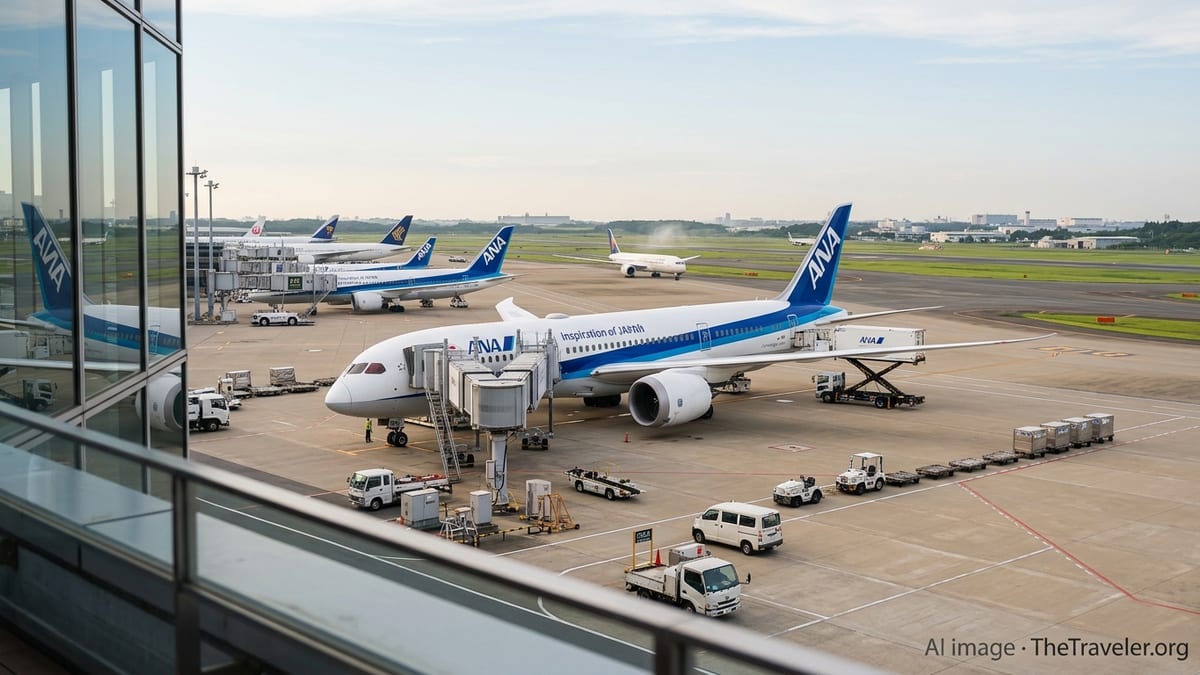
New interline deal links Southwest to ANA’s global network
Publicly available information on Southwest’s partnership page indicates that All Nippon Airways, commonly known as ANA, is the newest airline to join the U.S. carrier’s roster of partners as of March 2026. The agreement is structured as an interline arrangement, similar to Southwest’s existing partnerships with China Airlines and EVA Air, rather than a full codeshare alliance.
Under an interline model, travelers can purchase a single itinerary that includes flights operated by both airlines, with baggage checked through to the final destination and coordinated minimum connection times. Reports indicate that ANA customers can now link long-haul services to and from Japan and other international markets with Southwest-operated domestic segments at selected U.S. gateways.
ANA’s global reach gives Southwest-connected customers access to destinations across Asia, Oceania, India and Europe. In practice, that means travelers in U.S. cities served only by Southwest can use the carrier to reach major coastal hubs and then connect onto ANA flights for onward journeys to Tokyo and a broad regional network.
The move represents a significant step for Southwest, which historically concentrated on point-to-point domestic flying and limited near‑international routes. Recent strategic updates from the airline have repeatedly highlighted global partnerships as a key pillar for unlocking new markets without adding long‑haul aircraft to its fleet.
Building on earlier Asia links with China Airlines and EVA Air
The ANA tie-up follows a series of Asia-focused partnerships that began with China Airlines, announced in mid-2025 and launched for travel in January 2026. Coverage from travel industry outlets describes that deal as Southwest’s first major bridge into Asia, enabling single-ticket itineraries that combine Southwest’s U.S. domestic legs with China Airlines’ transpacific services via several West Coast gateways.
Later in 2025, EVA Air became another interline partner, further strengthening connectivity through Taipei. Analysis in consumer travel media notes that EVA’s network adds extensive links across East and Southeast Asia as well as to Oceania, effectively layering on more options for travelers whose journeys begin in Southwest-focused U.S. markets but end in cities like Bangkok, Hong Kong or Sydney.
With ANA now listed as the latest partner, Southwest has assembled a trio of Asia-based interline relationships centered on major hubs in Taiwan and Japan. Observers point out that this cluster of alliances positions the airline as an important feeder for inbound and outbound transpacific traffic even though it does not operate its own widebody aircraft.
Industry commentary suggests that these developments are also part of a broader response to competitive pressure from U.S. rivals that already participate in global alliances. While Southwest has not joined one of the three major alliances, its growing interline portfolio allows it to offer a simpler booking and baggage experience on many long-haul trips that previously required separate tickets and self‑connections.
What the partnership means for U.S. travelers
For travelers, the ANA partnership primarily affects how journeys are booked and managed rather than adding new Southwest-operated destinations overnight. Published guidance on interline travel with Southwest indicates that tickets combining partner and Southwest flights are generally sold through the partner airline’s channels and affiliated travel agencies, not through Southwest’s own website.
That means customers planning trips from U.S. cities on Southwest to Asia with ANA will likely begin by shopping on ANA’s site or via travel agents, selecting a single itinerary that includes both carriers. Once at the airport, bags can typically be checked through from the origin on Southwest to the final destination served by ANA, reducing the need to recheck luggage during a U.S. connection.
Travel rewards are evolving more slowly. Southwest’s support documentation notes that Rapid Rewards members can earn points and qualifying activity on Southwest-operated portions of partner itineraries when they add their frequent flyer number to a booking, but full cross-program redemptions and elite-status benefits with partner airlines are still limited. Recent investor materials from the airline have signaled that deeper loyalty integration and the ability to sell partner flights through Southwest’s own channels are longer-term goals.
Even with these limitations, travel advisors see the interline approach as a meaningful convenience upgrade for leisure and business travelers who favor Southwest’s domestic fares and schedules but need reliable connections to Asia. The ability to travel on one ticket with coordinated protection during irregular operations is often cited as a key advantage over separate, self‑booked connections.
Strategic pivot toward partnerships and global connectivity
Southwest’s embrace of interline partners reflects a notable strategic shift. Investor presentations and regulatory filings in recent years have emphasized international partnerships as a cost‑effective way to extend the carrier’s reach following several years of operational and financial challenges, including high-profile disruptions and rising costs.
Instead of investing in new aircraft types and long-haul crews, the airline is focusing on optimizing its dense domestic network to serve as a feeder for foreign carriers. Partnerships with Icelandair and Turkish Airlines cover transatlantic flows, while Condor and other carriers add seasonal and leisure-focused connectivity. The addition of multiple Asia-based partners completes a three-continent footprint that could be expanded further as systems and processes mature.
Travel industry analysts observe that Southwest’s move toward interline agreements coincides with other structural changes, including the introduction of assigned seating from January 2026 and refinements to fare bundles. These changes require substantial upgrades to the airline’s reservations and distribution technology, which in turn make it easier to support complex multi-carrier itineraries.
With ANA now in the mix, Southwest’s Asia strategy appears to be consolidating around close collaboration with a handful of large, full-service carriers that can handle long-haul flying while Southwest concentrates on its core strength of high-frequency domestic service. Market watchers indicate that the success of this approach will depend on how quickly Southwest can add selling capability in its own channels and deepen loyalty links, turning casual connecting traffic into repeat business for both sides.
Competitive implications across the transpacific market
The expanded Southwest–ANA connectivity adds a new wrinkle to an already competitive transpacific landscape dominated by joint ventures anchored in the major alliances. ANA is a core member of Star Alliance, and while the interline arrangement with Southwest does not alter existing joint ventures with other U.S. carriers, it does introduce a fresh flow of connecting passengers from secondary and mid-size U.S. cities where Southwest holds a strong presence.
Industry coverage suggests that this could marginally shift traffic patterns, particularly from markets where alternatives require backtracking or less convenient domestic connections on other airlines. For ANA, incremental feed from Southwest may help support capacity on routes not only to Tokyo but also to onward destinations across Asia and Oceania.
For U.S. travelers, the practical effect will likely be more itinerary options on price-comparison tools and agency platforms, as ANA-sold tickets that include Southwest segments appear alongside itineraries tied to other U.S. carriers. Over time, as additional partners are added and more connection points come online, Southwest’s domestic network could function as a de facto fourth option for connecting to Asia, sitting alongside the three alliance-focused U.S. majors.
While questions remain about how far Southwest will go in integrating its systems and loyalty program with long-haul partners, the decision to add another Asian carrier in ANA signals a sustained commitment to a partnership-driven global strategy. Travelers looking to pair Southwest’s domestic footprint with international journeys to Japan and beyond will likely see the benefits first as smoother connections, and later in expanded booking and rewards options as the collaboration matures.