


More news on this day
Air travel across Asia has been hit by another wave of severe disruption, with 318 flights cancelled and at least 3,649 delayed in a single 24 hour period, snarling operations at key hubs including Guangzhou, New Delhi, Dubai, Jakarta and Bangkok and forcing thousands of passengers on China Eastern, IndiGo, AirAsia, Emirates, Qatar Airways and Batik Air to rework their journeys.
Get the latest news straight to your inbox!
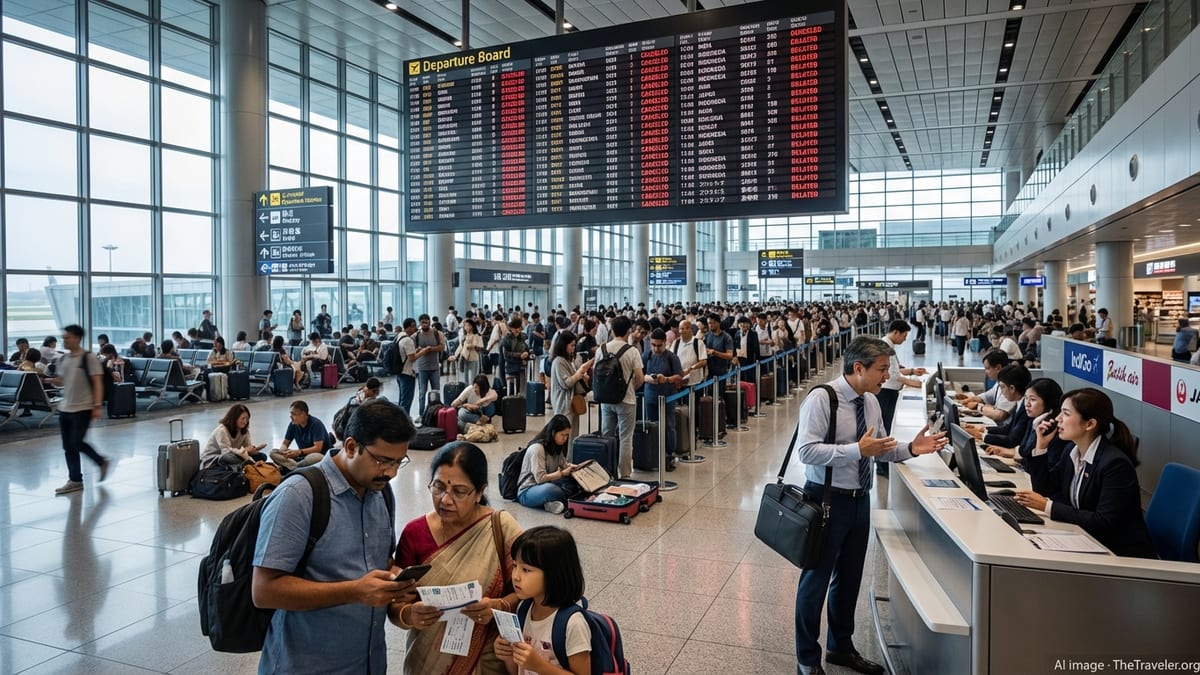
Regional Gridlock From China to the Gulf
Publicly available flight tracking snapshots and aviation analyses show a dense band of disruption stretching from southern China through South and Southeast Asia to the Gulf, with Guangzhou, Delhi, Jakarta, Bangkok and Dubai among the hardest hit hubs. Recent tallies of cancellations and delays across the region already indicated several days this season when more than 2,800 flights were delayed and over 400 cancelled in Asia alone, and the latest figures of 318 cancellations and 3,649 delays fit into that escalating pattern of strain on airport and airline operations.
At Guangzhou Baiyun International Airport, earlier data highlighted triple digit delay counts on busy days as China Eastern, Air China and other Chinese carriers struggled to absorb schedule volatility linked to weather, congestion and airspace constraints. Similar pressure has been reported at Shanghai and other mainland hubs, creating ripple effects across domestic and international connections that feed into Southeast Asian and Gulf networks.
Delhi’s Indira Gandhi International Airport has also featured repeatedly in recent disruption reports, with Indian outlets describing days of heavy delays and targeted cancellations on IndiGo and other major carriers. With India functioning as both an origin and transit market for large volumes of traffic bound for the Gulf, Southeast Asia and Europe, even modest operational issues in Delhi or Mumbai can quickly push knock-on delays into hundreds of flights.
In the Gulf, Dubai has remained a focal point of schedule instability. Aviation roundups tracking Middle East airspace restrictions described large spikes in delays and cancellations at Dubai earlier in the year, alongside curtailed operations at Doha and Abu Dhabi. As Emirates and Qatar Airways work to re-time or reroute services around restricted corridors, downstream disruption for passengers connecting into Asia has become a recurring feature of the current travel season.
Knock-on Effects for Major Carriers
For airlines, the latest figures translate into another difficult operational day layered on top of months of elevated disruption. China Eastern has appeared prominently in several recent regional disruption tallies, including days when Chinese hubs logged some of the highest delay volumes in Asia. The carrier’s extensive domestic and international network means a cluster of cancellations in Guangzhou, Shanghai or Chengdu can quickly cascade into missed rotations in Thailand, Indonesia and beyond.
IndiGo, India’s largest airline by market share, has been under particular scrutiny since its widely reported scheduling crisis in late 2025, when it cancelled thousands of flights over roughly ten days after struggling to adapt to stricter crew duty-time rules. While the current wave of 318 cancellations and 3,649 delays cuts across many operators and countries, any renewed concentration of disruption at Delhi or other Indian hubs inevitably raises questions about staffing, aircraft utilization and schedule resilience for the carrier and its competitors.
Low cost groups such as AirAsia and Indonesia’s Batik Air are also heavily exposed. Earlier coverage of weather-related disruption in Southeast Asia described clusters of delays and cancellations on high-frequency routes linking Malaysia and Indonesia to secondary cities in China, as well as onward connections into Thailand. With leaner turnarounds and dense point-to-point networks, these airlines can find it harder to absorb extended holding, diversions or last-minute airspace changes without triggering widespread knock-on delays.
Gulf giants Emirates and Qatar Airways, meanwhile, sit at the crossroads of multiple disrupted corridors. Public advisories and travel-industry briefings from recent months outlined how closures and restrictions in parts of West Asia prompted both carriers to suspend or re-time numerous flights, leading to congested rebooking queues and multiday delays for some passengers. The latest figures for Asia’s cancellations and delays suggest that even as schedules are gradually rebuilt, those networks remain vulnerable to further shocks.
Airspace Restrictions, Weather and Congestion Converge
The current disruption is not being driven by a single cause. Aviation analyses and regional news coverage point to a combination of airspace restrictions related to ongoing tensions in West Asia, adverse seasonal weather in parts of China and Southeast Asia, and structural congestion at several fast-growing hubs. Together, these factors have periodically pushed daily cancellation and delay totals across Asia to levels well above typical seasonal norms.
Middle East airspace closures and route adjustments have been an especially persistent trigger. Reports tracking the impact of those restrictions describe earlier episodes when more than 1,400 flights in the wider Asia Pacific region were delayed in a single day, and at least 462 flights were cancelled and over 3,600 delayed across Japan, China, Thailand, India and Qatar on another. When long-haul aircraft are forced to reroute or hold, they arrive late into Asian hubs like Bangkok, Jakarta and Shanghai, compressing turnaround windows and leaving less margin for local weather or airport issues.
At the same time, severe thunderstorms and seasonal weather in southern China, Malaysia and Indonesia have periodically prompted additional cancellations and diversions, particularly for carriers such as China Eastern, AirAsia and Batik Air. Coverage focused on those events has highlighted how even a relatively small number of outright cancellations can crowd terminals and overwhelm customer-service facilities when combined with hundreds of rolling delays.
Underlying airport capacity constraints add another layer of fragility. Rapidly recovering demand has pushed some hubs close to or beyond pre-crisis traffic levels, while infrastructure and staffing have not always kept pace. Analyses of recent disruption days note that as departure banks grow denser, minor schedule perturbations can rapidly snowball into large-scale delay statistics like the 3,649 late departures and arrivals now recorded across Asia.
What Travelers Are Facing on the Ground
For travelers, the statistics translate into crowded terminals, long queues at airline counters and missed connections across a swath of popular routes. Social media posts and traveler forums over recent months have described passengers sleeping at gates in Bangkok and Jakarta, lining up for rebooking in Dubai and Doha, and racing between terminals in Delhi and Guangzhou as departure boards fill with delayed and cancelled flights.
Passengers on China Eastern and other Chinese carriers have reported long waits for both domestic and onward international options when early-morning cancellations at Guangzhou or Shanghai wipe out entire waves of departures. In India, travelers on IndiGo and rival airlines have faced last-minute schedule changes on services linking Delhi and Mumbai to Gulf and Southeast Asian destinations, sometimes needing to accept overnight layovers when onward seats are fully booked.
In the Gulf, Emirates and Qatar Airways customers connecting between Europe, Africa and Asia have encountered tightened minimum connection times and instances of multi-hour or multi-day rebooking when airspace restrictions or congestion force schedule restructuring. Reports indicate that both full service and low cost carriers are frequently urging passengers to monitor flight status closely and to allow extra time between self-booked segments, particularly when itineraries combine separate tickets across different airlines.
With thousands of travelers affected on a single heavy disruption day, travel-insurance queries and questions about compensation have also increased. Consumer advisories published in recent weeks emphasize that eligibility for reimbursements or hotel coverage can vary widely depending on the cause of disruption, whether the flight is domestic or international, and the specific policies of the carrier operating the affected segment.
How Airlines and Airports Are Responding
Airlines and airport operators across the region are continuing to adjust schedules, redeploy aircraft and tweak routing to cope with the volatile environment. Public notices from carriers including IndiGo, Emirates, Qatar Airways and various Southeast Asian operators have highlighted measures such as flexible rebooking options, expanded fee waivers on certain routes and temporary capacity cuts on the most affected city pairs.
Some hubs are also refining operational playbooks for heavy-disruption days. Reports from Chinese and Southeast Asian airports suggest increased reliance on real-time data from flight-tracking platforms to prioritize runway access, optimize gate assignments and reduce ground delays when weather or upstream congestion hits. In India and Indonesia, recent coverage has noted efforts to streamline security and immigration processing at peak times to prevent bottlenecks from compounding airside schedule issues.
Yet the scale of the current disruption numbers underscores the limits of such mitigation strategies when several stress factors converge. As long as airspace restrictions in parts of West Asia continue, and seasonal weather systems sweep across key chokepoints in China and Southeast Asia, Asia’s interconnected network will remain prone to sudden spikes in cancellations and multi-thousand-flight delay totals.
For now, publicly available data and industry monitoring indicate that travelers planning to pass through Guangzhou, New Delhi, Dubai, Jakarta, Bangkok and other major regional hubs should prepare for a heightened risk of last-minute changes. The tally of 318 cancelled flights and 3,649 delays across Asia’s skies in a single day underscores how quickly conditions can shift for airlines and passengers alike.