


More news on this day
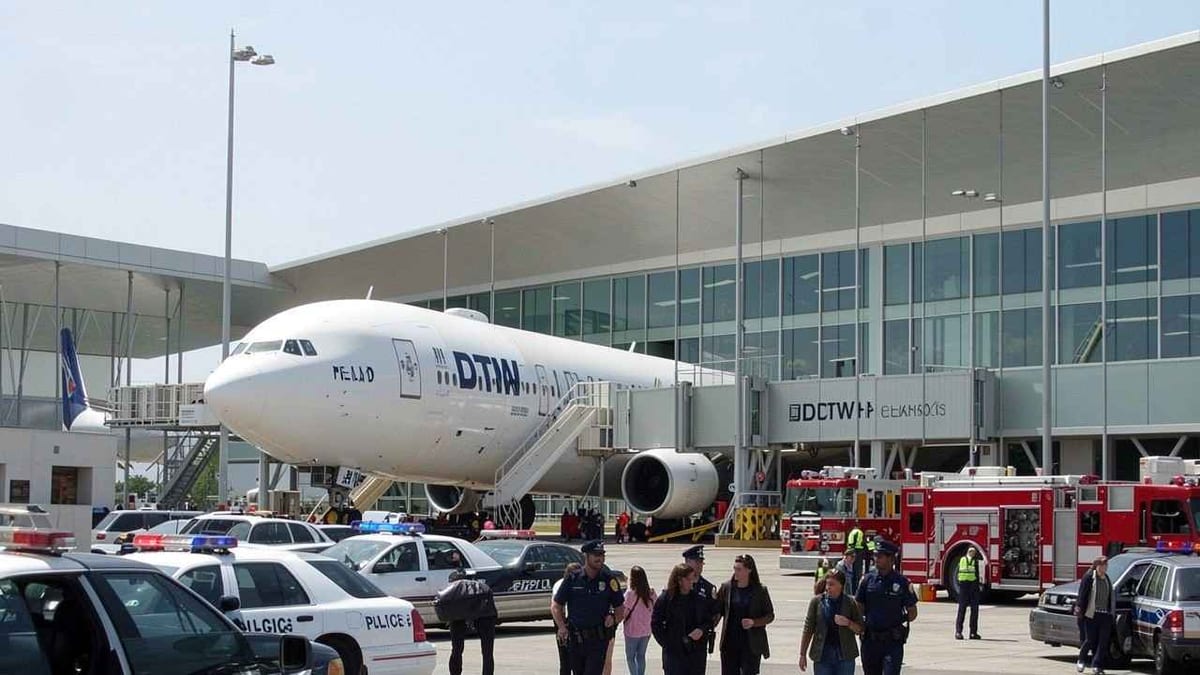
A Southwest Airlines flight operating as SWA1627 between Denver and Milwaukee diverted to Omaha’s Eppley Airfield, briefly interrupting the carrier’s busy Rocky Mountain to Great Lakes corridor and drawing attention to how and why mid route changes occur.
Get the latest news straight to your inbox!
What Is Known About Southwest Flight SWA1627
Public flight tracking data lists Southwest flight WN1627, also displayed as SWA1627, as a regular domestic service between Denver International Airport and Milwaukee Mitchell International Airport. The route is typically flown by Boeing 737 variants in the 800 and MAX families, including aircraft in the 737 8H4 configuration used widely across the airline’s network.
On the day of the diversion, tracking records show the aircraft departing Denver as scheduled and then altering course before reaching Wisconsin, instead descending toward Omaha’s Eppley Airfield. Available information points to a diversion rather than a simple routing change, since the flight was originally scheduled and sold as a nonstop Denver to Milwaukee service.
At the time of writing, publicly available feeds from airport and flight status platforms do not indicate any onboard emergency associated with this particular flight. In the absence of official detail on the underlying cause, the diversion appears consistent with the kind of precautionary or operationally driven changes that occur periodically on domestic routes.
Eppley Airfield, serving the Omaha metropolitan area, functions as a regional node for multiple U.S. carriers, including Southwest. The airport’s published materials highlight a growing schedule of departures and relatively short security wait times, making it a logical alternate for flights crossing the central United States when conditions disrupt their original plans.
Why an En Route Diversion Can Happen
Diversions of domestic U.S. flights are most frequently linked to weather conditions, airport traffic constraints, or technical and operational issues. Aviation regulators and industry guidance emphasize that crews are expected to prioritize safety margins around thunderstorms, low visibility, high winds, or runway contamination, even when those decisions create delays and unplanned stops for passengers.
Denver is one of Southwest’s busiest operational airports, with high volumes of daily departures and arrivals. According to airline and industry analyses of the carrier’s network, Denver functions as a major base where disruptions can quickly ripple outward to other cities, including Midwestern destinations such as Milwaukee. Storm activity or ground congestion at a large node can therefore make a mid route diversion an efficient way to manage fuel reserves, sequencing into busy airspace, or crew duty time limits.
Weather along the route corridor between Colorado, Nebraska, Iowa, and Wisconsin can also be highly variable in late spring and summer, with fast developing storm cells, turbulence, and crosswinds. When conditions deteriorate near an intended destination, crews may decide to land at a suitable alternate such as Omaha to wait out a weather system, take on fuel, or avoid prolonged holding patterns in the air.
In other situations, diversions can reflect mechanical concerns or passenger medical needs, although specific causes for individual flights may not be publicly disclosed. Industry case studies show that airlines sometimes divert to airports where they already maintain ground staff, maintenance capability, or onward flight options, which helps explain why a Denver to Milwaukee service would route passengers to Eppley Airfield.
What the Diversion Means for Affected Travelers
For travelers on SWA1627, the diversion to Omaha likely translated into an extended journey and revised arrival time in Milwaukee. Once on the ground at an alternate airport, airlines generally work through a combination of waiting for conditions to improve, dispatching the same aircraft onward, or rerouting passengers through other flights in the network.
Southwest’s customer policies, as summarized in independent travel guides and consumer coverage, distinguish between disruptions within the airline’s control and those considered uncontrollable, such as severe weather or air traffic control restrictions. In uncontrollable scenarios, carriers typically focus on rebooking and transportation to the ticketed destination instead of offering broad financial compensation, although specific outcomes can vary by case and ticket type.
When diversions occur, travelers often face uncertainty over timing and connections. Passengers with tight onward plans from Milwaukee, including same day regional flights or ground transportation, may need to adjust itineraries while still in the air or during the unscheduled stop. Many airline and airport advisories recommend monitoring mobile apps and notification systems closely whenever severe weather or national airspace constraints affect major hubs like Denver.
At Eppley Airfield, passengers from a diverted flight can usually expect access to standard terminal services, including food and restrooms, once deplaning is authorized. However, depending on how quickly a decision is made to continue the flight or swap aircraft, some travelers may spend only a short time in the terminal before reboarding, while others may face longer ground delays.
How Omaha’s Eppley Airfield Fits into the Route Network
Omaha’s Eppley Airfield occupies a strategic position for flights traveling between the Mountain West and the Midwest. Airport statistics and airline network summaries show that the field supports a mix of point to point services to major hubs and leisure destinations, offering flexibility as both an origin and an alternate landing site.
Recent Southwest network information lists Denver among the cities connected to Omaha, alongside a slate of other domestic destinations. This means the carrier already maintains an operational footprint at Eppley Airfield, which can simplify logistics during diversions by providing access to ground handling, fueling, and customer service support directly under the airline’s existing contracts.
The airport’s guidance to passengers emphasizes arriving early for departing flights and notes current construction and parking updates, reflecting its role as a growing regional gateway. For travelers diverted there from an en route flight, the same facilities that support scheduled operations can help absorb unexpected crowds, even when hundreds of additional passengers arrive without prior notice.
From a network perspective, selecting Omaha as a diversion point for a Denver to Milwaukee flight lines up with common airline practices of directing flights to geographically appropriate alternates that already appear on their route maps. This approach shortens repositioning times and increases the odds that passengers will be able to continue to their final destination on the same carrier rather than requiring complex interline arrangements.
What Future Passengers on SWA1627 Should Keep in Mind
Travelers booked on upcoming Southwest flights between Denver and Milwaukee, including those marketed as SWA1627, are unlikely to see permanent schedule changes solely because of a single diversion event. Published timetables and route planning tools continue to list multiple nonstop services on this corridor each week, typically using Boeing 737 aircraft comparable to the 737 8H4 that operated the diverted flight.
Nonetheless, airline schedule data and travel industry advice consistently stress that flight times and routings are subject to change, especially during seasons of unsettled weather. Passengers who rely on tightly timed connections, evening arrivals for events, or same day business obligations may benefit from booking earlier departures where possible or considering backup plans if storms are forecast for Denver or the upper Midwest.
Monitoring flight status on the day of travel remains one of the most practical steps passengers can take. Real time tracking through airline apps, airport boards, and independent flight data platforms can alert travelers to gate changes, ground stops, or airborne holding that may precede a diversion decision similar to the one affecting SWA1627.
While a mid route diversion can be stressful, industry statistics indicate that such events represent a small fraction of total flights and are typically undertaken as a conservative measure to preserve safety margins. For most travelers on the Denver to Milwaukee route, the experience will remain a straightforward two hour hop, with Omaha’s Eppley Airfield serving quietly in the background as one of several alternates that help keep the system resilient when conditions suddenly change.