


More news on this day
Zimbabwe has cleared the way for a multi‑billion euro light rail system in Harare, approving a project valued at about €3 billion that aims to overhaul commuting patterns in and around the capital and signal a new phase of large‑scale urban transport investment in Southern Africa.
Get the latest news straight to your inbox!
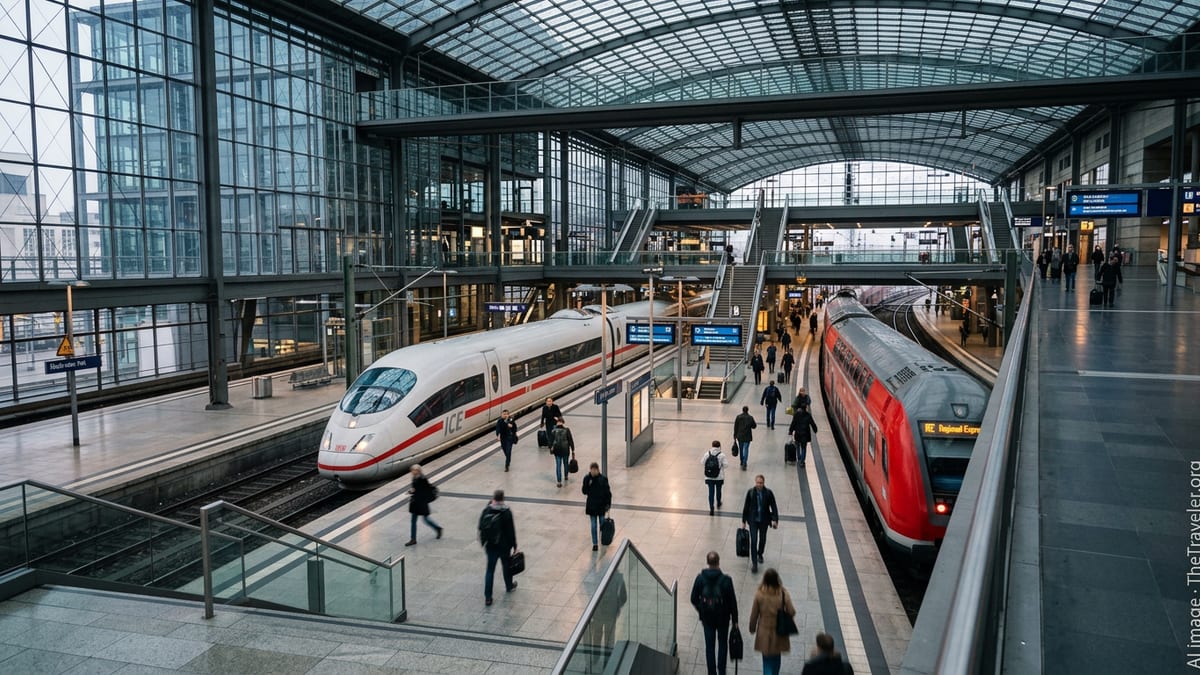
Green light for Harare’s largest urban transport investment in decades
Publicly available information indicates that the Harare Light Rail Project recently received formal approval from Zimbabwe’s investment authorities, including recognition as a strategic national scheme. The decision provides the regulatory backing required to begin detailed preparation on what is described as the country’s largest urban public transport initiative in many years.
The project is reported to carry an overall price tag equivalent to roughly 3 billion euros, positioning it among the more expensive light rail undertakings on the African continent. Early documentation describes a modern, electrically powered network intended to support both daily commuters and visitors, reflecting Harare’s role as a regional hub.
Designation as a high‑priority national project is expected to streamline permits and coordination between agencies. Available coverage suggests that this status also helps to unlock technical assistance and early‑stage finance from international partners, a crucial step before full construction funding can be assembled.
Network to link suburbs, airport and new administrative city
Concept plans describe a system radiating from Harare’s central business district to major residential and economic nodes. Proposed corridors include links to the fast‑growing satellite town of Chitungwiza, the Robert Gabriel Mugabe International Airport and the developing administrative and financial centre at Mount Hampden, often referred to as the “new city.”
By connecting dense suburbs directly with employment centres and the airport, planners aim to shift a significant share of trips from informal minibuses and private cars to rail. Publicly available studies on African urban rail corridors note that such radial networks can relieve severe congestion on arterial roads, particularly when paired with supportive bus services and pedestrian access.
The Harare alignment is expected to combine dedicated rights of way with grade‑separated crossings at key junctions, allowing trains to bypass clogged road intersections. Reports suggest the system will be designed to integrate with existing bus routes that can serve as feeders, creating a layered public transport network rather than a stand‑alone rail line.
Public–private partnership and role of development financiers
The light rail scheme is being structured as a public–private partnership, a model that has become increasingly common for large transport investments across Africa. Under this approach, the state retains strategic oversight while private partners take on roles in design, construction, operation and, in some cases, partial financing.
According to project summaries made public to date, the investor consortium is working to mobilise several million dollars in initial preparation funding, supported by technical assistance from multilateral lenders such as the African Development Bank. These early funds are typically used for feasibility refinement, environmental and social assessments, engineering design and transaction advisory work.
Urban rail research by international institutions highlights that robust preparation can significantly reduce the risk of cost overruns and demand shortfalls that have troubled some rail projects worldwide. For Harare, the preparatory phase will be critical in confirming ridership forecasts, refining station locations and sequencing construction in a financially viable manner.
Regional context: African cities turn to rail to tackle congestion
The Harare initiative places Zimbabwe among a growing group of African countries pursuing multi‑billion‑euro urban and suburban rail schemes. Existing or under‑construction systems in Addis Ababa, Lagos, Abidjan and Cairo illustrate a continental shift toward higher‑capacity, fixed‑guideway transit to keep pace with rapid urbanisation.
Recent examples include large metro and light rail lines financed through combinations of state budgets, export credit from Asian and European partners and loans from development banks. Analysts note that while the capital costs are substantial, these projects are increasingly seen as essential infrastructure for long‑term economic competitiveness, air‑quality improvement and climate objectives.
In this broader landscape, the Harare Light Rail Project stands out by targeting both traditional commuter flows and future growth corridors, such as the emerging new city at Mount Hampden. Observers of African urban development suggest that tying rail investment to planned satellite centres can shape land use, encourage higher‑density development and reduce future sprawl.
Opportunities and risks for travelers and residents
If delivered as envisioned, the Harare network could significantly shorten journey times between the capital’s core, its outlying suburbs and the international airport, improving reliability for local residents and visitors alike. For regional and international travelers, a rail link from the airport to central Harare would provide an alternative to congested road transfers and offer more predictable access to hotels, business districts and government offices.
However, international research on urban rail highlights persistent challenges, including the risk of construction delays, higher‑than‑expected costs and lower‑than‑forecast ridership. The success of Harare’s system is likely to depend on careful project governance, transparent contracting and fare policies that balance affordability with financial sustainability.
Local mobility advocates also point to the importance of integrating rail stations with safe walking and cycling routes, as well as reliable feeder buses, so that the benefits of the new infrastructure extend beyond those living directly along the alignment. As planning advances from concept to implementation, the Harare Light Rail Project will be closely watched as a test case for large‑scale, rail‑based urban mobility in Southern Africa.