


More news on this day
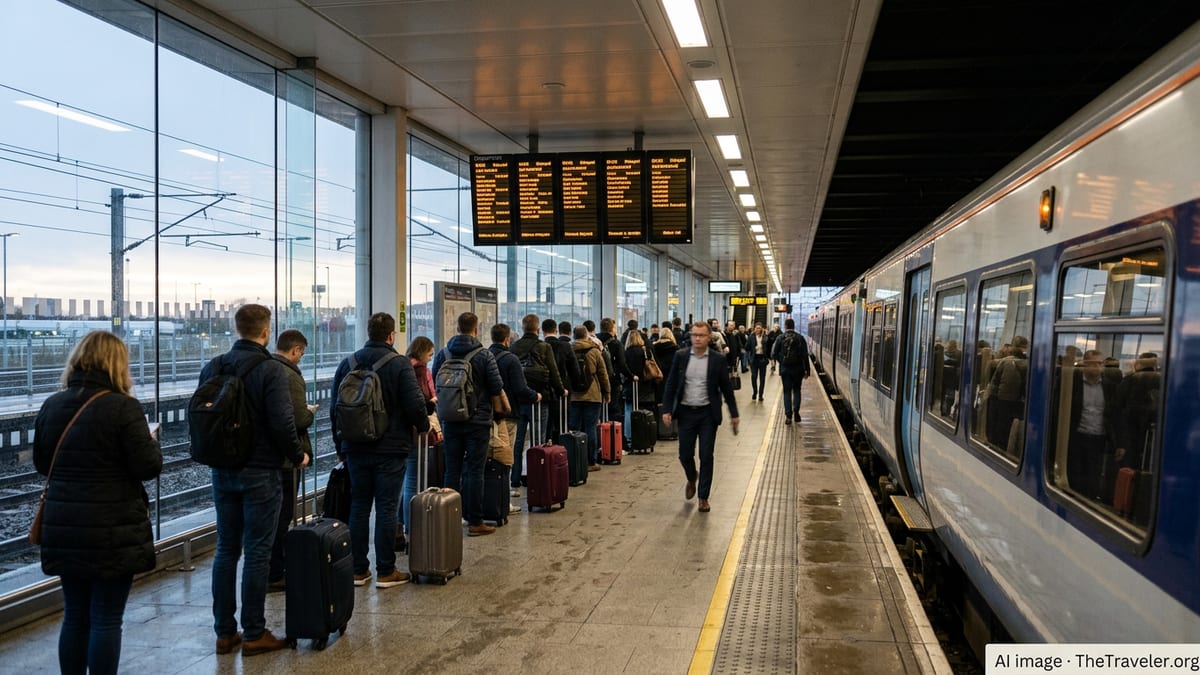
Rail passengers are facing days of disruption as operators introduce emergency timetable changes following a substation fire that disrupted power supplies on a busy rail corridor, prompting reduced services, diversions and extended journey times across the network.
Get the latest news straight to your inbox!
Power Failure Forces Emergency Service Cuts
According to published coverage from rail operators and infrastructure managers, the substation fire led to an immediate loss of power on one of the main electrified routes serving both commuter and long distance traffic. With signalling and traction power affected, control rooms were required to suspend or severely limit services through the affected section while engineers assessed damage to cables and switchgear.
In the hours after the incident, services were gradually reintroduced using a mix of diesel units, short-haul electric trains operating on remaining feeds, and diversions onto alternative routes where capacity allowed. However, the reduced availability of powered tracks meant that the normal timetable could not be sustained. Publicly available information shows that operators moved quickly to implement an emergency timetable, trimming peak frequencies and cancelling some off-peak trains to keep a skeleton service running.
Reports indicate that delays have rippled well beyond the immediate impact area. Train diagrams and crew schedules are tightly interlinked across modern rail networks, and the loss of a key power node has resulted in stock and staff being out of position. As a result, passengers on neighbouring lines have also encountered cancellations and shorter trains, particularly during the morning and evening peaks.
Revised Timetables and Rerouted Services
Rail timetables are being repeatedly updated as infrastructure specialists restore elements of the power system and operators test what can safely run through the corridor. Published journey planners and operator bulletins show a pattern of half-hourly services reduced to hourly, semi-fast trains converted into all-stops services, and some direct connections withdrawn in favour of change-at-hub routings.
On the busiest commuter flows, reports indicate that operators are prioritising core citybound trains at peak periods, with some branch services turning back short of the usual terminus to free up scarce paths. Longer-distance intercity services are being rerouted where possible over parallel lines, but these diversions can add substantial time to journeys and require trains to use platforms and junctions that are already close to capacity.
Replacement buses have been introduced on a limited number of sections where no powered rail route is currently available. However, road congestion around key interchanges and the difficulty of matching rail capacity with buses mean that these shuttles are only partly offsetting the reduction in train services. Travel advisories from operators consistently urge passengers to verify departure times on the day of travel and to consider postponing non-essential journeys during the most heavily affected periods.
Knock-on Effects for Commuters and Leisure Travel
The disruption comes at a time of strong seasonal demand, with leisure travellers, tourists and major events all contributing to high passenger volumes. Reports from transport commentators suggest that some morning peak services are departing full and standing from outer-suburban stations that would normally see spare capacity, while evening returns are experiencing heavy crowding as passengers wait for the less frequent trains.
Business travellers and long-distance passengers are also feeling the impact. Public journey data shows extended end-to-end times on routes that typically rely on dependable electric services through the affected substation area. Where diversions are possible, trains are often running via slower alignments or pausing for longer at intermediate stations to accommodate altered crossing movements and pathing margins.
Tourism boards and local media have begun advising visitors to build in additional time for onward rail connections from airports and intercity terminals. Missed onward connections are being reported where travellers have not checked for the latest timetable changes, particularly on evenings and weekends when frequencies are lower and alternatives less frequent.
Infrastructure Recovery and Safety Inspections
Infrastructure managers have initiated a phased inspection and repair programme at the damaged substation and along adjacent sections of line. Publicly available technical updates describe teams working to test feeder cables, replace damaged components and verify the integrity of signalling power before progressively re-energising sections of the network. Safety protocols require extensive checks before normal line speeds and full traffic volumes can resume.
In similar incidents documented in recent years, the recovery phase has often taken several days, with temporary speed restrictions remaining in place even after power is restored. Analysts note that the complexity of modern electrification and signalling systems means that apparently minor fire damage can have wide-ranging consequences, particularly where equipment rooms, cable routes and control systems are closely co-located.
Published guidance from rail safety bodies stresses that returning to the full timetable too quickly can risk further disruption if faults emerge under load. As a result, passengers are being warned that some of the interim timetable reductions and altered stopping patterns may remain in force for longer than the physical repair work itself, as controllers monitor performance and gradually reintroduce additional services.
What Passengers Should Do Before Travelling
Transport information services and journey planners are being updated repeatedly throughout the day, reflecting short-notice changes as trains are added, cancelled or rerouted. Travel advisories encourage passengers to check for updates immediately before departing for the station and again on arrival at the station, as screens and announcements may carry more recent information than printed timetables.
Rail operators are also reminding customers of standard disruption arrangements, including the acceptance of tickets on alternative routes and, where agreed between companies, on other modes of transport. Publicly available conditions of carriage typically allow passengers to claim refunds or compensation when trains are cancelled or significantly delayed, although the precise thresholds and processes vary between operators and jurisdictions.
For travellers planning multi-leg journeys, transport commentators recommend allowing additional transfer time between services, especially when connecting between long-distance and regional trains. In the current circumstances, even small delays can result in missed connections where margins are tight. Until the substation and associated infrastructure are fully restored and the regular timetable is reinstated, rail users are being advised to treat any journey through the affected corridor as subject to change.