


More news on this day
Spain is entering another record tourism year as geopolitical tensions in the Middle East, shifting airline routes and changing traveler risk perceptions combine to push more holidaymakers toward the Iberian sun.
Get the latest news straight to your inbox!
Record Numbers Cement Spain as Europe’s Standout Destination
Spain has consolidated its position as one of the world’s tourism powerhouses, with official figures showing a string of record seasons. Provisional data from Spain’s statistics institute indicated that the country welcomed around 93.8 million international visitors in 2024, surpassing pre-pandemic highs and outpacing much of the rest of Europe. Tourism now accounts for more than 12 percent of national output, reflecting how central the sector has become to the Spanish economy.
The upward curve did not stop there. Subsequent data for 2025 pointed to nearly 97 million foreign arrivals, confirming Spain as one of the globe’s most visited destinations and one of its top tourism earners. Industry analyses and national reports describe 2025 as the latest in a run of record-breaking years, with visitor spending also climbing sharply as travelers shift from budget trips toward higher-value experiences, boutique hotels and premium dining.
Within Europe, Spain is competing at the top of the tourism rankings with France and Italy, but recent growth patterns have set it apart. Research from European and Spanish institutions indicates that nights spent in Spanish tourist accommodation have grown faster than in several rival markets, driven by robust demand from the United Kingdom, Germany, France and an increasingly important United States market. The result is a perception among tour operators and travel analysts that Spain has become Europe’s most reliably “hot” destination, not only for its climate but also for volume, connectivity and resilience.
Several Spanish regions have emerged as clear winners from this surge. Catalonia, the Balearic Islands, the Canary Islands and Andalusia attract the majority of international visitors, according to national tourism data. Urban centers such as Barcelona, Madrid, Málaga and Valencia have benefited from city-break and cultural tourism, while coastal strips like the Costa del Sol and Costa Blanca remain magnets for sun-and-sea holidays that anchor charter programs and low-cost airline schedules.
Middle East Tensions Reroute Demand Across the Mediterranean
Spain’s exceptional run is unfolding against a backdrop of renewed instability in parts of the Middle East and Eastern Mediterranean, where conflict and security concerns are shaping travelers’ choices. Travel industry coverage suggests that tensions linked to conflicts around Israel and Gaza, as well as wider regional instability, have dampened demand for some destinations historically popular with European package tourists, including parts of Egypt and certain resort areas in Turkey.
Reports from major tour operators and trade publications describe a pattern of holidaymakers switching bookings away from destinations perceived as closer to conflict zones and toward Western Mediterranean alternatives. Spain, with its established mass-market infrastructure and reputation for political stability, has been cited as one of the main beneficiaries of this recalibrated demand, along with Italy and Greece. Booking and search data published by airlines and travel analytics firms indicate stronger interest in Spanish beach and island resorts for upcoming seasons, particularly from northern European travelers.
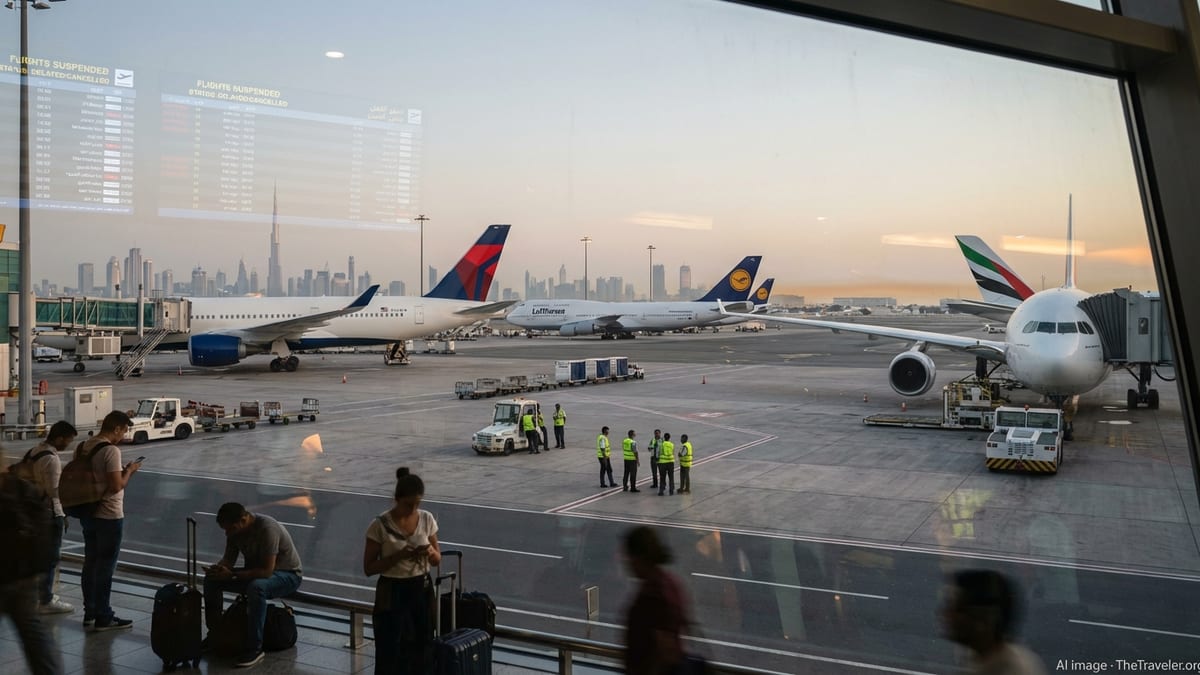
At the same time, air traffic patterns have been disrupted by regional tensions and airspace restrictions. Industry analyses from airline associations highlight that parts of the Middle East serve as a crucial transit hub between Europe, Asia and Africa. When conflict or security alerts affect these hubs, long-haul routes are sometimes curtailed or rerouted, indirectly nudging travelers toward point-to-point travel within Europe instead of multi-stop itineraries via Gulf or Levantine airports. Spain’s dense web of direct connections from European capitals and growing transatlantic links make it a natural beneficiary of this shift.
Travel demand data from Mediterranean markets underline a wider rebalancing rather than a simple substitution. Coverage focused on Greece, for example, reports modest but noticeable increases in demand as part of a broader movement toward perceived safer and more stable coastal destinations. Within that trend, Spain appears to be capturing a particularly large share, thanks to its combination of large resort capacity, extensive low-cost carrier networks and years of investment in branding that emphasizes safety and reliability.
Perceived Safety, Connectivity and Climate Drive the Shift
Beyond immediate geopolitical concerns, a set of structural factors is reinforcing Spain’s appeal at a moment when travelers are reassessing risk. Publicly available surveys and travel industry commentary suggest that perceived safety and political stability now rank alongside price and weather in many travelers’ decision-making. Spain is often grouped with a core set of Western European countries that are seen as predictable, institutionally stable and equipped with robust health and transport systems.
Air connectivity is another decisive advantage. Spain’s main hubs in Madrid and Barcelona, together with regional airports across the islands and coasts, are heavily served by both legacy carriers and low-cost airlines. This allows tour operators to reprogram capacity quickly when demand shifts from more volatile regions. As Middle East tensions disrupt certain routes and discourage some long-haul trips, Spain’s ability to absorb additional short- and medium-haul flights has become a strategic asset for airlines seeking to redeploy aircraft.
Climate trends also play into the story. The Mediterranean has been warming, and summers across southern Europe have brought record heat in recent years. Travel analysts note that Spain’s varied geography, from Atlantic-facing Galicia and the Basque Country to higher-altitude inland areas, allows visitors and planners to adjust seasonality and location to avoid the most intense heat. Shoulder seasons in spring and autumn are becoming increasingly popular, smoothing demand across more months and making Spain a year-round alternative when traditional winter-sun destinations in the Middle East or Red Sea region are affected by tensions.
Currency and cost considerations further support Spain’s position. While inflation and higher hotel prices have been widely reported, Spain is still often regarded as offering better value than some northern European competitors. In a climate of global uncertainty and elevated airfares, the ability to access a broad range of accommodation, from budget apartments to luxury resorts, within a single country helps Spain attract both cost-conscious families and higher-spending visitors diverted from long-haul markets.
Benefits, Strains and the Politics of Overtourism
The tourism surge is delivering clear economic dividends, but it is also exposing pressure points across Spanish society. Official estimates show tourism contributing more than a tenth of Spain’s gross domestic product and supporting hundreds of thousands of jobs, particularly in coastal regions where alternatives are limited. Municipal budgets in resort towns and major cities are buoyed by visitor spending, tourism taxes and related activity in construction, retail and services.
At the same time, visible signs of strain are multiplying. Local media and international coverage have documented a rise in anti-tourism protests since 2024, especially in island territories such as the Canary and Balearic Islands and in cities like Barcelona and San Sebastián. Demonstrations have highlighted concerns over housing affordability, congestion, environmental stress and the perceived imbalance between visitor numbers and residents’ quality of life. Critics argue that Spain’s success as Europe’s hottest destination is coming at the cost of livability for locals.
Regional governments and the national administration have responded with a patchwork of measures. These range from tighter rules on short-term rentals and proposed caps in saturated neighborhoods to experiments with visitor quotas on fragile natural sites. Policy documents and strategic plans, including Spain’s long-term tourism strategy, emphasise a pivot toward “quality over quantity,” seeking higher per-visitor spending while moderating growth in the most overcrowded spots.
The intersection with Middle East tensions complicates that balancing act. As long as instability diverts visitors away from rival destinations, pressure to keep absorbing demand will remain strong, particularly from businesses that depend on high occupancy. Analysts warn that Spain’s challenge is to channel redirected flows into regions and seasons that can still accommodate growth, rather than concentrating ever more travelers into a handful of already saturated coastal hotspots.
A New Travel Map for Europe
Taken together, the tourism boom and geopolitical shifts are redrawing Europe’s holiday map in ways that may outlast the current tensions. Spain’s combination of scale, infrastructure and perceived safety positions it as a default choice for millions of travelers who might previously have alternated between Western Mediterranean resorts and destinations in North Africa or the Middle East. Tour operator programing for coming seasons, as reported in trade press, suggests that Spain will continue to receive an outsized share of package capacity and scheduled seats.
Other European countries are watching closely. Italy, Greece and Portugal are all seeking to capture some of the demand redirected from conflict-affected regions, but Spain’s head start in both volume and brand recognition is significant. Industry commentary notes that if current patterns persist, Spain could further entrench itself as Europe’s primary mass-market sun destination, second only to France in total international arrivals yet increasingly dominant in the beach and resort segment.
For travelers, the powerful shift reshaping Spain’s tourism landscape means more choice within the country’s borders rather than across regions that previously competed on equal footing. From urban cultural breaks in Barcelona and Madrid to extended winter stays in the Canary Islands and luxury escapes on the Costa del Sol, the country is absorbing roles once spread across a wider Mediterranean arc. How Spain manages that influx, and whether it can reconcile economic gains with social and environmental limits, will help define the next phase of European tourism in an era marked by geopolitical uncertainty.