


More news on this day
A temporary special train service between Budgam in central Kashmir and Katra, the railhead for the Mata Vaishno Devi shrine, has been introduced to move stranded passengers after landslides, flooding and weather-related highway closures disrupted road connectivity across Jammu and Kashmir.
Get the latest news straight to your inbox!
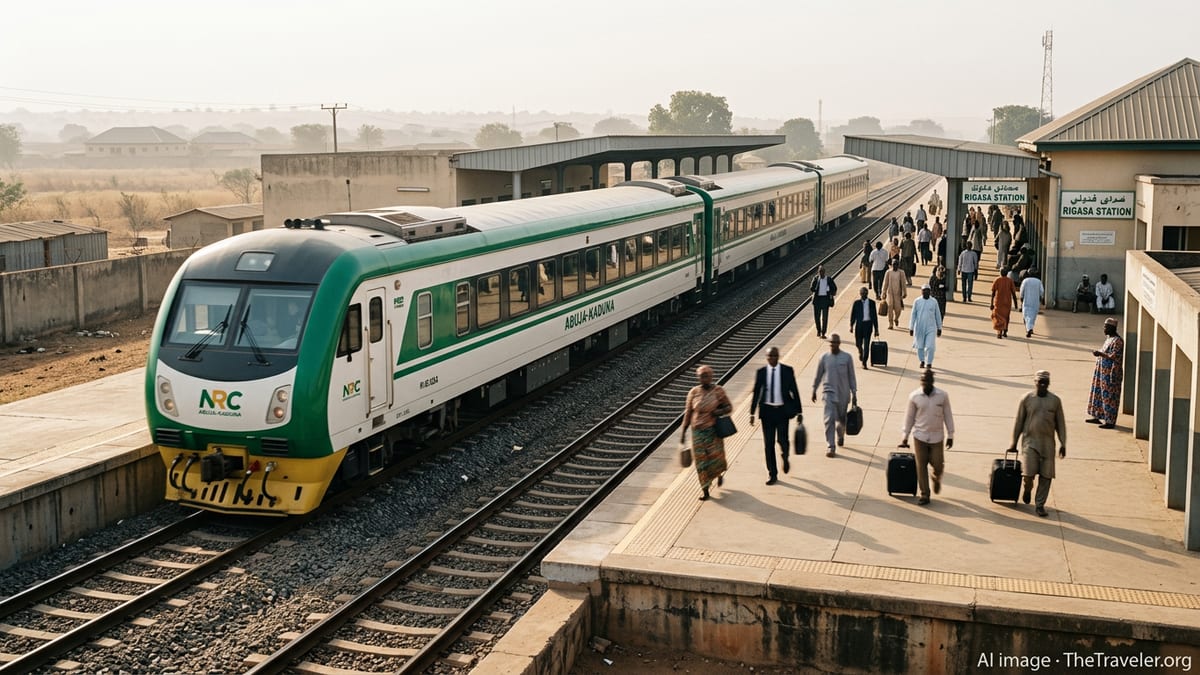
Emergency Link Between Kashmir Valley And Pilgrim Hub
Recent disruptions on the Jammu–Srinagar national highway have repeatedly cut off routine bus and taxi services, leaving thousands of residents, students, workers and pilgrims unable to complete their journeys. In response, Indian Railways has activated a special Budgam–Katra service designed as an emergency bridge between the Kashmir Valley and the key pilgrimage hub in the Jammu region.
Published coverage from regional newspapers indicates that the special train is being positioned as a relief connection for travellers stuck on either side of the Pir Panjal range when road traffic is suspended or severely restricted. The service supplements earlier special trains that have been run between Katra and Sangaldan, as well as Katra and Banihal, whenever floods, landslides or extended highway blockades have stranded passengers.
By starting from Budgam, one of the principal railheads for the Srinagar urban area, the relief train allows passengers from the Kashmir Valley to reach the rail-linked pilgrimage town of Katra without relying on long, uncertain road transfers. From Katra, passengers can then connect to long-distance trains serving major cities in northern and central India, restoring a degree of mobility at a time when regular travel plans have been thrown off course.
Reports also describe the mood on board similar earlier relief services as broadly positive, with passengers welcoming a predictable, scheduled option after spending days waiting for roads to reopen or for airfares to drop from surge levels. The Budgam–Katra train is being presented in the same spirit, as a stopgap solution that uses newly completed rail infrastructure across the Chenab and Pir Panjal corridors to offset the fragility of the mountain highway network.
Route, Timings And Key Stations On The Corridor
While operational specifics for the latest Budgam–Katra special service can vary according to demand and track availability, publicly accessible timetables for comparable specials show a pattern of daytime departures from Katra toward the Valley and afternoon or evening returns. Earlier specials on this axis have typically taken around four to five hours between Katra and the major Valley stations, with intermediate halts at key junctions along the Jammu–Udhampur–Srinagar–Baramulla line.
The route threads together important waypoints including Reasi district, the Chenab bridge sector, Sangaldan and Banihal, before emerging into the Kashmir Valley and serving stations such as Qazigund, Anantnag and Srinagar, with Budgam acting as a major suburban hub. This alignment mirrors the path of regular services and earlier relief trains, ensuring that passengers familiar with the rail network can easily understand and use the special.
Regional coverage notes that some special services on this corridor have operated as reserved trains, requiring advance booking, while others ran in a hybrid mode that allowed both reserved and unreserved ticket holders to board. The Budgam–Katra train has been described as accepting existing tickets where feasible, with extra capacity created through additional coaches to accommodate the sudden spike in demand from stranded groups.
Travel times on the special service compare favourably with the road journey when the highway is partially open, and are significantly more reliable when weather conditions create rolling closures along the Banihal and Ramban stretches. For passengers heading to or from the Vaishno Devi shrine, the direct rail link to Katra also avoids the uncertainty of last-minute diversions or overnight halts that often accompany highway blockages.
Weather, Highway Closures And Rising Reliance On Rail
In recent seasons, Jammu and Kashmir has experienced repeated spells of heavy rainfall, cloudbursts, flooding and landslides that have affected both road and air travel. Coverage from multiple regional outlets highlights episodes in which the Jammu–Srinagar highway was fully shut for days, flights were curtailed by snowfall or poor visibility, and passengers found themselves marooned in transit towns with limited accommodation options.
These recurring disruptions have coincided with the rapid buildout of the Jammu–Udhampur–Srinagar–Baramulla Railway Link, including the commissioning of the Chenab Rail Bridge and the long Pir Panjal and Banihal tunnels. As new segments opened, rail has become a more resilient alternative, less exposed to rockfalls and surface washouts that can force immediate closures on the highway.
Against this backdrop, the decision to operate a Budgam–Katra special for stranded passengers fits a broader pattern in which rail is increasingly used as the primary relief and evacuation mode during weather emergencies. Earlier, similar specials linked Katra with Sangaldan or Banihal, while reserved trains were temporarily pressed into service between Srinagar and Katra when snowfall and weather warnings were expected to impact scheduled Vande Bharat services.
Publicly available information shows that these ad hoc operations are typically planned with short lead times based on meteorological advisories and highway status reports. The Budgam–Katra relief service is part of this flexible operational approach, giving railway planners the option to insert an additional long-distance passenger working when normal mobility in the region is threatened.
Benefits For Pilgrims, Migrant Workers And Local Residents
The Budgam–Katra special train is particularly significant for pilgrims headed to the Mata Vaishno Devi shrine, one of India’s busiest religious destinations. Many pilgrims travel from the Kashmir Valley or board long-distance trains in Katra after arriving by air or road to Jammu, so prolonged highway closures can derail carefully timed itineraries and bookings.
By creating a direct rail link between Budgam and Katra, the special service reduces the need for pilgrims to depend on road convoys over vulnerable mountain stretches when conditions are at their worst. Published accounts of earlier relief trains on this axis describe devotees expressing relief at being able to resume their onward journeys without waiting indefinitely for the highway to reopen or paying inflated fares for scarce taxi seats.
The service also offers a vital channel for students, migrant workers and medical travellers who rely on connections from Katra and Jammu to reach institutions and hospitals in other parts of India. For these groups, the cost of last-minute flights or multi-day detours can be prohibitive, and an affordable rail option can mean the difference between returning to work or studies on time and facing severe financial or academic penalties.
Local residents in districts along the route benefit as well. With the Budgam–Katra special stopping at key intermediate stations, people in smaller towns affected by road blockages gain a stable means of reaching administrative, educational and commercial centers. This inclusive pattern of halts, observed in earlier specials, allows rail to function not only as a corridor between two hubs but as a lifeline stitching together communities scattered across the mountain landscape.
Temporary Measure With Long-Term Connectivity Signals
Railway notices and regional press coverage consistently describe such Budgam–Katra specials as time-bound, often scheduled for a fortnight or tied to specific weather alerts and pilgrimage peaks. The intention is to provide temporary relief until road conditions stabilize or until regular train services can fully absorb disrupted passengers.
Even so, the repeated use of this corridor for stranded-passenger operations sends a broader signal about the strategic role of the Katra–Kashmir rail link. As more of the Jammu–Baramulla line enters routine service, special and relief trains demonstrate how the infrastructure can be flexibly deployed in times of crisis, complementing flagship services such as the Vande Bharat Express and regular express and passenger trains.
Observers of the region’s transport network note that each emergency operation helps rail authorities refine evacuation, crowd management and timetable adjustments across challenging terrain. Lessons learned from running Budgam–Katra specials, including demand patterns, coach composition and station staffing, can shape how future permanent services are configured to better withstand both seasonal weather shocks and sudden surges in travel demand.
For now, the Budgam–Katra special offers a crucial stopgap, restoring a measure of predictability for those caught between closed roads and limited flights. As long as extreme weather and landslide risks continue to disrupt surface travel in Jammu and Kashmir, similar special trains are likely to remain a central feature of the region’s emergency transport playbook.