


More news on this day
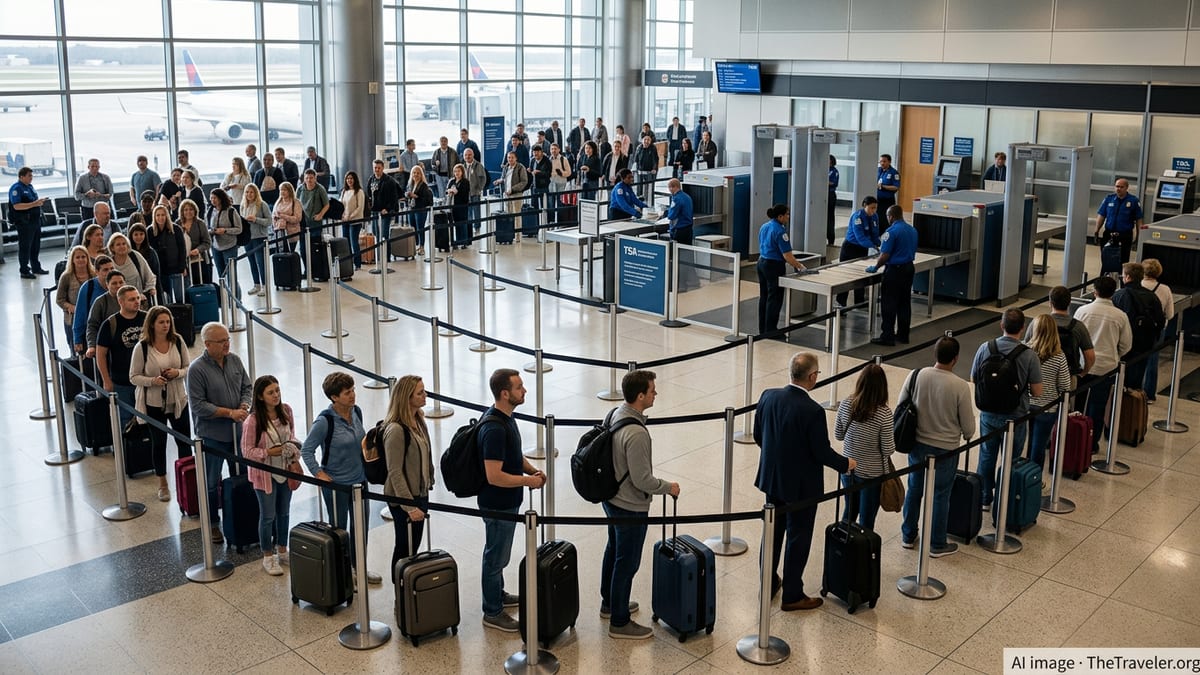
Airport security lines remain one of the most unpredictable parts of flying, and the picture is getting more complicated as the Transportation Security Administration continues to rely on both federally staffed checkpoints and a smaller set of airports screened by private companies under TSA oversight through the Screening Partnership Program (SPP). For travelers, the key question is less who signs the paychecks and more what can be reliably known about wait times, how those times are generated, and what differences, if any, show up at airports where screening is contractor-operated.
Get the latest news straight to your inbox!
What SPP is, and what it is not
SPP is not a separate set of security rules. Publicly available TSA program materials describe SPP as a model in which qualified private vendors perform passenger and property screening under federal supervision, using TSA procedures and standards. The agency retains oversight authority while contractors handle day-to-day staffing and operations at participating airports.
TSA’s own public-facing guidance has, for years, emphasized that security protocols are intended to be consistent across commercial airports, regardless of whether the screeners are federal employees or contractor personnel. The practical difference is administrative: airports apply to participate, TSA evaluates and approves, and then TSA awards task orders to pre-qualified vendors that hold SPP contract vehicles.
The size of SPP remains limited relative to the national system. Recent national coverage has continued to describe SPP as operating at about 20 airports, with major examples repeatedly cited as San Francisco International Airport and Kansas City International Airport. TSA materials from recent years have also referenced a low-twenties count, and published coverage in 2026 commonly uses the figure of 20.
Where private screening is operating, with verifiable examples
San Francisco International Airport is one of the most frequently referenced large hubs in SPP. Public airport information pages identify Covenant Aviation Security as the private company providing passenger and baggage screening at SFO under a TSA contract. Separate publicly available procurement documentation describes SFO screening services being procured through TSA’s SPP multiple-award contracting approach and discusses SFO as a long-running SPP site.
Kansas City International Airport is another prominent SPP example. Public coverage in the Kansas City market has described TSA subcontracting screening at MCI to VMD Corp under the SPP framework. A 2024 company announcement also described VMD receiving a large, multi-year follow-on award to continue screening operations at MCI as part of SPP.
For travelers trying to identify whether a given airport is SPP or federally staffed, the limitation is that a single, consistently updated, traveler-friendly roster is not always easy to locate in one official public table. In practice, the most reliable confirmations often come from a combination of airport “security screening” webpages, procurement records, and major-outlet reporting that names specific airports.
Security wait times: what data exists, and what can be misleading
Many travelers look first to TSA’s MyTSA app and TSA web wait-time features. Those tools can be helpful for quick planning, but it is important to treat them as estimates, not guarantees. Travelers should also recognize that an “airport wait time” may not reflect the specific checkpoint or terminal they actually use, and the experience can differ sharply between standard lanes, TSA PreCheck lanes, and peak international departure banks.
A major reliability challenge appears during disruptions that affect data freshness or operational consistency. Published coverage and widely shared traveler discussions during recent funding disruptions and shutdown-related periods have described circumstances where official estimates were not consistently maintained, which can create a mismatch between posted times and the line travelers see in person. When travelers notice unusually static estimates over long periods, that can be a signal that the displayed number is not capturing current conditions.
Separate from wait times, TSA regularly publishes checkpoint throughput totals, which are a different kind of operational signal. A federal air travel consumer report published in August 2026, for example, stated that TSA screened about 78.8 million passengers in June 2026 and processed about 27.6 million checked bags. Those totals do not translate into a specific queue time at a given airport, but they underline how quickly staffing, schedule peaks, and equipment constraints can amplify delays.
Do SPP airports have different wait times in practice?
There is no universal, publicly reported finding that SPP airports consistently deliver shorter lines. What published oversight reviews and program descriptions do make clear is that SPP is designed to meet the same screening requirements, with TSA monitoring contractor performance against federal standards.
That said, the contractor model can change operational flexibility. TSA’s own public FAQ materials describe contractors determining the number of contract screeners hired, within the boundaries of meeting security and service requirements. In theory, that could affect how quickly staffing scales for seasonal surges, early-morning departure waves, or irregular operations. But any traveler-facing benefit depends on local execution, checkpoint design, and airline schedule patterns more than on the label of “SPP” alone.
One difference that has shown up in repeated 2026 coverage is resilience during government shutdowns. National reporting has described that contractor pay often continues because it flows through federal contracts, while federal employee pay can be disrupted, potentially affecting attendance and morale. That distinction has been cited as one reason some policymakers and airport stakeholders continue to revisit contractor screening models, even as workforce advocates raise concerns about broader privatization.
What travelers can do now to plan around uncertain waits
Given the limits of any single wait-time feed, the most practical approach is triangulation: check official estimates, verify whether your airport posts checkpoint-specific information, and build in extra time around the day’s predictable spikes. Early mornings, Monday business peaks, holiday weekends, and weather-triggered rebooking surges remain the most common drivers of sudden line growth.
For travelers weighing options like TSA PreCheck or private identity services, the planning takeaway is that these can reduce time spent in the longest general queue, but they do not eliminate variability. PreCheck lanes can still back up when staffing is tight or when departure banks concentrate. Identity services can speed the document-check step, but they do not bypass physical screening, and the bottleneck can shift to the X-ray or body scanner area depending on how a checkpoint is configured.
The broader trend line is that TSA is actively experimenting with multiple approaches to the checkpoint experience, including expanded public-private models and new access programs at select airports. As these initiatives evolve, travelers should expect continuing variation in how wait times are measured, displayed, and experienced, and plan with a margin that assumes the posted number may be an optimistic snapshot rather than a promise.