


More news on this day
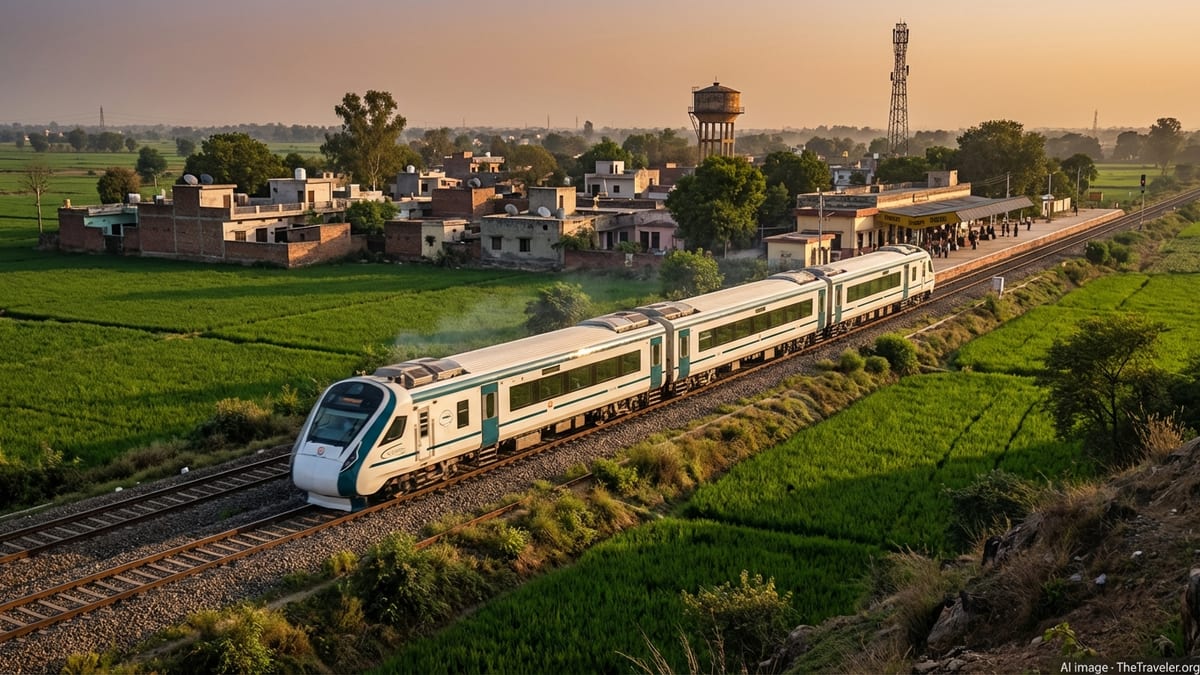
Swiss rolling stock manufacturer Stadler has unveiled what published company information describes as the world’s first hydrogen-powered train specifically designed for narrow-gauge railways, marking a new phase in low-emission regional travel for some of Europe’s most scenic but technically demanding lines.
Get the latest news straight to your inbox!
A world-first for Sardinia’s narrow-gauge network
The new train was presented at Stadler’s commissioning center in Erlen, Switzerland, on 19 June 2026, in partnership with Sardinian regional operator Trasporti Regionali della Sardegna, known as ARST. Publicly available information indicates that it is the first time hydrogen propulsion has been fully integrated into a train configured for narrow-gauge infrastructure, which typically has tighter curves, lighter track and stricter weight limits than standard-gauge lines.
The train is destined for ARST’s 950-millimeter-gauge network in northern Sardinia, where it is scheduled to enter passenger service from 2028. Initial deployment is expected on routes linking Alghero Airport with Mamuntanas, and on the lines between Sassari and Alghero and between Sassari and Sorso, offering a zero direct-emission alternative to aging diesel fleets that currently serve both commuters and tourists.
Stadler and ARST have presented the project as part of a broader transition on the island toward lower-carbon public transport. Company statements suggest that, compared with the diesel trains it is replacing, the hydrogen unit could cut more than 2,100 tonnes of carbon dioxide emissions annually once a full fleet is in operation.
The unveiling in Switzerland reflects Stadler’s practice of testing new rolling stock at its own facilities before handing vehicles over to operators in their home markets. For Sardinia, the milestone also symbolizes a shift from experimental pilots to a long-term hydrogen rollout on a regional rail network that has often struggled to attract sustained investment.
Technical design tailored to light infrastructure
Narrow-gauge railways in Italy impose tight limits on axle load, vehicle profile and structure gauge, which has historically constrained the adoption of heavier alternative propulsion systems. According to technical information made public by Stadler, the new train has been engineered with a special lightweight bodyshell and optimized weight distribution to remain within the strict thresholds required by ARST’s infrastructure.
The hydrogen technology is integrated into a modular architecture derived from Stadler’s existing multiple-unit platforms. Fuel cells and hydrogen storage are housed in dedicated modules designed to keep high-pressure components clear of passenger areas while maintaining the low axle loads needed on lightly built track. The configuration is intended to enable sufficient range for regional services without refueling during the daily timetable.
Passenger comfort is a notable part of the design. The train offers low-floor access throughout most of its length, easing boarding for travelers with luggage, families with strollers and passengers with reduced mobility. Public design briefs emphasize air-conditioned interiors, wide doors and large panoramic windows, features that are increasingly seen as essential for shifting drivers from cars to public transport on tourist-heavy islands.
The hydrogen drivetrain is also expected to reduce noise and vibration compared with diesel traction. For communities along the line, those characteristics are presented as practical benefits alongside climate considerations, especially on routes that pass close to residential areas and coastal resorts.
Part of a wider Italian hydrogen corridor
The Sardinian narrow-gauge train is not an isolated project. Over the past few years, Italian regional networks in Calabria and Sicily have also commissioned narrow-gauge hydrogen trains from Stadler, according to corporate releases and trade media coverage. Together, these orders form one of Europe’s first coordinated efforts to introduce hydrogen traction across multiple small-gauge systems.
In Calabria, regional operator Ferrovie della Calabria has contracted Stadler to supply hydrogen-powered trains for its 950-millimeter network, with deliveries linked to infrastructure upgrades and new refueling facilities. Reports indicate that these units will operate on regional and local routes from 2026, creating a southern Italian cluster of hydrogen operations spanning both the mainland and the islands.
Sicily has followed a similar path, with narrow-gauge hydrogen trains planned for the Ferrovia Circumetnea line around Mount Etna. Public documentation suggests that these trains will share a common technical concept with the Sardinian units, using a central power module to house fuel cells and tanks while preserving passenger space at both ends of the train. Service introduction on the Etna line is currently targeted for the second half of this decade.
For Italian tourism, the convergence is significant. Many of the narrow-gauge lines slated for hydrogen conversion run through highly scenic areas, from vineyard-covered hillsides in Calabria to volcanic landscapes in Sicily and coastal scenery in Sardinia. Lower-emission rolling stock is therefore positioned not only as a transport upgrade, but as a way to align visitor mobility with national sustainability goals.
Hydrogen rail gains momentum beyond Europe
The narrow-gauge debut in Sardinia builds on Stadler’s broader hydrogen portfolio, which includes standard-gauge multiple units tested and deployed in North America. In 2024, one of the company’s hydrogen-powered FLIRT trains set a Guinness World Records title for the longest distance traveled by a pilot hydrogen fuel cell passenger train on a single tank, covering more than 2,800 kilometers during testing at a dedicated facility in Colorado.
Hydrogen trains based on the same platform have since been introduced on the Arrow corridor between San Bernardino and Redlands in Southern California. According to public project summaries, that service is considered the first hydrogen-powered passenger train operation in North America, supported by funding for additional units to expand zero-emission rail capacity in the state.
These developments show how technical advances proven on standard-gauge commuter routes are now being adapted to the more constrained geometry of narrow-gauge lines. Manufacturers and transport agencies are using demonstrator projects and record-setting tests to refine fuel cell integration, energy management software and refueling logistics before committing to larger fleets.
For international travelers, the spread of hydrogen-powered trains means that itineraries increasingly include low-emission rail segments, even in regions where full electrification with overhead wires remains economically or technically challenging.
Implications for sustainable travel and regional tourism
The arrival of hydrogen traction on Sardinia’s narrow-gauge network is expected to have practical consequences for visitors as well as local residents. Many of the lines earmarked for the new trains connect airports with coastal cities and resort areas, forming key links in multimodal journeys that combine air travel, ferry crossings and regional rail.
As older diesel trains are replaced, travelers are likely to encounter quieter, more modern vehicles with consistent interior standards and accessible boarding. Public information notes that the hydrogen units are intended to run integrated timetables with existing bus and rail services, providing more attractive options for tourists who prefer to avoid renting a car.
The project also has symbolic value in the competition between alternative propulsion technologies. Battery-electric multiple units are advancing quickly on shorter regional routes, while traditional electrification remains the most efficient option where high traffic volumes justify the infrastructure costs. By placing hydrogen trains on demanding narrow-gauge lines in Sardinia, Sicily and Calabria, Italian regions are effectively positioning hydrogen as a solution for corridors where overhead wires or extensive charging infrastructure would be difficult to deliver.
For destinations marketing themselves as sustainable, the combination of scenic narrow-gauge lines and low-emission rolling stock could become a selling point. As hydrogen rail matures, Sardinia’s newly unveiled train is likely to be watched closely by other regions with similar networks, from mountain railways to rural tourist branches, looking for ways to align transport infrastructure with ambitious climate targets.