


More news on this day
Canada is turning to Swiss manufacturer Stadler for a new generation of hybrid battery diesel locomotives, awarding a multibillion dollar contract for 45 units that will modernize the country’s long distance passenger rail fleet and bring final assembly work back onto Canadian soil.
Get the latest news straight to your inbox!
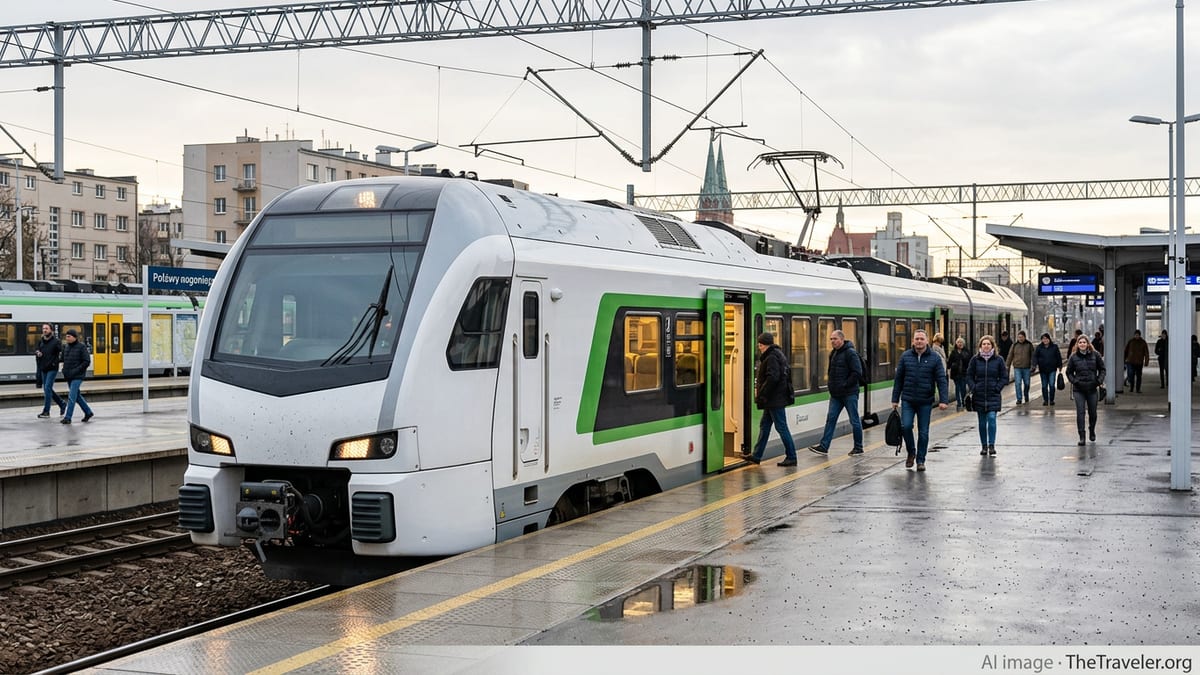
Major Investment in Hybrid Passenger Power
Publicly available information from the Government of Canada indicates the new order for 45 hybrid locomotives is valued at about 1.95 billion Canadian dollars, covering design, production and long term support. The locomotives are intended for use by national passenger operator Via Rail on key long distance and regional routes, many of which remain non electrified.
Reports indicate the locomotives will be equipped with both a conventional diesel engine and a substantial onboard battery system. The configuration is designed to cut fuel consumption and emissions compared with traditional diesel electric units while offering the flexibility needed to operate across Canada’s vast mixed infrastructure of electrified and non electrified lines.
Government announcements and subsequent coverage describe the order as one of the most significant single investments in Canadian passenger rolling stock in recent decades. The deal is framed as central to maintaining and improving intercity rail services while aligning the sector with federal climate and air quality objectives.
Assembly Work Returns to Canada
According to published coverage of the contract details, Stadler will leverage its established manufacturing base in Europe for major components but plans to complete the final assembly of up to 36 of the 45 locomotives in Canada. This marks the first time in decades that new passenger locomotives for Via Rail will be assembled domestically.
The approach is intended to blend Stadler’s global supply chain with Canadian industrial participation. Public information suggests Canadian facilities will handle final integration, testing and commissioning, drawing on local suppliers for selected subsystems and services where feasible.
Officials have framed the domestic assembly component as a way to support skilled manufacturing jobs and technical expertise within Canada, while also ensuring that knowledge related to operation and maintenance of the new hybrid technology is embedded in the local workforce.
Hybrid Technology Designed for Harsh Conditions
Stadler has built a global reputation for rolling stock capable of operating in demanding climates, including services in Arctic regions and high altitude Alpine environments. Reports note that this background was a factor in selecting the manufacturer, given the extreme temperature swings and challenging weather conditions experienced on many Canadian routes.
The new locomotives will combine a diesel prime mover with traction batteries that can store and release energy. Public technical descriptions of Stadler’s existing hybrid platforms indicate that battery packs are typically charged both through the diesel engine and through regenerative braking, capturing energy that would otherwise be lost as heat when trains slow down.
For Canadian service, this hybrid arrangement is expected to allow low noise, low emission operation in stations and urban areas by relying more heavily on battery power at low speeds, while still providing the range and power of diesel traction across long rural stretches. The configuration also offers a pathway to integrate future low carbon energy sources if they become commercially viable.
Supporting Canada’s Climate and Transport Goals
Federal policy documents have consistently positioned rail transportation as a key tool for reducing greenhouse gas emissions in the national transport sector. While full route electrification remains a long term objective on some corridors, many of Via Rail’s services operate over infrastructure owned by freight railways, where immediate electrification is unlikely.
Against that backdrop, the hybrid locomotive order is presented as a pragmatic step toward cleaner operations, using technology that can deliver measurable fuel and emissions savings within the constraints of existing infrastructure. Government materials highlight expected reductions in local air pollutants and lifecycle greenhouse gas emissions compared with the locomotive fleet that the Stadler units will replace.
Industry observers note that hybrid passenger locomotives are already in service or on order in Europe and parts of Asia, but Canada’s contract positions Via Rail as one of the first adopters of this type of technology for long distance passenger services in North America.
Broader Implications for the North American Rail Market
The Stadler contract is also seen as strategically significant for the broader North American rolling stock market. The company has previously supplied multiple unit trains and locomotives for transit and regional operators in the United States, but the Canadian order represents one of its largest standalone locomotive projects on the continent.
Analysts point out that the successful deployment of hybrid locomotives in Canada could encourage other passenger and even freight operators in the region to consider similar solutions, particularly where full electrification is not yet economically viable. The project will provide a high profile test case for the performance, reliability and maintenance profile of large battery diesel hybrids in North American operating conditions.
Delivery timelines and detailed technical specifications have not all been released publicly, but the contract structure and the scale of investment indicate that the new locomotives are expected to form the backbone of Via Rail’s long distance fleet for decades. The order underscores both the urgency of fleet renewal and the growing role of hybrid technologies in bridging the gap between conventional diesel traction and fully electrified or zero emission rail systems.