


More news on this day
As the United States and Canada mark the 25th anniversary of the September 11 attacks, communities across Canada are revisiting the extraordinary moment when hundreds of diverted flights turned quiet airport towns into temporary havens for thousands of stranded travelers.
Get the latest news straight to your inbox!
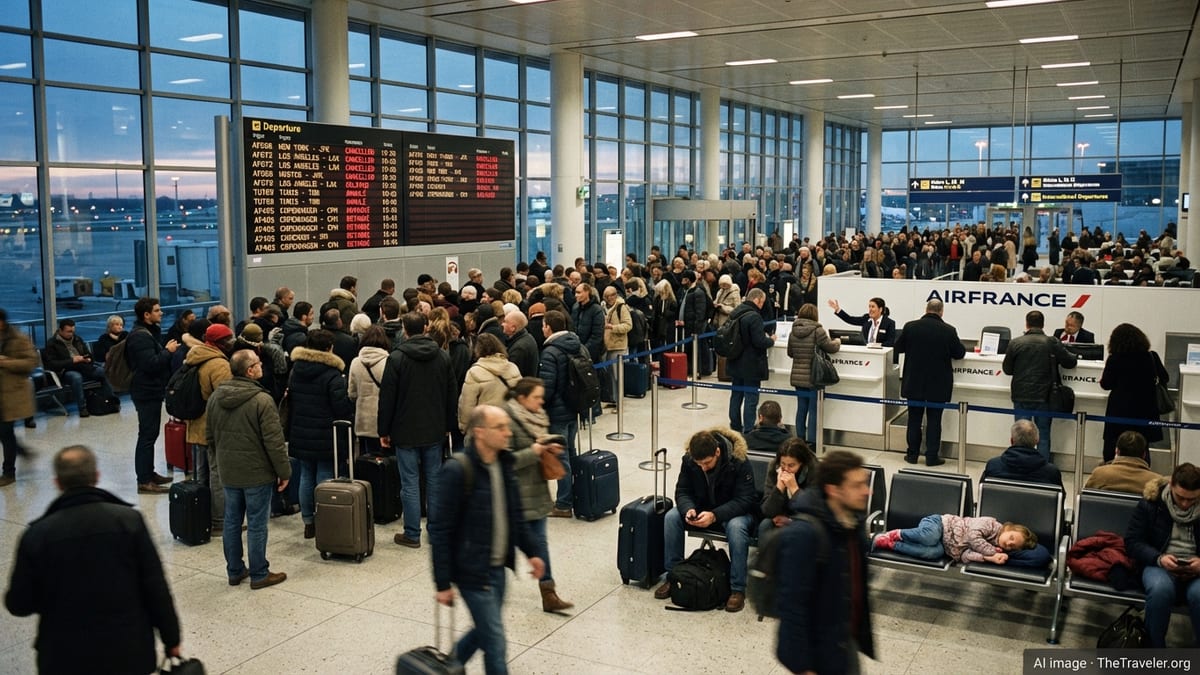
Airspace Closure Sent Hundreds of Flights North
On September 11, 2001, the unprecedented closure of United States airspace forced hundreds of international flights bound for American cities to divert, with Canadian airports absorbing much of the shock. Publicly available records indicate that more than 200 aircraft were redirected to airports across Canada by early evening, after U.S.-bound flights were ordered to land as quickly and safely as possible.
Government summaries and historical briefings describe how at least 239 international flights were ultimately diverted to 17 Canadian airports, from Atlantic hubs such as Gander and Halifax to major western gateways including Vancouver. In total, more than 33,000 passengers and crew members suddenly found themselves in unfamiliar Canadian communities, unable to continue their journeys and uncertain when commercial air travel would resume.
Transport and aviation documents from the period outline how air traffic controllers, pilots and airport teams had to improvise in real time. Aircraft were sequenced into Canadian airspace, often landing at airports that would not normally handle such volumes of widebody jets. Taxiways, remote stands and even decommissioned military aprons were pressed into service to park the unplanned arrivals.
The rapid diversion effort reshaped the geography of that day for thousands of travelers. Instead of New York, Chicago or Los Angeles, their memories of September 11 are now anchored in places like Gander, Halifax, Vancouver and Winnipeg, where they waited for news and for a way home.
Gander and Halifax: Small Towns on the Front Line
Atlantic Canada carried a particularly heavy share of the aviation disruption. Transport Canada material notes that airports in the region received more than half of all diverted flights, reflecting their position along North Atlantic routes linking Europe with North America. Gander, a town known in aviation circles as a transatlantic refueling stop, suddenly became one of the busiest airports on the continent.
Local and federal accounts indicate that roughly three dozen large commercial aircraft, carrying about 6,600 passengers and crew, were directed to Gander alone. The influx was equivalent to a substantial share of the town’s population at the time, quickly overwhelming conventional terminal facilities. Aircraft were parked wingtip to wingtip along the runways and taxiways as ground staff worked to process arrivals and coordinate with immigration, customs and security agencies.
Nearby Halifax International Airport also became a critical diversion point. Historical transport reports describe how passengers remained confined to aircraft for hours as authorities implemented emergency security protocols and arranged for screening and temporary accommodations. As the day and night wore on, communities around both airports began organizing buses, cots, food services and basic medical support for travelers who had no idea how long they would be staying.
In the years since, both Gander and Halifax have become embedded in the broader story of 9/11’s impact on global aviation. The 25th anniversary has renewed attention on how quickly these locations shifted from routine operations to managing a complex humanitarian and logistical effort for thousands of unexpected visitors.
Commemorations Highlight Canada’s Role in 9/11 Response
The 25th anniversary has brought formal commemorations across Canada that specifically acknowledge the role of communities that received diverted flights. A national statement from Canada’s defence leadership released on September 11, 2026, highlights that more than 33,000 passengers found refuge in Canadian towns and cities, with particular recognition for Gander and other host communities.
In Gander, a large ceremony on September 11, 2026, drew residents, former passengers and dignitaries. According to published coverage from Canadian outlets and official event programs, the town’s events focused on remembering both the victims of the attacks and the hospitality extended to stranded travelers. New and existing public artworks, including mosaics assembled from hundreds of individual tiles, were presented as symbols of the bonds formed during those days.
National institutions have framed these observances as part of a broader Canadian reflection on 9/11. Official remarks circulated in advance of the ceremonies point to the way local volunteers, businesses and public facilities across the country opened their doors to visitors who arrived with little more than carry-on luggage. The anniversary programming emphasizes both grief for the nearly 3,000 people killed in the attacks and recognition of the civilian response that followed.
Media retrospectives timed to the anniversary also revisit the experiences of passengers and crew who unexpectedly spent several days in Canadian communities. These accounts, drawn from interviews and archival reporting, describe school gymnasiums converted into dormitories, impromptu social events for guests and long lines at pay phones and early internet terminals as travelers tried to reach loved ones.
Travel Disruption That Redefined Air Passenger Experience
The diversion of flights to Canada on September 11 remains one of the most far-reaching disruptions in modern commercial aviation. Analyses produced around the 25th anniversary note that the instant shutdown of U.S. airspace and the redirection of so many aircraft helped drive sweeping changes to airline security procedures, crisis planning and international coordination.
Coverage from major news organizations in 2026 situates the Canada diversions within a broader evolution of air travel since 2001. Security measures that became standard in the years after 9/11, such as reinforced cockpit doors and enhanced passenger screening, are now part of routine travel. Regulatory and oversight bodies reference the events of that day when outlining protocols for handling suspected threats and large scale airspace closures.
For passengers who were diverted to Canadian airports, the experience often marked a turning point in how they viewed flying. Many have described in public forums and anniversary features how the journey they expected to be a routine transatlantic or transpacific flight became an open ended stay in a foreign town, with no clear timetable for departure. Their stories contribute to a collective memory of 9/11 that extends well beyond the primary attack sites.
The 25th anniversary has prompted aviation experts and historians to revisit how contingency planning has evolved since 2001. Current guidance for airlines and air navigation services reflects lessons learned from the rapid coordination between Canadian and U.S. authorities, including clearer frameworks for rerouting aircraft, accommodating passengers and communicating during emergencies that unfold at global scale.
Legacy of Hospitality Shapes Today’s Tourism Story
Two and a half decades after the attacks, the legacy of those diverted flights is visible in Canada’s tourism narratives. Gander, in particular, has become known worldwide for the hospitality displayed during those days, an image reinforced by books, documentaries and a hit stage musical that brought the story to audiences far from Newfoundland and Labrador.
Local visitor materials and municipal guides emphasize that the town’s history is inseparable from its airport. They describe how the arrival of 6,600 unexpected guests in 2001 led to enduring connections, with many travelers returning in later years as tourists to revisit the community that sheltered them. Some airlines have acknowledged this history by dedicating aircraft names to Gander and Halifax, linking contemporary fleets to the events of that week.
Across Atlantic Canada and beyond, tourism boards and local organizations now incorporate 9/11 commemorations into broader cultural and historical itineraries. Travelers interested in aviation history or in understanding the human side of 9/11 often seek out memorials, exhibits and guided experiences that focus on the days when aircraft from around the world suddenly touched down on Canadian soil.
For many of the communities that received diverted flights, the 25th anniversary serves both as a moment of remembrance and as a reminder of how acts of welcome during a crisis can shape a destination’s identity. The story of stranded passengers in Canadian towns remains a powerful example of how travel, even in the most difficult circumstances, can forge enduring ties between people and places.