


Few Caribbean experiences are as memorable as stepping off a boat into waist-deep turquoise water and finding yourself surrounded by gentle southern stingrays. Grand Cayman’s Stingray City Sandbar is one of the island’s signature attractions, but many first-time visitors are unsure what the “sandbar” actually is, how shallow the water feels in real life, and how it compares with the deeper Stingray City sites they see in dive magazines. This guide focuses specifically on the shallow sandbar experience so you know exactly what to expect before you go.
Get the latest updates straight to your inbox!
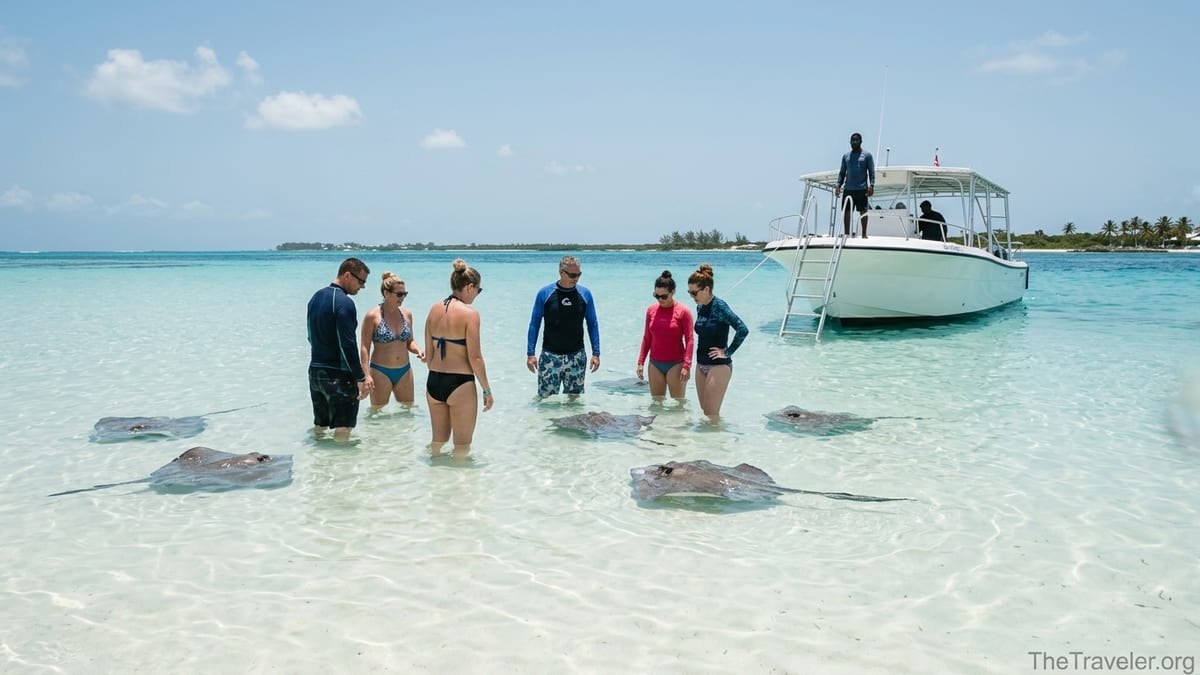
Where Exactly Is the Stingray City Sandbar and How Shallow Is It?
The Stingray City Sandbar sits in Grand Cayman’s North Sound, several minutes by boat from the island’s west and north coasts. Although many tour brochures simply say “Stingray City,” what most cruise excursions and family trips actually visit today is the shallow sandbar area. This is a natural sand bottom plateau where the seafloor rises close to the surface inside a protected lagoon, creating a calm, shallow pool ideal for non-swimmers.
On the sandbar itself, the water is typically about 3 to 5 feet deep at average tide. Most visitors will find it somewhere between knee and chest height. Children often stand comfortably with water around their waist, while an adult of average height will usually find it just above or below the navel. Depth does vary with tide and where your captain anchors, so on a higher tide you might need to tiptoe or gently bounce, while at a lower tide you may be nearly knee-deep.
The bottom is soft white sand with no rocks or coral heads, which makes it easy to stand and walk barefoot. Many guests compare the sensation to wading on a powder-sand beach that suddenly appears in the middle of the ocean. Because the sandbar lies within the reef-protected North Sound, there is usually little or no surf. On windy days you may feel more surface chop, but under the waves the water remains shallow, clear, and manageable for anyone comfortable in a swimming pool’s shallow end.
If you prefer to avoid even mild chop or slightly deeper spots, speak with the crew as you arrive. Smaller operators and private charters can often reposition the boat to a shallower section of the sandbar, which is especially helpful for families with young children, older travelers, or anyone anxious about open water.
What the Sandbar Experience Feels Like From Boat to Stingray Encounter
A typical Stingray City Sandbar visit begins at one of the marinas on Grand Cayman, such as those around Seven Mile Beach, West Bay, or North Side. Shared excursions generally use mid-size power catamarans or deck boats that carry 20 to 50 people, while private charters may use smaller center-console boats for groups of 6 to 12. Travel time out to the sandbar is usually 20 to 30 minutes, giving the crew time for safety briefings and an explanation of how to interact with the stingrays.
When your boat reaches the sandbar, you will see other vessels anchored in a line, with guests already standing in the water. The captain lowers a ladder from the stern and crew members often step down first to gauge the depth. You then climb down into the clear water, which can be a surreal moment for first-time visitors: the bottom appears so close that many people are surprised to feel only waist-deep water instead of having to swim.
Within moments, the first stingrays usually glide in, drawn by the sounds of boats and the promise of squid or fish pieces offered by the guides. The rays move silently over the sand like big, floating pancakes, often brushing gently against your legs or circling your knees. Most tours last 30 to 45 minutes at the sandbar itself, plenty of time for the crew to introduce the rays, offer supervised feeding, and help guests pose for photos.
The overall mood is typically lively but not frantic. Guests chat, laugh when a ray nudges them from behind, and take turns interacting more closely with the animals under a guide’s supervision. Even those who choose to stay closer to the boat ladder still see the rays up close, since the animals tend to move throughout the group looking for handouts and attention.
Stingray Interaction: Safety, Behavior, and What Really Happens
The southern stingrays that gather at the Stingray City Sandbar are wild animals, but they have become highly accustomed to human visitors over decades. Tour operators bring small pieces of squid or fish, and many of the same individual rays return daily to feed. They are not aggressive and are generally very gentle, often described as behaving like curious dogs, nudging against legs or pausing in front of you to see if you have food.
Your crew will demonstrate how to feed a stingray using a “flat pancake hand” technique, with your thumb tucked under your palm. This reduces the risk of accidental nibbles, which feel more like a firm suction than a bite. The rays do have barbed tails used for defense in the wild, but incidents at the sandbar are extremely rare. The animals are focused on food, and your guides are with them every day, watching both the rays and visitors to keep everyone comfortable.
Expect the stingrays to swim directly around and between the group, sometimes brushing your legs or gently resting against your shins. Their skin feels smoother and silkier than many people imagine, slightly slick but not slimy. Guides may support a larger ray just under the water’s surface so that guests can lightly touch its back. Many operators now discourage lifting rays fully out of the water out of respect for the animals; a responsible tour will prioritize the rays’ wellbeing and encourage low-stress, in-water contact instead.
If you are nervous, stand slightly behind the group or keep one hand on the boat’s ladder until you feel more confident. Crew members are used to helping anxious swimmers and can position you where rays pass by without surrounding you all at once. Children often react with a mix of excitement and hesitation, so guides typically introduce smaller, more relaxed rays to families first and encourage brief touches before moving on to feeding.
Crowds, Boats, and the Best Times to Visit the Sandbar
Stingray City Sandbar is one of the Cayman Islands’ most visited attractions, and it can feel crowded at peak times. On busy days when multiple cruise ships are anchored off George Town, you may see a line of large “cattle boats” with dozens of passengers each, lined up across the sandbar. The water still feels spacious, but the atmosphere becomes more energetic, with many groups taking photos and feeding rays at once.
To experience a quieter sandbar, timing and operator choice matter more than anything. Early morning departures, including sunrise trips that leave before 8 am, often reach the sandbar before the majority of cruise excursions arrive. Late-afternoon tours also tend to be calmer once ship passengers return to port. Travelers staying on-island in hotels, condos, or villas have a distinct advantage here, as they can choose less popular time slots that cruise passengers cannot.
Small-group operators and private charters typically cap numbers well below the maximum allowed, sometimes to a dozen people or fewer. This can make a dramatic difference in your experience. Instead of waiting in a long line to hold or feed a ray, you might share the sandbar with just a few families. Although private boats cost more, families or groups of friends can often split the charter rate and end up paying only slightly more per person than a standard large-boat excursion.
Seasonality also plays a role. Winter and spring, from roughly December to April, coincide with the Caribbean’s high cruise season, when the sandbar is busiest. Summer and early fall often see fewer ships and slightly lower visitor volume. Weather, of course, is a factor; strong winds can make the North Sound choppy, and in such conditions more conservative operators may cancel or reschedule sandbar trips for safety and comfort.
Photography, Water Clarity, and Getting Great Stingray Sandbar Shots
The Stingray City Sandbar is an outstanding setting for photography thanks to its shallow, clear water and pale sand bottom that acts like a natural reflector. Sunlight penetrates easily, creating swirling patterns of light on the sand and highlighting the gray backs of the stingrays as they glide past. On bright days, the color of the sea shifts from pale turquoise around your knees to deeper blue toward the edge of the sandbar, making a vivid backdrop for images.
Most guests use waterproof action cameras or smartphones in waterproof cases to capture the experience. In waist-deep water it is easy to kneel and frame shots at or just below the surface, which often produces dramatic images of rays moving toward the lens with the boat and sky in the background. Many operators bring their own photographers and will offer professional-quality photos for purchase afterward, showing each traveler or family interacting with a ray. These packages can add a noticeable amount to your overall cost, but they are convenient if you want to stay in the moment instead of handling your own camera.
If you bring your own device, use a wrist strap so it cannot slip from your hand. The sandbar bottom is soft, but dropped cameras can quickly disappear from sight in a small cloud of disturbed sand. For the clearest photos, wait for a lull in the crowd and step a few paces to the side so that rays are not hidden behind other guests. Ask a crew member to help you time shots when a ray is approaching, as they know the animals’ patterns and can often predict where they will surface.
Water clarity is usually excellent, but on very windy days or after storms the visibility can drop slightly, with more fine sand suspended in the water. Even then, the shallow depth still allows for good close-up shots. Wearing neutral or light-colored swimwear can help keep attention on the rays in your photos, while bright rash guards make it easier to spot friends and family in group images taken from the boat.
Costs, Tour Types, and What You Need to Bring
Prices for Stingray City Sandbar tours vary based on group size, itinerary, and whether you are booking through a cruise line or directly with a local operator. As of 2026, standard group excursions that focus on the sandbar typically cost in the region of 45 to 75 US dollars per adult. Longer three-stop outings that combine the sandbar with a snorkel at Coral Gardens or the Barrier Reef and a visit to Starfish Point often fall somewhere around 80 to 150 US dollars per adult, depending on inclusions such as drinks or transportation.
Private charters are more expensive overall but can become competitive on a per-person basis for families and groups. A half-day small-boat charter for up to about eight passengers often starts in the mid-hundreds of US dollars and rises based on boat size and route. Many visitors choose a three or four hour charter that includes the sandbar, one snorkel site, and a beach or restaurant stop at spots like Rum Point or Kaibo, turning the stingray encounter into a full half-day on the water.
Tour prices usually include mask and snorkel gear, though at the sandbar itself you will mostly be standing rather than swimming. Life jackets or flotation belts are generally available for anyone who feels more secure with extra buoyancy. You should bring a towel, reef-safe sunscreen, a hat, and sunglasses. Some visitors like to wear a fitted rash guard for sun protection and warmth, since even in the tropics a breeze over wet skin can feel cool after an hour in the water.
Footwear is typically optional because the sandbar bottom is smooth and sandy. In fact, many operators prefer guests to go barefoot to avoid accidentally stepping on a ray’s tail with stiff-soled shoes. If you have very sensitive feet, discuss options with your crew, but avoid rigid fins or full dive boots, which can be awkward in shallow crowded water.
Sandbar vs Deep Stingray City: How the Experiences Differ
Travelers sometimes see references to “Deep Stingray City” or older dive articles simply describing “Stingray City” and wonder if they are visiting the same place. The deeper site, traditionally popular with divers, sits nearby in the North Sound but over a section of seafloor around 10 to 15 feet deep. Here, guests descend fully into the water, either on scuba or snorkel, and kneel or hover above the sand while stingrays move around them in a looser circle.
At the shallow sandbar, by contrast, you stand the entire time in waist-deep water. There is no need for scuba certification or strong swimming skills, and even those who are uncomfortable in open water can usually relax once they feel the firm sand under their feet. The interaction is more social and upright: guests feed and gently touch rays at the surface, pass cameras between each other, and can easily step back to the boat if they want a break.
Deeper Stingray City sites tend to feel quieter and more immersive, with fewer boats and a higher proportion of divers and confident snorkelers. Time with the rays is spent mostly underwater, watching them glide overhead or settling in the sand at eye level. You see more of their natural swimming behavior and less of the surface-level feeding that dominates at the sandbar. For experienced water lovers, this can be a highlight, but it is not appropriate for young children or anyone uneasy in deeper water.
When choosing between the two, consider your group’s comfort and goals. Families with mixed ages, multigenerational groups, and cruise visitors with limited time often find the sandbar ideal: it delivers close stingray interaction with minimal physical effort and simple logistics. Divers and strong snorkelers who want a more subdued atmosphere and extended underwater time may ask local dive shops specifically about deeper stingray dives or snorkel sites, which are sometimes offered separately from standard sandbar tours.
The Takeaway
Stingray City Sandbar is designed for easy, shallow-water interaction with some of Grand Cayman’s most famous residents. Expect clear, waist-deep water, a soft sandy bottom, and friendly rays that have learned to associate boat sound with breakfast. The experience is accessible even if you are not a confident swimmer and can be tailored by choosing small-group or off-peak tours to avoid the largest crowds.
By understanding the actual water depth, how the stingrays behave, and what the crowded versus quiet versions of the sandbar feel like, you can choose the style of visit that best matches your comfort level. Decide whether you prefer the lively social atmosphere of a mid-day cruise excursion, the calmer feel of an early-morning charter, or perhaps, on a future trip, the more immersive deeper Stingray City sites aimed at divers and snorkelers.
Whichever option you choose, arrive prepared with reef-safe sun protection, a secure waterproof camera, and realistic expectations about crowds and conditions. In return, you will likely come away with some of the most memorable marine wildlife encounters of your travels, along with photos and stories that capture what it feels like to stand on a sandbar in the middle of the Caribbean Sea while stingrays glide calmly at your feet.
FAQ
Q1. How deep is the water at Stingray City Sandbar?
The water at the sandbar is typically around 3 to 5 feet deep, varying with tide and boat position, so most adults can stand comfortably on the sandy bottom.
Q2. Do I need to know how to swim to visit the sandbar?
You do not need to be a strong swimmer for the sandbar, since you can stand the entire time, but basic comfort in water and following crew instructions are important.
Q3. Is Stingray City Sandbar safe for children?
Yes, many families visit with young children. Kids should always wear life jackets if recommended by the crew and stay close to an adult while interacting with the rays.
Q4. What is the difference between Stingray City Sandbar and the deeper Stingray City site?
The sandbar is shallow, waist-deep water where guests stand, while the deeper site is roughly 10 to 15 feet deep and best suited to divers or confident snorkelers.
Q5. Will there be a lot of boats and people when I visit?
It depends on timing. Midday visits on busy cruise ship days can feel crowded, while early-morning, late-afternoon, or small-group tours are generally more relaxed.
Q6. Can I bring my own camera to photograph the stingrays?
Yes, waterproof cameras and phones in waterproof cases are common. Use a wrist strap and be careful not to drop your device into the soft sand.
Q7. What should I wear for a Stingray City Sandbar tour?
Wear a comfortable swimsuit, bring or wear a rash guard for sun protection, and apply reef-safe sunscreen. Most guests go barefoot on the sandbar itself.
Q8. Are the stingrays wild or trained?
The stingrays are wild southern stingrays that live in the North Sound. They have become accustomed to boats and people because they are regularly fed small pieces of squid and fish.
Q9. Can I visit the sandbar independently without a tour?
You need a boat to reach the sandbar, so most visitors join an organized tour or charter a vessel with a local captain rather than trying to go on their own.
Q10. What happens if the weather is bad on the day of my tour?
If winds or seas make conditions uncomfortable or unsafe, reputable operators may cancel or reschedule. Check their policies in advance so you know your options.