


Stingray City in Grand Cayman is one of the Caribbean’s most iconic marine experiences, but choosing the right tour can feel overwhelming. From shared group boats and intimate private charters to cruise-line excursions, catamarans and family-focused outings with snorkeling add-ons, the options are as varied as the visitors who wade into the sandbar. This guide breaks down the main types of Stingray City tours, realistic price ranges and what is typically included so you can match the experience to your style, budget and schedule.
Get the latest updates straight to your inbox!
What Is Stingray City and Why It Matters Which Tour You Choose
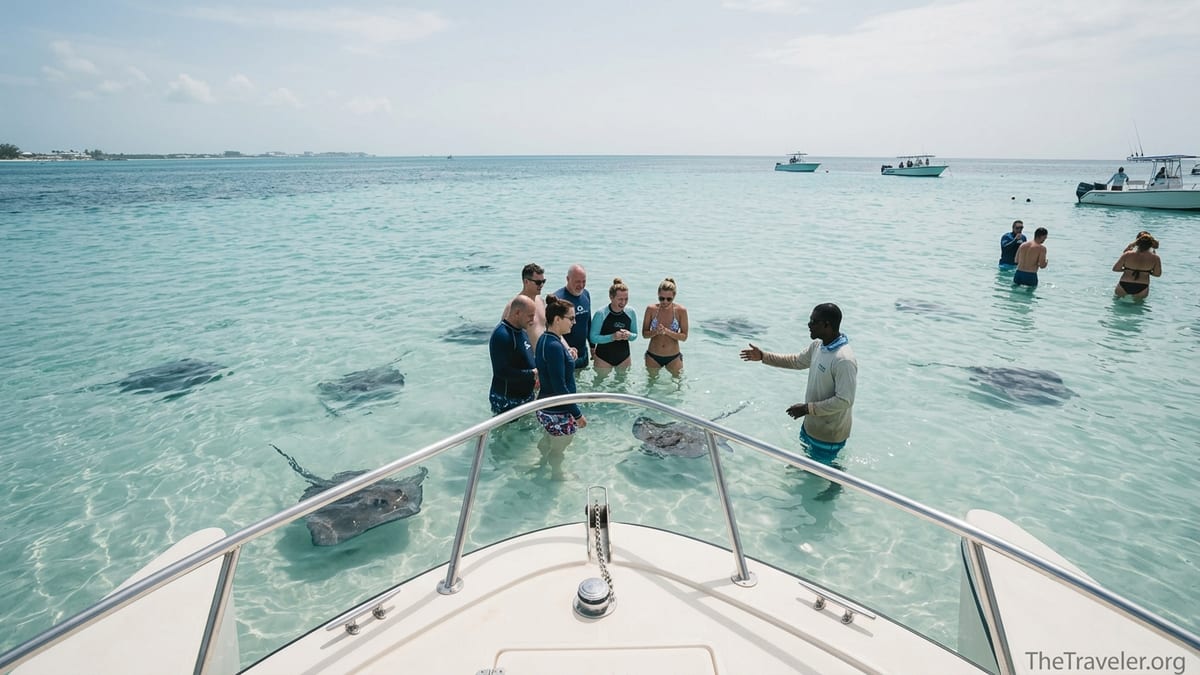
Stingray City is a series of shallow sandbars in North Sound, off the northwest coast of Grand Cayman. Here, southern stingrays glide through waist-deep water, accustomed over decades to boats arriving with food. Most tours anchor at the main sandbar, where guests can stand on soft white sand in clear turquoise water while rays swim around them. Many itineraries also include nearby sites like Coral Gardens or the barrier reef for snorkeling, and Starfish Point, a calm beach where you can see red cushion sea stars in shallow water.
On paper, many excursions look similar: a few hours by boat, a stop at the sandbar, then a snorkel. In reality, group size, departure point, schedule, boat style and crew-to-guest ratio shape everything from how crowded the water feels to how much personalized help kids or nervous swimmers receive. A budget-friendly shared tour that carries forty people will feel very different from a small-group catamaran or a private 30-foot center console with a dedicated captain and guide.
Choosing a tour type is also about logistics. Cruise passengers arriving in George Town on tender boats often need departures that align with fixed port times, while resort guests on Seven Mile Beach may prefer a late-morning or sunset run from marinas in West Bay. If you know in advance whether you want extra snorkel stops, hotel transfers or a cooler stocked with drinks, you can narrow your options quickly and avoid paying for extras you do not need.
There is no single “best” Stingray City tour. The experience that works for a couple who want a relaxed, uncrowded sail will not be ideal for a family of six trying to keep costs in check. The sections below compare group tours, private charters, cruise excursions and specialty family experiences so you can see how they differ in practice.
Shared Group Tours: The Most Affordable Way to Visit Stingray City
Shared group tours are the most common and budget-conscious way to reach Stingray City. Typical operators run boats carrying anywhere from about 20 to 50 passengers, often combining hotel guests, villa renters and independent cruise visitors. Many of these outings follow a similar three-stop pattern: the Stingray City sandbar, a snorkel at Coral Gardens or another section of the barrier reef, and a final stop at Starfish Point for photos and shallow swimming.
As of mid 2026, mainland-based tour companies and online platforms list morning or afternoon group tours in the region of 50 to 80 US dollars per adult, with discounted child rates that are often 10 to 20 dollars lower. For example, a typical three-stop “Stingray City, Coral Garden & Starfish Point” tour that lasts about three and a half hours may be advertised in the 60 to 75 US dollar range for adults, including snorkel gear, life vests, water and sometimes fruit punch. Some family operated businesses that emphasize a more local feel sit in a similar price band but limit boats to roughly 25 to 30 guests instead of filling every seat.
The main advantages of shared tours are price and convenience. You do not need to organize a group, and scheduled departures run most days, weather permitting. If your priority is simply to stand in the sandbar, touch or hold a ray under crew supervision and enjoy a short snorkel on a reef, a well-reviewed group tour will check those boxes without stretching your budget. For first-time visitors who are not sure whether they will enjoy boating or snorkeling, this is a low-commitment way to sample the experience.
The trade-offs are less personal attention and less control over timing. On a busier day when multiple cruise ships are in port, your boat might share the sandbar with many others, and you may rotate through the rays in small sub-groups while waiting on board or in the water. If you have young children who need extra help or are anxious about fish and rays brushing their legs, a larger group can be overwhelming. Noise, music volume and the overall vibe also vary widely between operators, from party-style outings with loud playlists to quieter, family-oriented boats.
Private Charters and Small-Group Catamarans: Space, Flexibility and Customization
Private charters appeal to travelers who want more space, flexibility and control over the day. Instead of buying individual seats, you charter the whole boat, which could be a center-console powerboat, a cabin cruiser or a sailing catamaran. Duration typically ranges from about three hours for a quick Stingray City run to six or eight hours for itineraries that combine the sandbar with extended snorkeling, beach time at Rum Point or Kaibo and leisurely sailing around North Sound.
In 2026, smaller private speedboats that carry up to about eight guests often start around 450 to 650 US dollars for a three-hour charter, excluding optional gratuities. Larger catamarans or motor yachts that can take 10 to 15 people may list half-day rates in the 700 to 1,200 US dollar range, depending on boat size, inclusions and season. When you divide those totals by the number of people in your group, per person pricing can become comparable to, or even less than, mid-range group tours, especially for extended families or groups of friends traveling together.
What you gain with a private charter is control. Departure time, duration at each stop and whether you prioritize Stingray City or snorkeling can all be adjusted within the constraints of tides and weather. Captains can watch how busy the sandbar is and time your arrival to avoid the thickest crowds. Families with young children can linger in shallower patches, while confident swimmers might ask for a longer reef stop, a drift snorkel on the edge of the barrier or time at a less-visited coral head. Many captains are also happy to slow down to look for turtles or to swing by quiet coves after the main stops.
Inclusions vary more widely on private trips, so it is important to read details. Most charters provide snorkel gear, life vests and a cooler with water and soft drinks. Some include light snacks, fruit platters or simple sandwiches, while others allow or encourage you to bring your own picnic and alcoholic beverages. Hotel or condo pickup by minibus or van may be bundled in or charged separately. When requesting quotes, ask explicitly whether fuel surcharges, park or marine fees and gratuities are extra so you can compare apples to apples between operators.
Cruise-Line Excursions vs Independent Operators
Grand Cayman is a major cruise port, so Stingray City excursions sold directly by cruise lines are a staple on itineraries for major brands. These packages typically bundle transport from the tender pier to the marina, the boat tour itself and return transfers back to George Town, all scheduled around your ship’s arrival and departure. A typical two-and-a-half to three-hour “Stingray City & Snorkel” excursion offered through a cruise line can be priced around 90 to 130 US dollars per adult, sometimes more when packaged with additional attractions like a turtle center visit or beach club access.
The biggest advantage of booking through your cruise line is logistical security. If a tender is delayed or the tour runs slightly late, ship-sponsored excursions have built-in communication with the vessel and generally carry a guarantee that the ship will wait or that you will be protected in the case of delays. For cruisers who prefer to let the line handle transport details and are comfortable paying a premium for peace of mind, this alone can justify the higher price.
Independent operators that cater heavily to cruise passengers, including those aggregated on major online booking platforms, often meet guests just outside the port gates and run similar three-stop itineraries to Stingray City, a reef and Starfish Point. These tours frequently cost less than the cruise ship versions, with adult pricing sometimes in the 60 to 90 US dollar range depending on season and inclusions. Smaller family-run outfits may have more flexible group sizes and may adjust timing slightly to dodge the busiest waves of ship tours, although they still need to work within port schedules.
The main risk with independent excursions is timing. If your ship is anchored offshore and tendering takes longer than planned, you might miss your tour window, although many operators will attempt to accommodate late arrivals from the same ship where possible. Similarly, if there is an unexpected delay on the water, independent boats are not formally tied to the ship’s schedule. To manage this, look for companies with strong recent reviews mentioning cruise passengers, ask about their policies for late tenders, and choose departure times that leave a generous buffer before your all-aboard deadline.
Family-Focused Tours and Snorkeling Add-Ons
Families with younger children, first-time snorkelers or older relatives often need a different style of Stingray City tour than confident swimmers. Many operators in Grand Cayman market specifically to families by limiting group sizes, choosing gentler schedules and including extra guidance in the water. For example, a family-oriented operator might cap boats at about 20 to 25 guests rather than 40, keep music volumes low, and spend more time explaining stingray behavior and safety in simple, reassuring language.
In practical terms, look for tours that highlight shallow sandbar depths and mention the approximate water level at the sandbar, often around waist to chest high for adults. Crews who frequently work with families will typically provide life jackets or pool noodles for hesitant swimmers, accompany children while they hold or feed a ray, and encourage those who prefer to watch from the boat. Many three-stop tours also mix a short first snorkel in relatively shallow water with a longer second stop once guests are more comfortable.
Snorkeling add-ons are where itineraries start to distinguish themselves. A basic Stingray City trip may include only the sandbar and a single coral reef stop in deeper water, while more comprehensive “Stingray City, Coral Gardens & Starfish Point” outings give you two environments to explore: schooling fish over patch reefs and calm, shallow starfish habitat. For families who want to introduce children to snorkeling without long swims, the easier reefs inside the North Sound lagoon, such as Coral Gardens, are friendlier than more exposed outer barrier sections.
Prices for family-focused group tours are typically in line with other shared outings, in the same broad 55 to 80 US dollar per adult bracket depending on inclusions and season. Where you may see a difference is in the overall value for children: some companies do not charge for very young kids, while others offer generous child discounts or family bundles. When evaluating options, read recent reviews for comments about patience with kids, the quality of snorkel equipment and whether the crew felt attentive rather than rushed.
What Is Usually Included: Gear, Transfers, Drinks and Photos
Most Stingray City tours, whether group or private, include the core essentials: a licensed boat and crew, fuel, required safety equipment and the rights to operate in the North Sound. On top of that, inclusions differ by operator and price level, so reading descriptions closely can save you from surprise add-ons at the dock.
Snorkel gear is typically included on shared group tours and many private charters, usually consisting of masks, snorkels and fins in a range of adult and child sizes. Some operators provide inflatable snorkel vests as well as standard life jackets. If you have sensitive skin or prefer your own gear, bringing a personal mask and snorkel can make the experience more comfortable. Rash guards or swim shirts are rarely provided, so plan to bring your own sun protection along with reef-safe sunscreen.
Hotel or condo transfers are sometimes bundled into the advertised price, especially for resorts along Seven Mile Beach. A common setup is small buses or vans collecting guests from several properties, then driving to a marina in West Bay or along North Sound Road. If transfers are not included, you may need to budget for a taxi or rental car, which is important if your accommodation is far from the departure point. Cruise excursions booked through the ship nearly always include pier transport as part of the package.
Complimentary drinks on most tours are limited to water, soft drinks and sometimes fruit punch. A few higher-end operators and private charters offer light snacks such as chips, fruit or simple finger foods. Full meals, alcoholic beverages and professional photography are more often extras. Some boats have crew members who take photos of guests holding stingrays, then sell digital packs or prints. These packages can add a noticeable amount to the total cost for families, so if you are happy using your own waterproof camera or phone case, you may prefer to skip official photos.
Typical Price Ranges and How to Compare Value
Prices for Stingray City tours fluctuate with season, demand and fuel costs, but there are clear bands that can help you benchmark offers. At the lower end, short group tours focusing on the sandbar and a single snorkel stop can sit around 50 to 65 US dollars per adult in quieter months, perhaps rising toward 70 to 80 US dollars when demand is high. Three-stop tours that include Coral Gardens and Starfish Point often cluster in the 60 to 85 US dollar range depending on operator reputation, group size and whether transfers are included.
Cruise-line excursions typically cost more for a similar time on the water, often starting close to 100 US dollars per adult and increasing for bundled combinations that add attractions like a turtle farm, Hell village photo stop or beach club access. The higher price reflects both the convenience of ship-based booking and the perceived security of ship-sponsored timing, rather than a radically different experience at the sandbar itself.
Private charters show the widest spread. A compact three-hour private speedboat trip might start around 450 to 500 US dollars in shoulder seasons, while a larger or more luxurious vessel could easily surpass 1,000 US dollars for a half day. Full-day private catamarans with food and open bar can cost several thousand dollars, putting them in a special-occasion category. When comparing private options, look carefully at maximum guest counts and what is included, then divide the total by your group size to understand the per-person value relative to upscale shared tours.
Regardless of tour type, it is wise to factor in tips. In the Cayman Islands, gratuities for boat crew are customary when service has been good. A common benchmark for shared tours is around 10 to 20 percent of the tour price, adjusted for your satisfaction, while private charters may follow a similar percentage applied to the total charter cost. When budgeting, also consider extras such as taxis to the marina, waterproof phone cases, rash guards and any post-tour meals or drinks at nearby beach bars.
How to Choose the Right Stingray City Tour for Your Style
To pick the right Stingray City tour, start with your non-negotiables. If your schedule is fixed around a cruise port call, a ship excursion or a well-reviewed independent operator with departures timed to your arrival will likely rise to the top. If you are staying on island and value flexibility, you can target early morning or late afternoon tours that avoid the peak mid-day crowds, and you may find that a smaller shared tour or private charter fits better.
Next, consider comfort in the water and your group’s dynamics. Confident snorkelers who are excited about reefs might prioritize tours that highlight extended time at Coral Gardens or the barrier reef. Nervous swimmers or families with toddlers might seek out operators that explicitly mention shallow sandbar depths, gentle introductions for children and patient guidance. In reviews and descriptions, look for phrases that suggest smaller groups, attentive crew and a relaxed atmosphere instead of rushed rotations.
Boat style also shapes the experience. Power catamarans offer stability and plenty of deck space, which is helpful for families and older travelers. Sailing catamarans provide a quieter, more leisurely ride but can take longer to travel between sites. Traditional monohull boats and center consoles can be faster and may feel more intimate in small groups, though they may have less shade. Consider shade, seating, restroom availability and ladder design, especially if anyone in your party has mobility concerns.
Lastly, think about the feel of the day. Some tours lean toward a party vibe with stronger music and drinks, while others emphasize nature, marine education and quieter conversation. Neither is inherently better, but mismatching your expectations can lead to disappointment. If you picture a calm, nature-centric outing, steer toward operators with a reputation for eco-conscious practices, reef-friendly messaging and small groups rather than volume-focused mass excursions.
The Takeaway
A visit to Stingray City is a highlight of many trips to Grand Cayman, but the quality of your experience depends heavily on the tour you choose. Shared group tours offer the most budget-friendly path to the sandbar and are ideal for straightforward encounters with the rays and a quick snorkel. Private charters and small-group catamarans cost more overall, yet deliver more space, flexibility and personalization, often making them excellent value for families and groups of friends.
Cruise-line excursions bring built-in logistical security at a premium price, while independent operators can save money and sometimes offer smaller groups if you are comfortable navigating timing. Family-focused tours and thoughtful snorkeling add-ons can turn a simple outing into a memorable, confidence-building introduction to the underwater world, especially for children and first-time snorkelers.
Whichever route you choose, check recent reviews, confirm exactly what is included and be realistic about your group’s comfort in the water. Arrive prepared with reef-safe sunscreen, sun protection and an open mind. With the right tour match, standing in clear Caribbean water surrounded by gentle rays is likely to become one of the standout memories of your time in the Cayman Islands.
FAQ
Q1. Is Stingray City safe for children and non-swimmers?
Stingray City is generally considered safe for children and cautious adults when visited with a reputable operator. The main sandbar is shallow, often around waist to chest height for adults, and most tours provide life jackets or flotation aids. Choose a family-focused tour, mention any concerns in advance and follow crew instructions closely so nervous swimmers can participate at their own pace.
Q2. What is the best time of day to visit Stingray City?
Early morning and late afternoon trips are often less crowded and can feel calmer, especially on days when multiple cruise ships are in port. Midday tours may coincide with the largest number of boats at the sandbar but can work well if you prefer a later start. If you have flexibility, ask operators which departures tend to be quieter during your travel dates.
Q3. Should I book a Stingray City excursion through my cruise line or independently?
Booking through your cruise line offers convenience and extra reassurance about timing, but usually at a higher price per person. Independent operators and online tour platforms can offer better value and sometimes smaller groups, yet require you to manage timing and meeting points carefully. If you are comfortable planning and building in a buffer before your ship’s departure, independent tours can be a good option.
Q4. How long do Stingray City tours usually last?
Most shared group tours last about three to three and a half hours door to door, including travel time by boat and multiple stops such as the sandbar, a snorkel site and possibly Starfish Point. Private charters can be shorter, around two and a half to three hours, or extend to half- or full-day experiences that combine Stingray City with additional snorkeling and beach time.
Q5. What should I bring on a Stingray City tour?
Plan to bring a swimsuit, towel, reef-safe sunscreen, sunglasses, a hat and a lightweight cover-up or rash guard for sun protection. Water-resistant sandals or boat shoes are helpful on deck, and a waterproof case for your phone or camera is useful if you plan to take photos in the water. Most tours provide snorkel gear, but you can bring your own mask and snorkel if you prefer.
Q6. Can I touch or feed the stingrays, and is it ethical?
Most tours allow guests to touch and, under supervision, briefly hold stingrays while a guide supports the animal and explains how to avoid sensitive areas like the tail. Rays are attracted to the sandbar because of decades of regular feeding from fishermen and tour boats, and many operators now follow guidelines intended to minimize stress. If you are concerned, you can choose to observe from a short distance, avoid feeding and seek out companies that emphasize gentle, respectful interaction.
Q7. Are photos and videos included in the tour price?
Some operators have crew members who take photos of guests holding stingrays and then sell digital packages or prints separately, while others simply allow you to capture your own images. It is uncommon for professional photos to be fully included in the base tour price, especially on lower-cost group trips. If photos are important to you, confirm policies and pricing in advance so you can budget accordingly or bring your own waterproof camera.
Q8. What happens if the weather is bad on the day of my tour?
Operators regularly monitor wind and sea conditions in North Sound and may cancel or reschedule tours if the water becomes too rough or visibility drops significantly. Light rain does not always mean a cancellation, but strong winds and storms can make the sandbar and reefs uncomfortable or unsafe. Check your tour’s cancellation policy and keep an eye on messages from the operator in the 24 hours before departure.
Q9. Do I need to know how to snorkel before joining a tour?
No previous snorkeling experience is required for most Stingray City trips. Crew members typically demonstrate how to use a mask and snorkel, adjust fins and enter the water safely. If you are a beginner, let the crew know so they can offer extra guidance, fit equipment carefully and possibly suggest shallower or more sheltered spots for your first attempts.
Q10. How far in advance should I book a Stingray City tour?
During peak travel periods such as major holidays and school breaks, it is wise to book at least several weeks in advance, especially for small-group tours or private charters. In quieter seasons, you may find availability closer to your travel dates, but popular morning departures can still fill quickly. Cruise passengers should consider booking as soon as they finalize their sailing to secure time slots that fit their port schedule.