


Stockholm has just leapt onto Skyscanner’s trend list with a reported 99 percent year-on-year surge in searches, pushing Sweden’s capital from Nordic insider tip to mainstream city break. That spike in attention means more pressure on beds, museum time slots and archipelago boats, but with a bit of planning you can still experience Stockholm’s islands, neighborhoods and world class museums without wrecking your budget. This guide focuses on realistic spending, the key travel passes and concrete examples of what a long weekend in Stockholm actually costs in 2026.
Get the latest updates straight to your inbox!
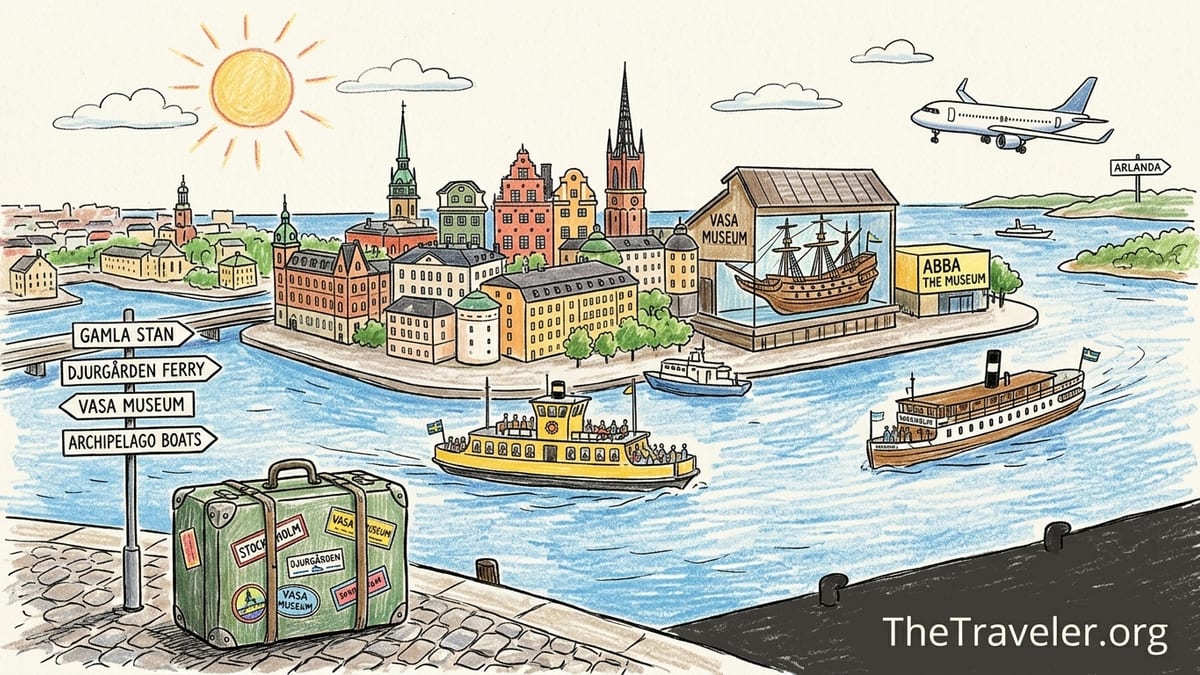
Stockholm’s boom: what Skyscanner’s 99 percent growth means
Skyscanner’s latest trend report names Stockholm as one of its fastest rising city destinations, with searches increasing by roughly 99 percent compared with the previous year. In practice that means more visitors competing for the same central hotel rooms in Norrmalm, Gamla Stan and Södermalm, and more pressure on timed tickets at headline attractions such as the Vasa Museum and ABBA The Museum. If you are visiting between May and September, especially around Midsummer and major events, you now need to think more like a big city traveler than someone slipping into a quiet Nordic capital.
The good news is that Sweden still has no tourist tax on hotel stays, so you avoid the nightly surcharges common in many European cities. A mid range hotel near Central Station or in hip Södermalm often runs around 1,800 to 2,500 Swedish kronor per night in high season for a double room, while private hostel rooms or budget chains just outside the old town tend to start closer to 1,200 kronor if booked a few months ahead. With Skyscanner searches rising so sharply, those lower rates are going first on peak weekends, so flexible dates and early booking matter more than ever.
Flights are following the same pattern. Budget carriers and flag airlines now operate more seasonal services into both Stockholm Arlanda and the smaller Bromma airport, but as demand has climbed, the very cheapest fares advertised in sale campaigns are harder to secure for popular summer Fridays and Sundays. Using price alerts and looking at midweek arrivals into Stockholm can easily save several hundred kronor that you can then put toward museum entries or an archipelago boat trip.
On the ground, the city has responded to growing tourism by extending opening hours at some museums in summer and by promoting contactless tickets across the public transport network. You tap a bank card or phone at metro and bus gates to buy a 75 minute single ride for around 43 kronor in 2026, which is often cheaper for short stays than multiple airport trains or taxis. That digitization helps keep queues down even as visitor numbers climb.
The islands that make Stockholm feel like a small city
Stockholm is built on islands and peninsulas, and your sense of the city changes dramatically depending on where you stay. Most first time visitors sleep in Norrmalm, the busy downtown district around Central Station, or in Gamla Stan, the compact medieval old town on its own island. Walk a few minutes south over the bridge and you are in Södermalm, a larger island with residential streets, independent cafés and some of the best viewpoints at Monteliusvägen and Fjällgatan, both free to visit and ideal if you want classic views of the old town skyline.
To the east, Djurgården is Stockholm’s green museum island. You reach it by tram from the city center or by the Djurgården ferry from Slussen, and both are fully covered by the city’s SL travelcards. Djurgården is where you will find the Vasa Museum, Skansen open air museum and zoo, ABBA The Museum and several smaller attractions. A realistic museum day might mean paying roughly 240 kronor for an adult ticket to the Vasa Museum in high season, around 300 kronor for Skansen depending on date and events, and somewhere from the high 200s to mid 300s for ABBA The Museum depending on time slot and season.
Further out are the residential islands of Kungsholmen and Lidingö. Kungsholmen, west of the center, is a calm base with promenade walks along Norr Mälarstrand and access to the City Hall tower for views over Lake Mälaren. Lidingö to the northeast, reachable by tram line Lidingöbanan, provides access to the Millesgården sculpture park, an under appreciated stop that pairs clifftop terraces with views back to the city. None of these require special boat tickets; regular metro, tram and bus services are covered by SL passes and make it simple to treat each island as a different neighborhood.
Even within central Stockholm you can feel the rhythm of an archipelago town. Commuter ferries cross between Slussen, Skeppsholmen and Djurgården carrying residents and visitors alike, and they accept the same SL tickets as the metro. You might pay nothing extra for a short evening cruise from Slussen to Djurgården on a sunny summer night if you already hold a valid 24 or 72 hour card, turning your transport pass into a miniature harbor tour.
How to see the Stockholm archipelago without overspending
The real Stockholm archipelago starts beyond the city center, stretching into a maze of some 30,000 islands and skerries in the Baltic Sea. For visitors with limited time, a realistic goal is to reach one or two easily accessible islands in a day using a mix of commuter services and dedicated archipelago boats. It is important to understand that most longer distance boats are operated by companies such as Waxholmsbolaget and are not fully covered by regular city travelcards, so you should budget separate funds for these trips.
Many travelers start with Vaxholm, a small wooden town often described as the gateway to the archipelago. Classic boats from central Stockholm typically take around one hour and in 2026 often charge in the region of 180 to 220 kronor for a one way adult ticket depending on the time of day and whether you choose a faster or slower service. A simple day out might involve a morning departure to Vaxholm, a stroll to the fortress, lunch at a harbor café for roughly 150 to 250 kronor per main course, then a late afternoon return to Stockholm.
For a quieter feel, islands such as Grinda and Sandhamn are popular with Stockholmers in summer. Reaching them usually takes 1.5 to 2.5 hours by boat from the city, with fares rising accordingly. When boats are busy in July and early August it is worth reserving tickets a few days ahead. If you would rather avoid higher boat fares, you can use your SL travelcard to ride certain commuter ferries out to suburbs like Ekerö in Lake Mälaren or Nacka and Lidingö in Saltsjöfjärden, getting a taste of life surrounded by water without paying extra beyond your pass.
Some guided passes and attraction cards bundle short sightseeing cruises with museum entry, and these can represent value if you plan to pack your days. For example, a 24 or 48 hour hop on hop off boat ticket on central routes often costs a little over 200 kronor per adult and may be discounted when purchased in combination with a bus tour or museum tickets. Before buying one, add up realistic individual costs for your own plans. If you are mainly going to Djurgården and a single outer island, standard ferries and a point to point archipelago boat may work out cheaper than an unlimited sightseeing pass.
Understanding Stockholm’s travelcards, ferries and airport options
Stockholm’s public transport is run under the SL brand and covers metro, buses, commuter trains, trams and some ferries. As of late 2026, an adult single fare bought with contactless payment costs around 43 kronor and is valid for 75 minutes of travel across almost the entire network. For most visitors, the better value option is an SL travelcard that gives unlimited rides for a set period. A 24 hour travelcard bought through official channels is around 180 kronor, while a 72 hour card sits close to 360 kronor for adults. Children and youths pay lower prices, and there are slightly higher rates if you insist on a physical plastic card rather than app or contactless media.
These travelcards are especially useful because they also cover the city center ferries. Your 24 or 72 hour pass is valid on the Djurgården ferry between Slussen and Djurgården, and on a handful of commuter ferry lines that feel like mini cruises past city landmarks. It does not, however, cover most longer archipelago services or the dedicated high speed airport train. You can buy travelcards in the SL app, at ticket machines in metro stations, or at convenience chains such as Pressbyrån and 7 Eleven, which is handy if you prefer to pay with cash or need help in English.
Getting from Arlanda Airport into the city illustrates Stockholm’s range of price points. The Arlanda Express train from the airport to Stockholm Central is the fastest option, taking about 18 minutes, but a full price adult ticket can cost several hundred kronor. Cheaper alternatives include Vy Flygbussarna airport coaches, which usually charge a bit over 100 kronor for the 45 minute ride, and the SL commuter train plus surcharge combination, where one combined ticket covers both your SL fare and the Arlanda station fee. If you are two or more people with luggage, occasional taxi promotions or ride hailing services can rival or even undercut the train on price, but always agree on a fixed rate at the airport taxi rank and avoid unmarked cars.
Within the city, it is worth comparing a 72 hour travelcard with individual contactless payments. For example, if you plan three or more metro or bus journeys per day, plus a couple of short ferry rides, the 360 kronor cost of the three day card usually works out cheaper than buying multiple 43 kronor singles. On the other hand, if you prefer to walk and only foresee two or three rides in total, tapping a bank card for each journey may save money. Stockholm is compact, and most central districts are within a 20 to 30 minute walk of each other.
Stockholm’s standout museums and what they cost
For a relatively small capital, Stockholm has an impressive museum line up that ranges from maritime history to contemporary photography. The Vasa Museum on Djurgården is the city’s biggest single draw, built around a 17th century warship that capsized and was salvaged almost fully intact. In 2026, adult entry is typically just under or around 240 kronor in high season, with children visiting for free. Audio guides and short guided tours are included in the ticket, so you do not need to pay extra unless you join a special themed tour.
ABBA The Museum, a short walk away on Djurgården, attracts music fans with interactive exhibits and original costumes. Tickets here are timed in 30 minute entry slots, with dynamic pricing that generally puts adult tickets somewhere between the high 200s and mid 300s kronor depending on the date, time and how far ahead you book. Booking online secures your slot and can be slightly cheaper than buying at the door, which matters on busy weekends or during school holidays when afternoon times can sell out.
Fotografiska, the contemporary photography center in Södermalm housed in a former customs building by the water, runs rotating exhibitions and a popular top floor restaurant. Its ticketing uses flexible pricing, but official sources in 2024 and 2025 list adult tickets typically in the 179 to 219 kronor range depending on day and time, with some discounts for late evening visits and special offers such as midweek duo tickets. Meanwhile, traditional art lovers should consider Nationalmuseum on the Blasieholmen peninsula, where adult entry for major collections is around 160 kronor, with free admission on certain evening slots such as Thursday nights, effectively turning one evening into a high value cultural outing.
Other paid museums include the open air Skansen, the Nordic history focused Nordiska museet, the Nobel Prize Museum in Gamla Stan and the Swedish History Museum in Östermalm. Several of these introduce adult entry fees in the 150 to 200 kronor range while allowing under 18s in for free. If you plan to visit more than three or four major museums in three days, it is worth checking whether a city attraction pass including entries to Vasa, Skansen, Nobel and a short boat tour will save money compared with buying separate tickets.
Choosing neighborhoods: where to stay and what you spend
Deciding between Stockholm’s neighborhoods affects not only atmosphere but also daily costs. Staying in Gamla Stan means charming alleys and being able to walk to the Royal Palace in minutes, but space is tight and many buildings are centuries old. That often translates into smaller rooms at higher prices and fewer budget food options once the day trippers leave. You might pay 2,200 to 2,800 kronor per night for a mid range double here in peak season, then need to walk to adjacent Norrmalm or Södermalm for broader dining choice at non tourist prices.
Norrmalm is more modern and practical, with a concentration of chain hotels around the central station. Prices here span from around 1,200 kronor for simple business hotels at weekends up to 2,500 kronor or more for full service properties with spa access. You have immediate access to the Arlanda Express, long distance trains and almost all metro lines, which can save taxi costs on arrival and departure. It is also where you will find department stores and shopping streets such as Drottninggatan.
Södermalm has become a favorite for visitors who want a slightly more local feel and are willing to ride the metro two or three stops into the center. Around the SoFo area near Nytorget and the cliffs above Mariatorget, you will find independent cafés, vintage shops and creative restaurants. Hotel prices have risen in recent years, but you can still find design conscious guesthouses and smaller hotels around 1,500 to 2,000 kronor per night if you book early or visit in shoulder seasons such as late April or early October. Eating out here can be gentler on the wallet than in Gamla Stan, with lunch deals around 130 to 160 kronor and neighborhood bistros offering mains in the 190 to 260 kronor band.
If you are on a strict budget, consider suburbs such as Solna, Sundbyberg or parts of Kungsholmen that are one or two metro or commuter rail stops from the center. These areas often host chain business hotels that drop weekend rates significantly, sometimes below 1,000 kronor per night, without adding more than 15 to 20 minutes to your journey into the old town. Combine that with a 72 hour SL travelcard and you can often save enough on accommodation to pay for several museum entries or a full day archipelago excursion.
Realistic daily budgets and money saving tactics
A realistic mid range daily budget for a visitor to Stockholm in 2026, excluding flights, might sit around 1,200 to 1,800 kronor per person. At the lower end of that range you would likely share a double room in a mid range hotel or stylish hostel, use a 72 hour SL travelcard, choose one paid museum most days and focus on casual meals and supermarket snacks. At the higher end you can add more sit down restaurant dinners, several museum entries and at least one paid boat excursion into the archipelago.
For accommodation, assume around 700 to 1,300 kronor per person per night if sharing a mid range twin or double, or 400 to 600 kronor per person in a well rated hostel dorm. Transport with a three day SL travelcard works out to about 120 kronor per day if you use it heavily for metro rides, ferries and buses. Food can then absorb anything from 250 kronor per day if you self cater and rely on supermarket lunches and occasional fast food, up to 500 or 600 kronor with one restaurant main, one café stop and breakfast at your accommodation.
Museum and attraction spending varies with your interests. A common three day pattern for a first timer might be: Vasa Museum and Nordiska museet on one day for roughly 400 kronor in total, ABBA The Museum and Skansen another day for around 600 to 700 kronor combined, plus one other museum or cultural site such as Nationalmuseum or Fotografiska for another 160 to 220 kronor. That yields an attractions budget of around 1,200 to 1,400 kronor over three days, which you can trim by focusing on free museums and taking advantage of free evening slots when available.
To stretch your money, seek out lunch specials advertised as dagens lunch on chalkboards outside cafés and bistros. These often include a hot dish, salad, bread and coffee for 120 to 160 kronor on weekdays, substantially cheaper than the same restaurant at dinner. Drinking tap water is completely safe and normal, and many Stockholmers refill bottles from fountains rather than buying single use plastic. Finally, remember that cards are accepted almost everywhere and some venues are entirely cash free, so there is little need to exchange large amounts of foreign currency.
Planning a three day Stockholm and archipelago itinerary
An efficient three day itinerary weaves together neighborhoods, museums and at least a taste of the archipelago. On day one you could arrive, check into a hotel near Central Station or in Södermalm and buy a 72 hour SL travelcard. Spend the afternoon walking Gamla Stan, visiting the Royal Palace or simply exploring narrow lanes until the changing light makes them glow. In the evening, ride the metro to Slussen and take the Djurgården ferry across the water and back just to understand how closely water and city life intertwine, all included in your pass.
Day two can focus on Djurgården. Take the tram or ferry in the morning and head straight to the Vasa Museum, booking a mid morning slot to avoid peak tours. After a few hours there, cross to Nordiska museet or Skansen, depending on your interests. If music is a priority, reserve a timed ticket to ABBA The Museum for late afternoon, then ride the tram back into the city for dinner in Östermalm or Södermalm. With SL covering your trams and ferries, you pay only for the museum entries themselves.
Day three is the time to experience the archipelago. If you want a gentle introduction, catch a morning boat to Vaxholm, wander the fortress and pier, then return to Stockholm in late afternoon for last views from Monteliusvägen. Travelers with more energy can opt for a longer cruise to Grinda or Sandhamn, leaving early and returning after dinner. In all cases, build in at least one hour’s buffer before any evening flights or trains, as archipelago services are more vulnerable to weather and crowding in peak season.
Throughout your stay, keep an eye on museum websites and local listings for temporary exhibitions and late opening nights, which are a good way to add extra culture without stretching your budget. Stockholm’s current surge in popularity means more programming and events, but also fuller calendars, so pre booking the two or three experiences that matter most to you will keep the rest of your trip flexible and relaxed.
Conclusion: making Stockholm’s water world work for you
Stockholm’s jump in Skyscanner searches confirms what repeat visitors already know: few cities combine island scenery, modern museums and efficient transport as elegantly as Sweden’s capital. The recent 99 percent growth in interest brings crowds and higher pressure on central beds and timed museum slots, but it also supports longer opening hours, new flight routes and more varied cultural programming.
If you understand how SL travelcards integrate metro, buses and ferries, recognize when to pay separately for archipelago boats, and plan a realistic daily budget that reflects accommodation and museum prices in 2026, Stockholm becomes a manageable and deeply rewarding destination. Choose a neighborhood that matches your style, from storybook Gamla Stan to creative Södermalm, and balance big ticket highlights like the Vasa Museum and ABBA The Museum with quieter islands and free viewpoints.
Most of all, remember that the essence of Stockholm lies in its relationship with water. From a commuter ferry sliding past the old town to a slow boat weaving through outer islands, those moments are often the most memorable of any trip. With a little smart planning around passes, prices and timing, you can enjoy that experience fully, even as Stockholm steps firmly into the international spotlight.