


More news on this day
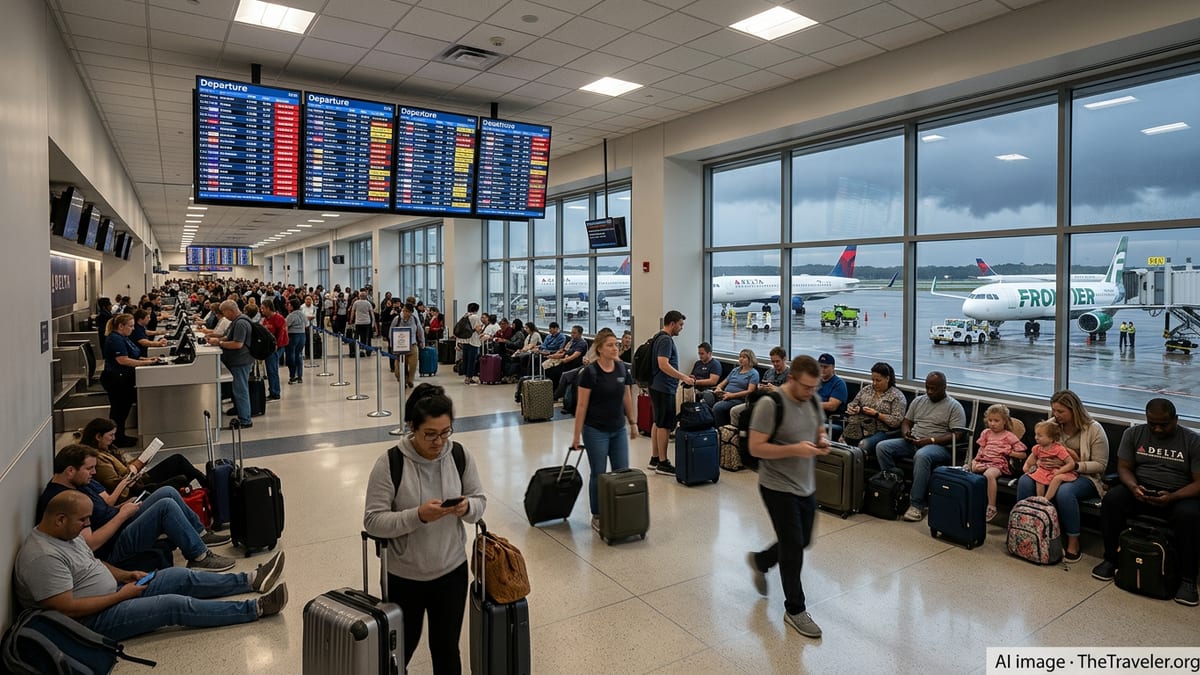
Hundreds of passengers were left stranded at Philadelphia International Airport on Monday as a fresh wave of weather-related disruption and congestion across the U.S. air network saw at least 15 flights cancelled and 211 delayed across major hubs including Chicago, Miami, Dallas, New York and Atlanta.
Get the latest news straight to your inbox!
Weather Turbulence Ripples Across the Network
Publicly available flight-tracking data and operational summaries point to a familiar trigger behind the latest round of disruption: fast-moving storm systems and unsettled summer weather across key aviation corridors. Thunderstorms and heavy rain over the Midwest and Mid-Atlantic have periodically slowed departures and arrivals at some of the country’s busiest hubs, including Chicago O’Hare, New York area airports and Atlanta, creating a cascade of delays that ultimately stranded travellers in Philadelphia.
Ground delays and air-traffic flow restrictions at busy hubs tend to reverberate through the national network, as aircraft and crews arrive late into their next assignments. When storms build or shift along heavily used routes between the Northeast, Midwest and Southeast, congestion can quickly outpace recovery efforts, especially during peak summer schedules when aircraft are flying close to capacity and spare planes are limited.
In this latest episode, the bottlenecks left some Philadelphia-bound and Philadelphia-originating flights without available aircraft or crews at the right time, contributing to both outright cancellations and rolling delays that stretched into many hours for some passengers.
Philadelphia’s position as a major connecting gateway amplified the impact. Travellers starting their journeys elsewhere found themselves forced into unexpected overnight stays after missing onward connections, while local passengers faced repeated schedule changes as airlines tried to reroute aircraft around the worst of the weather.
Major Carriers Hit: American, Frontier, United, Delta and JetBlue
Operational snapshots from airline dashboards and flight-status services show that American Airlines, Frontier, United, Delta, JetBlue and several smaller carriers all experienced knock-on effects from the day’s weather and congestion. American, which maintains one of its largest hubs in Philadelphia, appeared particularly exposed, with cancellations and lengthy delays on a mix of domestic routes radiating to and from the city.
Frontier, which has steadily expanded low-cost service linking Philadelphia with Chicago, Miami, Dallas, Atlanta and New York, saw multiple departures pushed back as aircraft arriving from storm-affected airports missed their scheduled turnaround windows. Budget carriers typically operate tighter schedules with less slack in their fleets, which can magnify the effect of even relatively short disruptions.
United, Delta and JetBlue reported scattered issues across their networks, with delays concentrated at large connecting hubs and coastal gateways. According to published coverage and publicly shared operational data from earlier severe-weather episodes this year, those carriers have already been contending with a busy summer travel season, periodic staffing constraints and ongoing air-traffic control challenges in congested airspace, all of which can slow recovery when storms strike at the wrong time.
While the total of 15 cancellations on Monday is modest compared with the worst mass disruption days seen in recent years, the 211 delays recorded across major U.S. cities underscore how even a limited number of scrubbed flights can force thousands of passengers into rebookings and missed connections when aircraft are already full.
Philadelphia Passengers Face Long Waits and Tough Choices
At Philadelphia International Airport, the operational strain translated into crowded concourses, long customer-service lines and passengers weighing whether to wait for new itineraries or abandon their trips altogether. As aircraft and crews were diverted or held elsewhere in the network, some routes saw only limited options for same-day rebooking, particularly for travellers headed to smaller markets that depend on connections through hubs like Chicago, Dallas or Atlanta.
Reports from travellers and historical patterns from prior disruption events suggest that rolling delays were a significant source of frustration. Instead of a single definitive cancellation, some flights were repeatedly pushed back in small increments, leaving passengers reluctant to leave the gate area or seek hotel rooms in case an aircraft suddenly became available.
The timing of the disruption also complicated plans for families embarking on summer vacations, business travellers with tightly scheduled meetings, and international passengers relying on transatlantic connections. Missed onward flights from East Coast gateways added another layer of complexity, forcing some travellers into next-day departures or rerouting via alternative hubs.
Airport operations teams in Philadelphia continued working to move passengers through security and baggage systems as efficiently as possible, but the underlying constraints were largely driven by conditions and decisions elsewhere in the national network, limiting how quickly the situation could be resolved locally.
Systemic Strains Exposed as Peak Summer Travel Builds
The latest wave of disruption arrives as the U.S. airline industry moves deeper into what is expected to be one of the busiest summer travel seasons in years. Published analyses of recent operational data show that weather remains a leading cause of flight delays and cancellations, but it often exposes deeper system vulnerabilities, from tight crew scheduling rules to limited gate capacity and high load factors on popular routes.
Carriers including American, Delta, United, Frontier and JetBlue have all recently outlined efforts to improve their handling of irregular operations, expanding self-service options through mobile apps and kiosks, and in some cases adjusting schedules on routes that have proven especially prone to congestion. However, when storms disrupt multiple hubs at once, even improved digital tools can be overwhelmed by the sheer volume of passengers seeking to rebook.
Air-traffic control staffing and infrastructure constraints in key regions, particularly the Northeast corridor, continue to be cited in industry analyses as an aggravating factor. When thunderstorms reduce available airspace or runway capacity, controllers must space aircraft farther apart for safety, cutting into hourly throughput at already busy airports and leading to the type of ground delays that ripple outward through the network.
For travellers, the convergence of these issues can make even short-haul trips unpredictable on stormy days. The situation in Philadelphia highlighted how quickly a localized weather system in one part of the country can strand passengers hundreds of miles away as the national network adjusts in real time.
What Travellers Can Do When the System Stalls
Consumer advocates and travel specialists point to several strategies that can soften the impact when conditions similar to Monday’s disruption arise. Booking earlier flights in the day, for example, can reduce exposure to the compounding effect of upstream delays. Nonstop routes, where available, also remove the risk of missing connections at congested hubs, though they may be more expensive or less frequent.
When cancellations or long delays occur, publicly available airline policies indicate that passengers generally have the option to request rebooking at no additional cost on the next available flight, or in some cases to seek a refund if they choose not to travel. During widespread disruption events, many carriers open temporary travel waivers that allow itinerary changes without standard change fees, though these are typically limited to specific dates and routes.
Travel experts consistently recommend that passengers use multiple channels at once when seeking assistance, combining airline mobile apps with staffed airport counters and, where available, phone or chat support. Securing a confirmed seat on an alternative itinerary can be critical on busy travel days when open seats are scarce across multiple airlines.
As operations gradually normalize following the latest round of cancellations and delays, passengers stranded at Philadelphia and other major hubs are expected to filter to their destinations over the next 24 to 48 hours. With summer storm patterns forecast to continue, however, the episode serves as another reminder that the U.S. air travel system remains highly sensitive to both weather and structural pressures, and that even relatively small numbers of cancellations can leave hundreds of travellers unexpectedly grounded.