


More news on this day
Severe weather and airspace congestion around Chicago O’Hare International Airport on Sunday led to widespread flight disruptions, with publicly available tracking data indicating roughly 340 delayed departures and arrivals and nine cancellations affecting United, Republic, American, Jazz and other carriers on routes across the United States, Canada, Germany, France, Japan and additional international markets.
Get the latest news straight to your inbox!
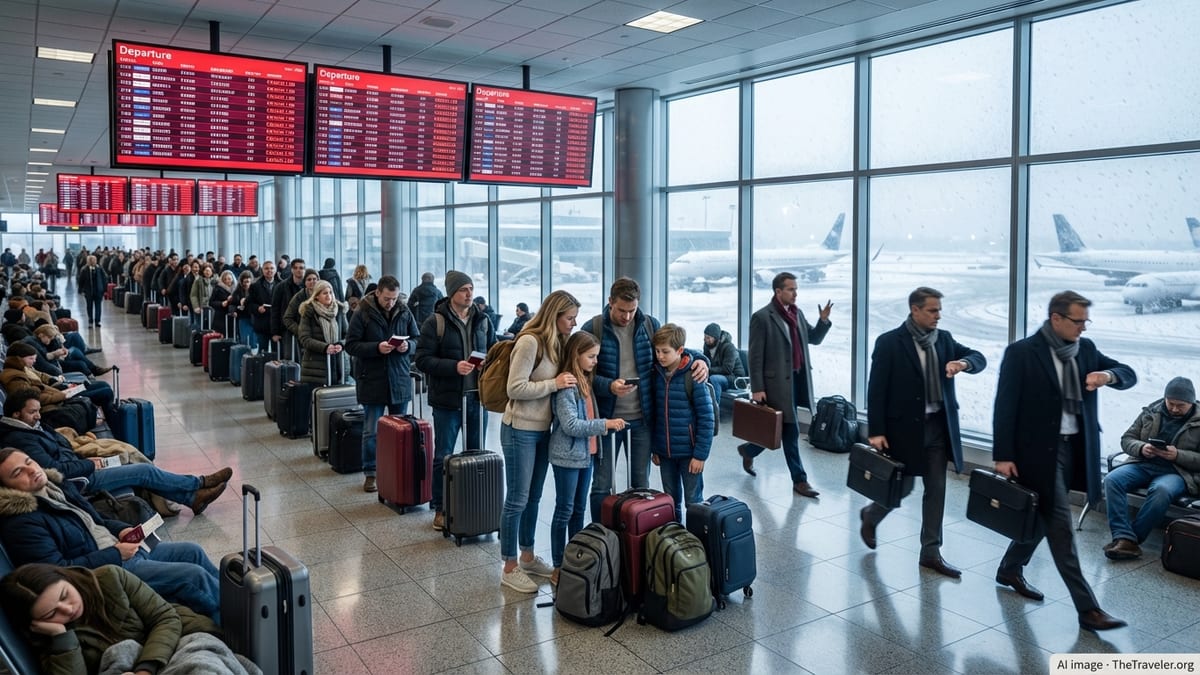
Storms And Congestion Put Chicago Hub Under Strain
The latest round of delays coincided with thunderstorms sweeping through the Chicago region and a ground delay program that slowed operations at O’Hare. Local weather coverage for June 21 described storms capable of producing heavy rain and flooding, with related airport delays and overnight restrictions on arrivals and departures at the city’s main hub.
O’Hare is among the busiest airports in the world and a key connecting point for transcontinental and transatlantic traffic. When storms move through northern Illinois, flights often face longer taxi times, increased spacing in the arrival and departure queues, and reroutes around active weather systems, all of which can cascade into missed connections and rolling delays throughout the day.
Recent weeks have already seen weather related waivers and congestion alerts tied to Chicago, with airlines adjusting schedules and allowing customers to rebook trips around anticipated storms. Sunday’s disruptions added to that pattern as heavy traffic pushed O’Hare’s infrastructure and regional air traffic control resources to the edge of available capacity.
Impact On United, Republic And Partner Airlines
United Airlines, O’Hare’s largest tenant, bore a substantial share of the delays. Flight status boards for mainline United and its United Express partner Republic Airways showed multiple departures from Chicago pushed back by varying amounts of time, particularly on routes to domestic hubs and high demand business markets. Extended taxi queues and weather related flow control contributed to late departures even when aircraft and crews were available.
Regional affiliate Republic, operating under the United Express banner, also experienced schedule knock on effects as aircraft arriving late into Chicago could not be turned quickly for outbound legs. With many regional routes structured as short out and back segments from O’Hare, a delay of an hour or more on the first morning flight can ripple through an entire line of service for the day, generating compounding lateness for customers traveling to smaller Midwestern and East Coast cities.
American Airlines, which maintains a significant operation at O’Hare alongside its main Chicago Midway and Dallas Fort Worth activities, reported slower operations on select domestic and international flights. Partner carriers such as Air Canada Jazz, operating regional services to Canadian destinations, also featured in the disruption tallies as storms and congestion reduced the overall number of movements that could be handled in peak periods.
Delays Stretch Across North America, Europe And Asia
Although the bottleneck centered on Chicago, the impact quickly spread to other regions. Publicly available tracking and schedule data showed delayed flights from O’Hare to major U.S. cities including New York, Houston and Los Angeles, where arrival time slippages strained gate availability and crew rotations at those downline airports.
Transatlantic services from Chicago to European hubs in Germany and France also faced schedule pressure. Long haul flights already built around tight overnight windows were forced to await improving conditions or departure slots, leading to later than planned arrivals in Europe and potential misconnects for passengers heading onward to secondary cities. Even modest delays at departure can result in missed banked connections at major European hubs.
Asia bound travelers saw similar challenges. Chicago flights to Japan and other points in East Asia depend on precise timing to connect into morning and evening banks on the far side of the Pacific. When storms or congestion force departures to slide, carriers often have limited flexibility to recover schedules the same day, increasing the likelihood that some passengers will require rebooking or overnight accommodations at their connecting airports.
Operational Pressures Add To Weather Challenges
Beyond the immediate thunderstorm activity, O’Hare has been navigating broader operational pressures as airlines expand schedules and air traffic control staffing remains tight. Industry discussions in recent months have highlighted how additional flights from major carriers at the airport can quickly consume available runway and taxiway capacity, leaving the network vulnerable when weather or temporary staffing constraints arise.
Ground delay programs, which meter departures into crowded terminal airspace, are a standard tool used by traffic managers to prevent overloads at busy hubs. While effective at maintaining safety margins, these programs inevitably translate into longer waits at the gate and on the taxiway for airlines based at O’Hare, particularly during afternoon and evening peaks when arrival and departure volumes are at their highest.
The current pattern of disruptions suggests that even routine summer thunderstorms can now trigger outsized effects across the network, given how intensively carriers are utilizing available slots at major hubs. The combination of high demand, tightly banked schedules and limited slack in aircraft and crew resources leaves little room to absorb unexpected slowdowns.
What Travelers Are Experiencing And How Airlines Respond
For passengers, Sunday’s disruptions translated into extended waits at gates and in terminal concourses at Chicago and downline airports. Travelers arriving from delayed inbound flights frequently found their connections already boarding or closed, prompting long lines at customer service counters as they sought rerouting options for domestic and international journeys.
Publicly posted airline advisories and prior travel waivers tied to Chicago weather give some indication of the tools carriers are using to manage repeated bouts of disruption. In recent storm cycles, large hub airlines have allowed customers ticketed to or through O’Hare to move their trips by several days without change fees, or to reroute via alternative hubs where capacity is available. On days with active thunderstorms, carriers have also preemptively thinned schedules to create more breathing room for the flights that remain.
Travelers affected by the latest round of delays and scattered cancellations are being encouraged, through published guidance, to monitor flight status frequently, make use of airline mobile apps where possible, and consider carrying on luggage to improve flexibility when last minute gate or routing changes occur. With summer thunderstorm season in full swing across the Midwest, the pattern seen at Chicago O’Hare on Sunday underscores how quickly local weather can ripple through North American and international aviation networks.