


More news on this day
Travelers at Denver International Airport faced hours-long waits and missed connections on June 21 as a wave of disruptions left United, Southwest, SkyWest, Frontier and other carriers reporting hundreds of delayed flights and a small number of cancellations across North America, Europe and Asia.
Get the latest news straight to your inbox!
Ripple Effects From Denver Across Global Networks
Operational data and live flight tracking on June 21 indicate that roughly 472 flights operated by major North American carriers, including United Airlines, Southwest Airlines, SkyWest Airlines and Frontier Airlines, were delayed worldwide, with at least seven services canceled. While the bulk of affected flights were within the United States and Canada, knock-on schedule disruptions touched services involving Germany, France, Japan and other long haul destinations.
Denver International Airport, a central hub for United and a key base for Southwest and Frontier, emerged as a focal point of the disruption. Delayed departures from Denver pushed back aircraft and crews scheduled to operate onward legs, straining carefully timed rotations and creating gaps that cascaded through networks. Passengers connecting through Denver for transborder and transatlantic services, including routes into Western Europe and East Asia, reported missed onward flights and unscheduled overnight stays.
Publicly available airport planning documents underscore how vulnerable Denver can be to such ripple effects. Denver serves as a major connecting point not only for domestic itineraries but also for international links to Canada and beyond, with airlines depending on tightly synchronized banks of arrivals and departures. When those banks are disrupted for several hours, the impact can radiate quickly to far flung destinations.
The sheer scale of the delays recorded on June 21 is consistent with patterns seen during prior periods of operational stress, when weather, congestion or crew displacement have combined to push average delay figures higher for large hub carriers. Historical performance summaries from transportation authorities show that carriers such as United, Southwest, Frontier and SkyWest each operate tens of thousands of flights per reporting period, so even a modest percentage of delayed services can translate into hundreds of affected departures in a single day.
Grounded at Denver: Missed Connections and Overnight Stays
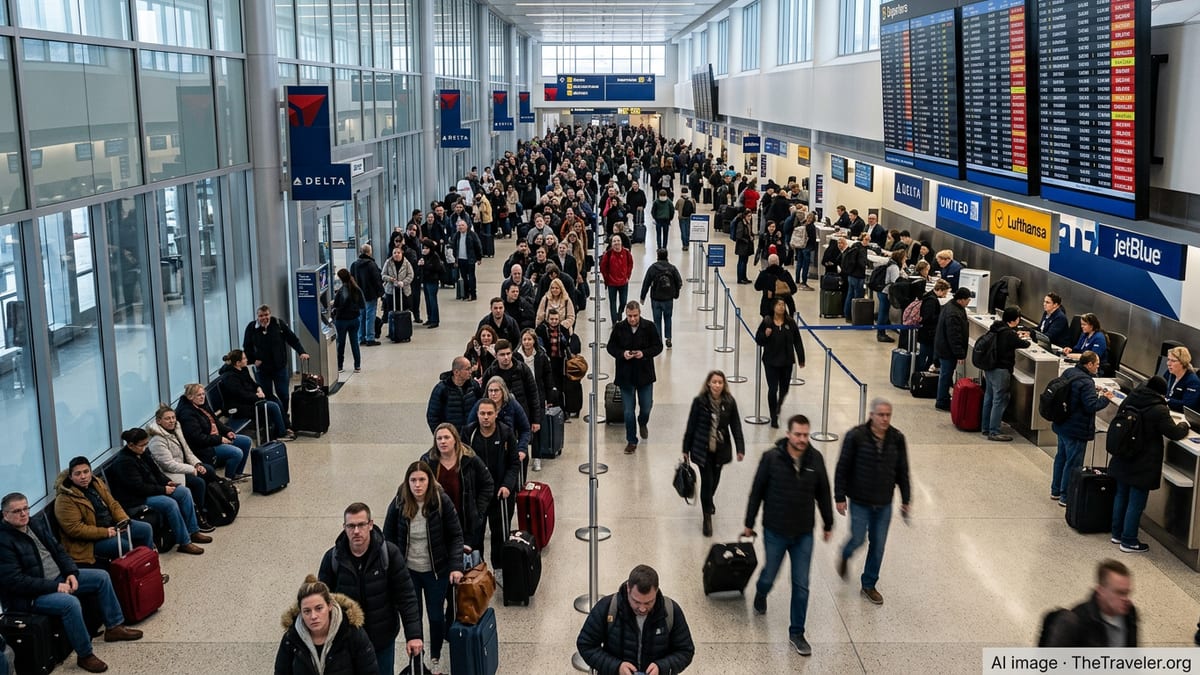
At Denver, the visible effect of the disruption was clusters of travelers waiting at crowded gates as departure times were repeatedly pushed back. Some passengers arriving on delayed feeder flights found that their onward services to coastal hubs or international gateways had already departed, leaving them to rebook for next day departures. Others reported being moved to alternate itineraries involving additional stops, extending travel days to 18 hours or more.
Because Denver functions as both a hub and an origin or destination airport, the disruption affected several types of itineraries. Travelers starting in Denver and flying to cities such as Toronto, Calgary or European gateways faced uncertainty about whether they would arrive in time to make onward connections. Those already en route to Denver confronted rolling estimated arrival times that made it difficult to predict whether they would clear immigration, collect bags and recheck in time for long haul departures.
The strain on airport services was also apparent. As delays mounted into the evening, lines grew at customer service counters and self service kiosks as travelers sought hotel vouchers, meal credits or alternative routing. Seating in public areas and near power outlets became scarce, and airport announcements repeatedly referenced rolling gate changes and revised boarding times for a range of domestic and international flights.
For passengers, the uncertainty often mattered as much as the delay itself. When updated departure estimates shifted incrementally through the afternoon and evening, some travelers stayed close to their gates for hours to avoid missing boarding, only to see new messages reassigning them to different flights or next day departures.
Causes Point to Systemic Vulnerabilities
While a single clear trigger for the June 21 disruptions was not immediately evident from public sources, the operational pattern reflected familiar stress points in modern airline networks. Historically, transportation department reports attribute large shares of delays to air carrier operations, congestion in the national airspace system, extreme weather and late arriving aircraft. Each of these can magnify the others once schedules begin to slip.
Hub operations like those at Denver are particularly exposed to late arriving aircraft and crew displacement. When an inbound aircraft arrives behind schedule, its onward departure may be pushed back while it is serviced, and the crew operating that flight may reach the limits of their duty time. If a replacement crew is not immediately available, even short initial delays can turn into long waits or cancellations, especially late in the operating day.
Regional partners such as SkyWest, which operate flights on behalf of larger network carriers, are an additional piece of this puzzle. Published performance data show that regional carriers collectively operate thousands of flights each month with broadly similar delay and cancellation profiles to their mainline partners. When a disruption hits a hub, both mainline and regional operations can be affected simultaneously, tightening gate space and stretching available staff across multiple brands.
Weather and air traffic management across other parts of a carrier’s network can further complicate recovery. Restrictions near coastal hubs, storms in the Midwest or congestion at busy European and Asian gateways may force airlines to hold or reroute flights, displacing aircraft that were scheduled to feed Denver. Once that happens, maintaining regular service to secondary destinations in Canada, Germany, France or Japan becomes significantly more challenging.
International Travelers Feel the Shockwaves
Although Denver is primarily known as a domestic mega hub, its role as a connecting point for international travel meant that the June 21 delays had global reach. Flights linking Denver to Canadian cities fed long haul services to Europe and Asia, while transcontinental journeys on major U.S. carriers served as the first leg of itineraries to Frankfurt, Munich, Paris, Tokyo and other major gateways.
For European bound travelers, late departures from interior hubs often lead to missed overnight crossings that only operate once per day. When that happens, rebooking may require shifting carriers, rerouting through alternative gateways or adding extra connections, extending trip times and straining airport hotel capacity. On June 21, scattered reports showed travelers from Denver facing exactly those challenges as they attempted to reach business meetings and holidays abroad.
Passengers heading for Japan and other Asian destinations encountered similar complications. Because transpacific schedules are built around limited daily frequencies, a missed connection in North America can mean a full day lost in transit. Some travelers stranded in Denver opted to begin their journeys by flying to West Coast hubs in the hope of securing standby seats on late departing long haul services.
Families traveling at the start of the busy summer vacation period were particularly exposed, with multi segment itineraries involving children and elderly relatives more difficult to adjust at short notice. The result was a patchwork of disrupted holidays across several continents, even though the operational flashpoint centered on one North American hub.
What Travelers Can Do When Disruptions Hit
The events of June 21 served as a reminder of how interconnected modern airline networks are and how quickly localized disruptions can spread. For travelers, advance preparation can mitigate some of the inconvenience when delays accumulate. Industry guidance typically recommends scheduling longer connection times at inland hubs during busy travel periods and avoiding tight connections before long haul flights to Europe or Asia.
Experienced travelers also monitor flight status tools to track the location of inbound aircraft and watch for ground holds or reroutes that may not yet appear on departure boards. When signs of strain emerge across multiple airlines at a hub such as Denver, that can be an early indicator that missed connections and extended delays are likely later in the day.
Rebooking strategies may differ depending on whether a disruption is localized or systemwide. In situations where multiple carriers at the same airport are experiencing heavy delays, switching airlines may provide limited benefit. In those cases, adjusting routings away from the most heavily affected hubs or accepting overnight stays in exchange for confirmed seats can sometimes offer more reliable outcomes.
For the thousands of passengers who found themselves stranded or heavily delayed around Denver on June 21, the experience will register as another example of how fragile global air travel can be when confronted with compounding operational pressures. As carriers continue to refine schedules and contingency plans, travelers are likely to remain alert to the possibility that a disruption at one hub can quickly become a worldwide issue.