


More news on this day
A freight train derailment in Illinois, reported amid a fresh round of severe storms and tornado activity across the state, is drawing attention to how volatile weather can disrupt rail travel and ripple through long-distance passenger routes.
Get the latest news straight to your inbox!
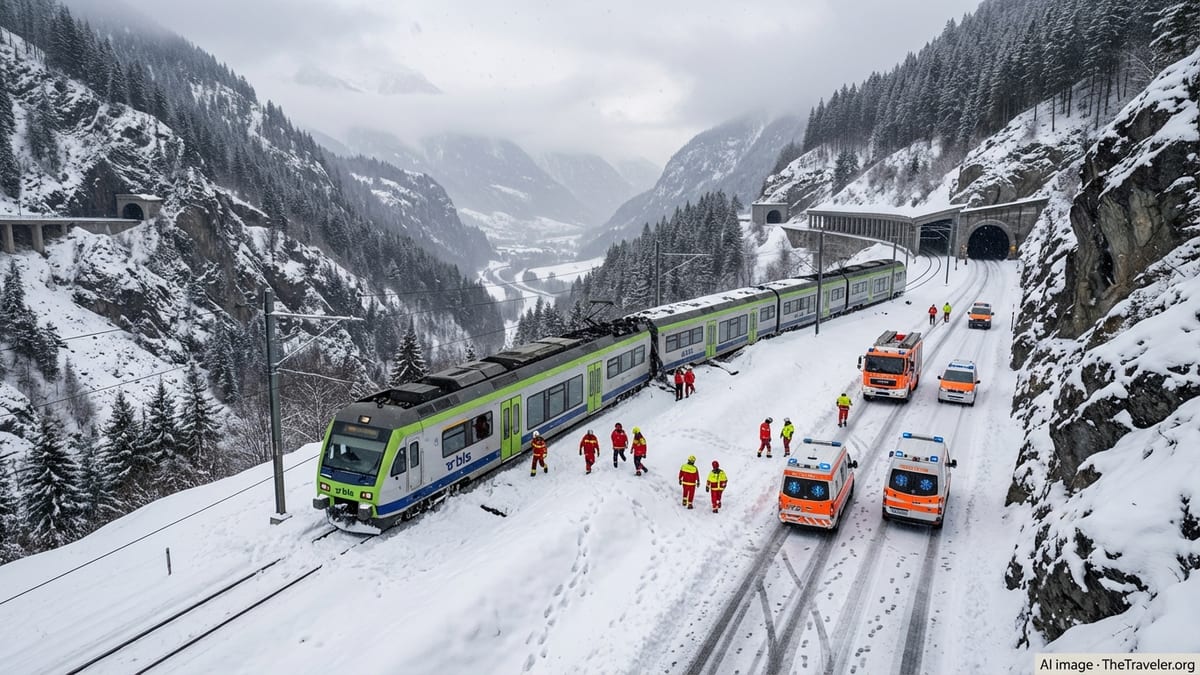
Derailment Reported As Severe Weather Pounds Illinois
Initial reports from rail passengers and online monitoring communities indicate that a freight train derailed in western Illinois as powerful storms swept across the region this week. The incident, described in public posts as a pileup of cars along a busy east-west freight corridor, occurred as high winds and heavy rain were tracking across parts of the Mississippi River valley and downstate Illinois.
While detailed official summaries were not immediately available, publicly shared trip reports from long-distance travelers describe a freight consist leaving the tracks in an area commonly used by both freight operators and cross-country passenger services. The derailment did not involve a passenger train, but it affected the same rail lines used by several national routes, leading to detours and extended delays.
Early indications suggest that no major injuries were recorded, though several cars reportedly left the rails and track damage was significant enough to halt traffic in both directions for hours. Rail operators shifted some trains to alternate routings and temporarily held others while crews assessed the scene and began clearing the line.
The derailment adds to an already turbulent week for transportation in Illinois, where strong thunderstorms, embedded tornadoes, and damaging wind gusts have repeatedly disrupted power, road travel, and aviation.
Storms, Tornadoes and High Winds Create Hazardous Rail Conditions
The derailment came as Illinois experienced one of its most active severe-weather stretches of the year. Recent storm systems have produced multiple confirmed tornadoes across northern and central parts of the state, as well as straight-line winds strong enough to uproot trees, damage buildings, and scatter debris across infrastructure.
According to published weather coverage, gusts from recent storms have topped 70 to 80 miles per hour in some communities, with a mix of supercell thunderstorms and fast-moving squall lines rolling through the Chicago metro area and downstate regions. In several instances, radar-indicated rotation and tornado warnings have coincided with periods of heavy rail traffic, forcing dispatchers and train crews to make rapid operational decisions.
Rail infrastructure is particularly vulnerable when storms combine saturated ground with high crosswinds. Heavy rain can weaken track beds, cause localized washouts, and reduce visibility for crews, while wind can push against long, lightly loaded freight cars. Debris such as fallen trees and blown-down signals can also create sudden hazards that are difficult to detect in time, especially overnight.
Historical climate and transportation research on Illinois has documented past instances where intense summer storms contributed to washouts and derailments on busy freight lines. The latest incident fits into a broader pattern of weather-related rail disruptions that appear to be occurring during more frequent and intense severe-weather episodes.
Ripple Effects for Long-Distance Passenger Trains
The freight derailment is being felt well beyond the immediate crash site, particularly by passengers booked on long-distance trains that cross the Midwest. Because passenger services in the United States often operate on host freight railroads’ tracks, any closure or capacity constraint on a key main line can quickly cascade into hours-long delays and even cancellations.
In recent days, publicly available trip accounts show that at least two major long-distance passenger routes experienced cancellations or major detours linked to freight derailments and storm damage in the broader region. Some travelers reported being bused around affected segments, while others saw entire legs of their journey scrubbed when no alternative path was available on single-track corridors.
Severe weather adds another layer of complexity. Even when rails remain intact, dispatchers may slow or stage trains to avoid the worst of the storms, especially in areas under tornado warnings or where wind gusts are forecast to exceed safe operating thresholds. That caution can strand trains far from their terminals and lead to missed connections for passengers on tight itineraries.
For tourism and leisure travel, the timing is especially challenging. Late spring and early summer bring a seasonal uptick in rail vacations across the country, with travelers booking scenic cross-country journeys months in advance. When a single weather-related freight derailment disrupts multiple long-distance trains, the impact is felt in hotel stays, local tourism spending, and travelers’ confidence in the reliability of rail as an alternative to flying.
Safety Practices and Calls for Greater Weather Resilience
Recent derailments and storm-related slowdowns are prompting renewed public conversation about how the rail industry manages weather risk. According to publicly available safety guidance and accident investigations, freight and passenger railroads already employ a range of precautions, including reduced speeds in heavy rain, track inspections after intense storms, and restrictions in areas under flash-flood warnings.
However, the increasing volatility of severe weather patterns is leading to fresh scrutiny of whether current practices are sufficient. Transportation analysts point to the need for more real-time integration between meteorological data and dispatch decisions, as well as investments in drainage, embankment reinforcement, and vegetation management near tracks in storm-prone areas.
Illinois, a major national crossroads for both east-west and north-south freight traffic, faces particular pressure to keep its rail network resilient. The state’s high share of national tornado activity this year, combined with its dense web of rail lines converging on Chicago, raises the stakes when a single storm system tracks along a primary corridor.
Community advocates and local planners have also highlighted the implications when derailments occur near residential areas or sensitive environments. While the latest incident appears to have been largely contained to the right-of-way, previous accidents across the Midwest have involved hazardous materials and evacuations, underscoring the importance of both prevention and emergency preparedness.
Travelers Weigh Options Amid an Unsettled Forecast
For travelers with upcoming itineraries through Illinois and neighboring states, the derailment and continuing storm threats serve as a reminder to build flexibility into plans. Rail observers and passenger forums encourage checking train status frequently on the day of departure, allowing extra time for connections, and being prepared for the possibility of bus bridges or rebookings when tracks are blocked.
Tourism businesses that rely on rail access, including hotels near major stations and operators of rail-based vacation packages, are monitoring conditions closely. Some are advising guests to secure refundable reservations or travel insurance that explicitly covers delays caused by severe weather and infrastructure disruptions.
Forecast discussions for the coming days point to additional chances of strong storms across portions of Illinois and the broader Midwest, although specific tracks and intensities remain uncertain. If another round of high winds and heavy rain coincides with peak rail traffic, operators may again need to adjust schedules on short notice to preserve safety.
As rail lines gradually return to service after the most recent derailment, the incident reinforces a wider message for travelers and transport planners alike: in a season of increasingly volatile storms, the intersection of weather and rail in Illinois is likely to remain a central storyline for the region’s mobility and tourism economy.