


More news on this day
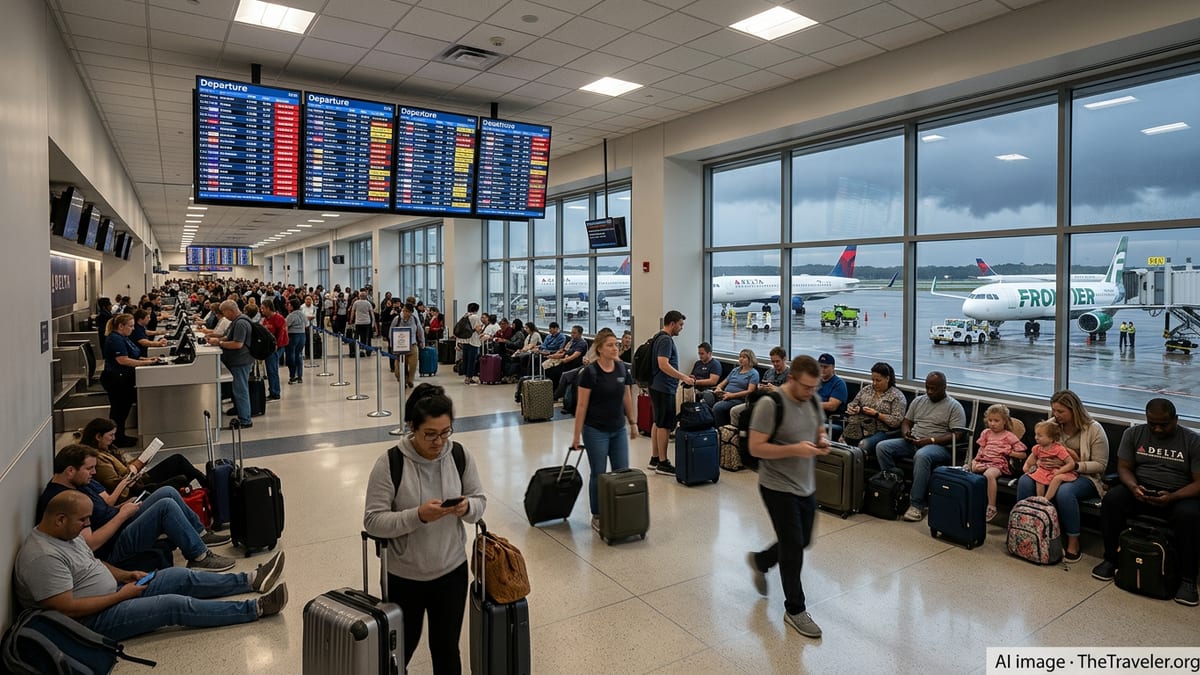
Air travelers across the United States faced another challenging day on July 1 as more than 2,199 flights were delayed and at least 73 were canceled nationwide, with disruptions concentrated in key hubs in Texas, California, Illinois, New York, Florida, Virginia and other states, affecting major carriers including American Airlines, United Airlines, SkyWest, Endeavor Air and PSA Airlines.
Get the latest news straight to your inbox!
Nationwide Disruptions Hit Key Travel Corridors
Publicly available tracking data for July 1 shows a broad pattern of delays across the US system, with thousands of passengers encountering missed connections, rolling departure pushes and scattered cancellations. The impact was most visible at large hub airports where American Airlines and United Airlines operate extensive domestic and international networks, magnifying the effect of each delayed aircraft.
The disruptions were not confined to a single region. Airports in Texas, California and Illinois, along with major East Coast gateways in New York, Florida and Virginia, all reported elevated delay levels at various points in the day. Regional affiliates such as SkyWest, Endeavor Air and PSA Airlines, which feed traffic into the networks of the largest carriers, were among those affected as aircraft and crews fell out of position.
Live statistics compiled from federal aviation data and commercial tracking platforms indicated that the overwhelming majority of affected flights were delayed rather than canceled. Even so, the more than 70 cancellations reported by mid-evening translated into thousands of travelers needing rebooking or overnight accommodation during one of the busiest periods of the summer season.
Weather, Congested Skies And Airspace Restrictions
Multiple factors contributed to the latest wave of operational problems. Seasonal thunderstorms once again played a leading role, in particular across the Southeast. Forecasts from federal aviation authorities for June 30 and July 1 highlighted the potential for storm-related delays in Florida and along key routes feeding major hubs, narrowing the windows in which aircraft could safely depart or arrive and reducing the overall capacity of the system.
Miami International Airport, one of the nation’s busiest gateways to Latin America and the Caribbean, saw more than one hundred departures and arrivals delayed and a series of cancellations on July 1 after unstable summer weather and temporary traffic management initiatives reduced throughput. Information compiled by passenger advocacy services indicates that American Airlines and United Airlines, along with several regional operators, were among the carriers affected as connecting banks backed up through midafternoon.
On the East Coast, additional pressure stemmed from temporary flight restrictions in parts of New York and Virginia, linked to security-related airspace limitations. These restrictions narrowed available routing options and increased the complexity of traffic flows along an already congested corridor, forcing controllers to meter departures and arrivals more aggressively into New York area airports and several mid-Atlantic fields.
Across the interior of the country, high demand combined with what air traffic managers describe as compacted traffic volumes led to en route congestion over sectors such as Denver and the central Rockies. Operational summaries based on federal data showed departure delays in the 15 to 30 minute range at certain large hub airports as controllers temporarily held aircraft at their gates to ease bottlenecks farther down the route.
Major Hubs In Texas, California And Illinois Struggle To Recover
In Texas, flight boards at Dallas Fort Worth and Houston reflected a mix of minor and extended delays as ripple effects from weather systems and traffic management constraints elsewhere in the network accumulated through the day. American Airlines, which operates one of its largest hubs at Dallas Fort Worth, faced growing pressure to keep its bank structure intact as late-arriving aircraft threatened to push back tightly timed connections.
United Airlines experienced similar challenges further north. At Chicago O’Hare, one of the carrier’s primary Midwestern hubs, off-schedule inbound flights and sector congestion produced pockets of departure delays, particularly during morning and early afternoon peaks. Even modest schedule disruptions at such high-volume airports can quickly cascade into missed connections for passengers heading to smaller communities served by regional affiliates.
On the West Coast, California airports saw fluctuating impacts. While some large gateways reported relatively normal conditions at certain hours, the broader system remained sensitive to any new weather cells or ground delays because aircraft and crews had already been operating with tighter margins following earlier storms in the week. When a key transcontinental or north-south route encountered restrictions, the knock-on effects were felt at both ends of the line.
Industry analysts monitoring the day’s operations noted that the sheer density of summer schedules in markets such as Los Angeles, San Francisco and San Diego leaves carriers with less slack to recover once irregular operations begin. With flights running close to full, many travelers affected by cancellations found that rebooking options were limited, especially for same-day travel.
Regional Carriers Bear The Brunt Of Knock-On Effects
While the largest network airlines often draw the most public attention during disruption events, their regional partners carried a significant share of the operational burden on July 1. SkyWest, Endeavor Air and PSA Airlines, among others, operate flights on behalf of major brands, connecting smaller cities to big hubs in states including Texas, Illinois, New York and Virginia.
When a mainline flight arrives late or a hub experiences a temporary ground stop, these regional services are frequently rescheduled or canceled to help restore overall flow. Data from historical performance reports compiled by the US Department of Transportation show that regional operators tend to post higher relative cancellation rates than their mainline partners during periods of severe weather or airspace constraint, largely because their flights are shorter and thus more easily removed from the schedule to free up capacity.
On July 1, this dynamic appeared again as regional routes feeding key hubs absorbed a notable share of the day’s 73 cancellations. Travelers in smaller markets, who often have only a few daily departures to connect with long-haul services, were among those facing the most limited alternatives when flights were scrubbed or significantly delayed.
Disruption on these feeder routes can also compound problems at larger airports. When passengers originating from smaller cities miss their connections because a regional flight is delayed or canceled, airlines must rebook them onto later services, consuming precious seats and adding to congestion at customer service centers and gate areas.
Passengers Confront Crowded Terminals And Limited Options
The operational turbulence on July 1 left many passengers confronting crowded terminals, long lines at rebooking counters and uncertainty about when they would reach their destinations. At busy hubs in Florida, New York and Texas, a combination of weather-related holds, en route congestion and rolling schedule adjustments produced intermittent surges in waiting times at both check-in and security.
Consumer rights organizations monitoring the situation advised travelers to closely review their carrier’s published customer service commitments when flights are significantly disrupted. While airlines are generally not required to compensate passengers for weather-related delays or government-imposed airspace restrictions, publicly available policies often spell out what assistance is offered in cases of cancellations, missed connections or lengthy ground delays.
Travel specialists also highlighted the importance of building additional buffer time into itineraries during the peak summer season, particularly for journeys requiring tight connections through major hubs or involving late-evening arrivals. With delay statistics already elevated and schedules running near capacity, even relatively minor operational issues can quickly ripple outward into widespread disruption, as the events of July 1 across Texas, California, Illinois, New York, Florida, Virginia and other states clearly demonstrated.