


More news on this day
Flight operations at Lima’s Jorge Chávez International Airport faced fresh disruption on July 1, 2026, as at least six flights were cancelled and 13 delayed, affecting services operated by LATAM Airlines, Sky Airline, JetSMART, Iberia, American Airlines, KLM, Air Europa and other carriers across South America and long haul routes.
Get the latest news straight to your inbox!
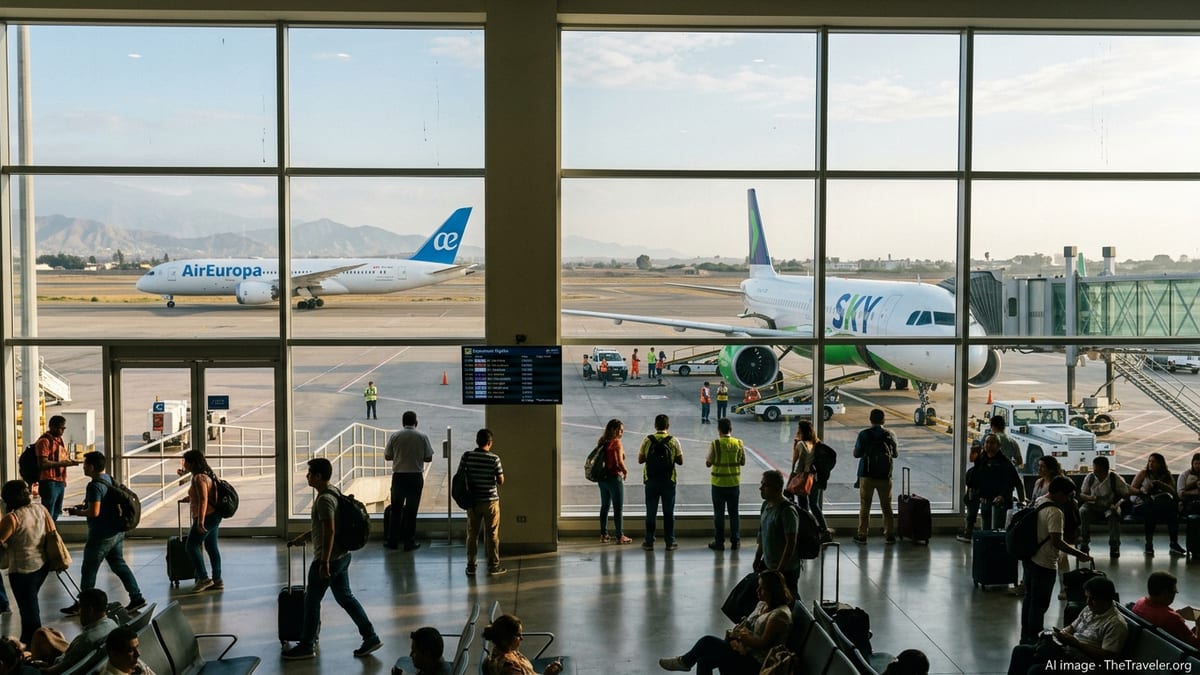
Chain Reaction at Peru’s Busiest Gateway
Publicly available flight-status data for the morning of July 1 in Lima shows a cluster of irregular operations at Jorge Chávez International Airport, Peru’s main international gateway. Several early departures and arrivals to key regional cities, including Santiago, Buenos Aires, São Paulo, Bogotá and domestic destinations such as Cusco and Arequipa, recorded delays, while a number of departures were cancelled outright.
Reports from aviation-tracking platforms indicate that at least one LATAM-operated long haul to Madrid was cancelled around the early-morning departure window, alongside a mix of regional and domestic services on LATAM, Sky Airline and JetSMART. Additional delays were registered on flights serving major hubs in Chile, Colombia and Brazil, compounding congestion on an already busy weekday schedule.
The pattern reflects how quickly disruption can spread at a hub like Jorge Chávez, which concentrates much of Peru’s international connectivity and handles a dense wave of morning operations. When early flights fail to depart on time, subsequent rotations of aircraft and crew are pushed back, leading to mounting delays over the course of the day.
Airport information published by Jorge Chávez’s operator highlights the facility’s central role in regional connectivity, with multiple daily frequencies to Santiago, Bogotá, São Paulo and other South American capitals, as well as long haul links to Madrid, Amsterdam and Mexico City. Any operational disruption therefore has immediate implications for both domestic and international itineraries.
Multiple Airlines and Routes Affected
The impact of the latest disruption in Lima has been felt across a broad range of airlines. Regional mainstay LATAM Airlines, which dominates traffic at Jorge Chávez, appears among the most affected, with cancellations and late departures on both domestic and international routes, including flights to Madrid, Miami and key South American cities.
Low-cost carriers Sky Airline and JetSMART, which connect Lima with Chile, Argentina and several secondary markets, also feature in the list of delayed flights. Tracking data shows morning services between Lima and Santiago, for example, running behind schedule, with knock-on effects for passengers making onward connections.
On the long haul side, European carriers Iberia and Air Europa, which link Lima with Madrid, face disruption when Lima-originating legs experience delays or cancellations. KLM, connecting Peru with Amsterdam and onward European destinations, and American Airlines, which serves North American hubs, are likewise exposed when aircraft and crews are not positioned as planned at Jorge Chávez.
Travel-industry coverage notes that these airlines collectively carry a substantial share of Peru’s inbound tourism and business traffic. Disruptions at Lima therefore resonate well beyond Peru’s borders, affecting itineraries to and from North America and Europe as well as neighboring Latin American markets.
Possible Drivers Behind the Operational Hiccups
While detailed causes for each affected flight have not been specified in publicly accessible data, aviation observers point to a combination of factors that commonly drive disruptions at major Latin American hubs. These can include temporary weather constraints in Lima or at destination airports, air traffic control flow restrictions, and aircraft rotation issues carried over from earlier days.
Travel-industry reporting in Peru has recently focused on debates surrounding airport fees and infrastructure at Jorge Chávez, highlighting the strain on a facility that has seen steadily rising passenger volumes. When schedules are tightly packed against runway and terminal capacity, even minor technical or operational incidents can escalate into wider disruption.
Lima’s position as a connecting hub also increases vulnerability to knock-on effects. Delays on inbound aircraft from North America or Europe can ripple into late departures on subsequent South American legs, and vice versa. Airlines operating complex multi-sector networks must then adjust schedules, crew rosters and aircraft assignments in real time.
Operational data from recent months across the region shows that carriers such as LATAM, Sky Airline and JetSMART have already been navigating a challenging environment marked by strong demand, evolving infrastructure projects and seasonal weather patterns. The events in Lima on July 1 fit within this broader context of occasional but disruptive irregular operations at key South American hubs.
Impact on Passengers at Jorge Chávez
For travelers passing through Lima on Tuesday, the irregular operations translated into missed connections, extended layovers and, in some cases, overnight stays. Passengers on cancelled flights to and from Madrid, Miami, Santiago and regional destinations faced rebooking onto later services or alternative routings across airline networks and partner carriers.
According to publicly available information, major international airlines serving Lima, including American Airlines, Iberia, KLM and Air Europa, provide a range of disruption management options such as rebooking windows, travel vouchers or refunds when flights are significantly delayed or cancelled. The specific remedies depend on the length of delay, route, and applicable regulations.
Regional carriers LATAM, Sky Airline and JetSMART maintain similar policies for affected passengers, typically offering re-accommodation on the next available flight or, where necessary, adjustments to onward connections. Passengers are encouraged by travel advisories to track their flight status via airline apps and airport information displays, especially during periods of visible operational strain.
Travel reports from Latin America indicate that, in busy holiday or business periods, hotel capacity near major airports such as Jorge Chávez can tighten quickly when multiple flights are disrupted. As a result, travelers are often advised to contact airlines promptly to secure rebooking and, where eligible, assistance with accommodation and meals.
What Travelers Should Watch in the Coming Days
With the July travel period underway and Peru remaining a key entry point to South America, analysts expect airlines and airport operators in Lima to face sustained pressure on punctuality. The latest wave of six cancellations and 13 delays serves as a reminder that even modest disruptions can cascade across interconnected regional and long haul networks.
Passengers with upcoming trips through Jorge Chávez International Airport are being advised in public travel guidance to monitor itineraries closely in the 24 hours before departure, verify check-in and boarding times, and allow additional buffer time for security and immigration formalities. This is especially relevant for those making tight same-day connections.
Industry commentary suggests that airlines may refine schedules, adjust aircraft deployment or add spare capacity on certain routes to mitigate the risk of further disruption as the season progresses. However, given the complex interplay of weather, infrastructure limits and regional air traffic, punctuality at Lima is likely to remain variable.
For now, the July 1 disruptions illustrate the vulnerability of Peru’s aviation system to concentrated operational shocks at its primary hub. With multiple major carriers and strategic routes touched by the latest cancellations and delays, Jorge Chávez once again underscores its status as both a critical asset and a potential single point of failure for air travel in and out of the country.