


More news on this day
Travelers at Detroit Metropolitan Wayne County Airport faced a choppy start to July as regional partners SkyWest, Endeavor and Jazz contributed to a small cluster of cancellations and a much larger wave of delays, disrupting itineraries touching Amsterdam, Paris, Toronto, Queretaro and several domestic hubs.
Get the latest news straight to your inbox!
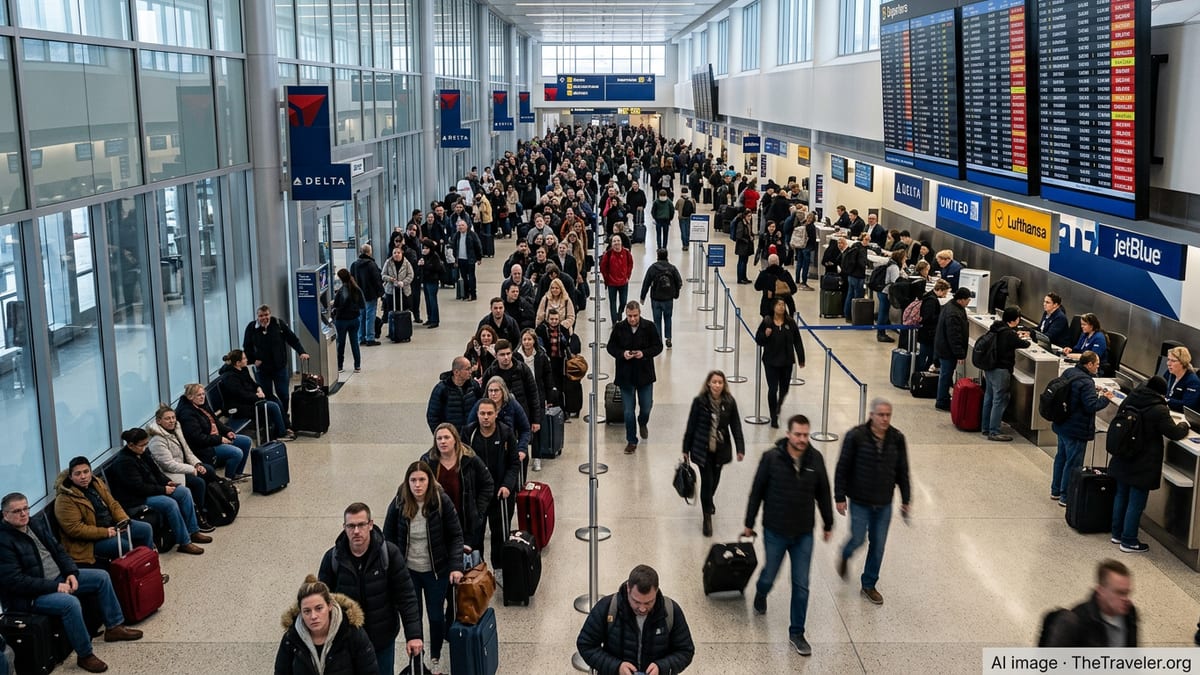
Cluster of Cancellations, Wave of Delays at Detroit Metro
Publicly available flight status boards and tracking platforms for July 1 indicate that while only a handful of departures and arrivals linked to Detroit were fully canceled, more than one hundred flights showed some level of delay. The imbalance between a low cancellation count and a high number of delayed operations created a messy travel picture for passengers trying to connect through the metro area.
Regional operators flying under major-brand banners, including SkyWest, Endeavor Air and Jazz, appeared prominently in early-morning and mid-day disruption data, particularly on short-haul routes that feed Detroit’s mainline domestic and transatlantic services. These flights, often operating under codes for Delta Air Lines, Air Canada and other large carriers, are critical for funneling passengers from smaller cities into Detroit’s international banks.
FAA airfield status information for Detroit showed only modest general delay categories, typically in the range of about 15 minutes for both departures and arrivals. That relatively mild airport-wide status contrasts with the more acute delays captured on individual regional flights, suggesting that local operational factors such as aircraft and crew rotations, as well as network-level scheduling pressures, were playing a larger role than weather or air-traffic control restrictions.
For customers, the practical result was the same: crowded gate areas, shifting departure times and tight or missed connections on onward flights to Europe, Canada, Mexico and U.S. destinations.
Transatlantic Connections to Amsterdam and Paris Feel the Strain
Detroit’s role as a major transatlantic gateway meant that disruptions on inbound feeders quickly spilled over into concerns about long-haul departures. Published schedules showed Detroit to Amsterdam flights marketed by both Delta and KLM, with equipment planned to operate overnight services into Schiphol. As of early afternoon on July 1, those flights were still planned, but the surrounding network instability raised the risk of misconnects for travelers arriving from smaller U.S. cities.
Similarly, Detroit to Paris Charles de Gaulle services, operated under Delta flight numbers, were set to run on evening departures following a pattern seen in recent days. Historical tracking data reflected these flights as key trunk routes linking Midwestern passengers to Air France and SkyTeam connections across Europe, Africa and the Middle East. Even when the long-haul aircraft remain on schedule, late-arriving regional traffic can leave connecting passengers scrambling to reach the gate in time.
Travel-planning sites and fare-search tools continued to list Detroit to Amsterdam and Detroit to Paris itineraries for July as available and operating, underscoring that the day’s issues were less about the existence of long-haul service and more about the reliability of the spokes feeding those transatlantic flights. For many travelers, the difference between a smooth trip and an unplanned overnight stay came down to whether their first short segment operated close to schedule.
Passengers who cleared the Detroit connection reports suggest they often still faced minor schedule adjustments or gate changes, but largely avoided the worst of the disruption. Those whose inbound regional flights were among the small group of cancellations, however, frequently had to be rebooked through alternative hubs or pushed to later dates.
Toronto, Queretaro and Other Regional Gateways Affected
The impact was not limited to Europe. Detroit’s northbound and southbound international feed also experienced knock-on effects, particularly to Toronto and Queretaro. Air Canada connections to Toronto Pearson relying on Jazz as a regional partner showed schedule adjustments in broader departure data, while Delta-operated services to Mexican destinations, including the Queretaro route that has featured in recent timetables, depend on tight coordination between regional and mainline operations.
Traffic patterns published by the airport authority highlight that Detroit has become a key connecting point for secondary Canadian and Mexican markets. Regional affiliates such as Jazz, SkyWest and Endeavor typically provide the shorter cross-border or domestic legs that set up onward journeys deeper into each airline’s network. When those shorter segments are delayed or canceled, ripple effects extend far beyond the immediate corridor.
Travelers bound for Toronto or connecting via Toronto to Europe and Asia therefore faced an added layer of uncertainty. A delay on a Detroit–Toronto regional leg could jeopardize not just a single flight, but a complex chain of onward movements on different carriers and alliances. Similar concerns applied to Queretaro-bound passengers, who rely on punctual Detroit departures to access morning and mid-day banks of domestic and regional flights across central Mexico.
Even where alternatives existed, such as re-routing via other U.S. hubs in Chicago, New York or Atlanta, rebooking volumes placed added pressure on reservation systems and remaining seat inventory. Many travelers reported having to accept longer routings or overnight stays to complete their itineraries.
Regional Partners Under Pressure in a Hub-and-Spoke System
Recent financial and operational filings from both airlines and airport authorities underscore the central role of regional partners in Detroit’s traffic mix. SkyWest and Endeavor operate large fleets of regional jets under brand agreements for mainline carriers, while Jazz provides connector services for Air Canada. Together, these companies handle a significant share of the daily movements into and out of Detroit’s terminals.
Annual reports and airport statistics show that Delta-branded regional flying, including operations by SkyWest and Endeavor, accounts for millions of passenger movements through the airport each year. Air Canada’s use of Jazz to serve Detroit likewise forms part of a broader cross-border strategy linking U.S. Midwest cities with Canadian hubs. On days when these regional operators experience schedule compression or irregular operations, the effect on overall hub performance is quickly visible.
Industry analysis frequently notes that regional carriers operate on tight schedules, often turning aircraft quickly at smaller airports and relying on complex crew pairings. This leaves little slack in the system when weather, maintenance or upstream delays occur. Once a disruption takes hold, it can cascade across multiple flights in a matter of hours, particularly on busy peak travel days.
The current pattern at Detroit illustrates this vulnerability. While mainline international flights to Amsterdam, Paris and other long-haul destinations may depart close to schedule, the regional web feeding those flights is more fragile, exposing connecting passengers to a higher risk of delay or misconnection.
What Passengers Traveling Through Detroit Should Expect Next
With FAA data indicating only minor field delays and no destination-specific ground stops, there is no clear sign that Detroit is facing a prolonged infrastructure or air-traffic crisis. Instead, the picture suggests a challenging period of operational juggling for airlines and their regional partners as they work through day-of-travel issues while maintaining published long-haul schedules.
Travelers booked through Detroit over the coming days can expect flights to operate, but with an elevated chance of schedule changes on shorter legs operated by SkyWest, Endeavor and Jazz. Passengers connecting to Amsterdam, Paris, Toronto, Queretaro and other key nodes may wish to plan for tighter monitoring of departure times and be prepared for gate changes or revised routings.
Airline and airport performance metrics published in recent months show that Detroit remains one of the busier and more resilient hubs in the region, but the current episode highlights how even a modest number of cancellations, combined with more than a hundred delays, can significantly complicate travel plans. For many passengers, the experience at Detroit this week will serve as a reminder of how integral regional airlines are to the global networks they rely on.