


More news on this day
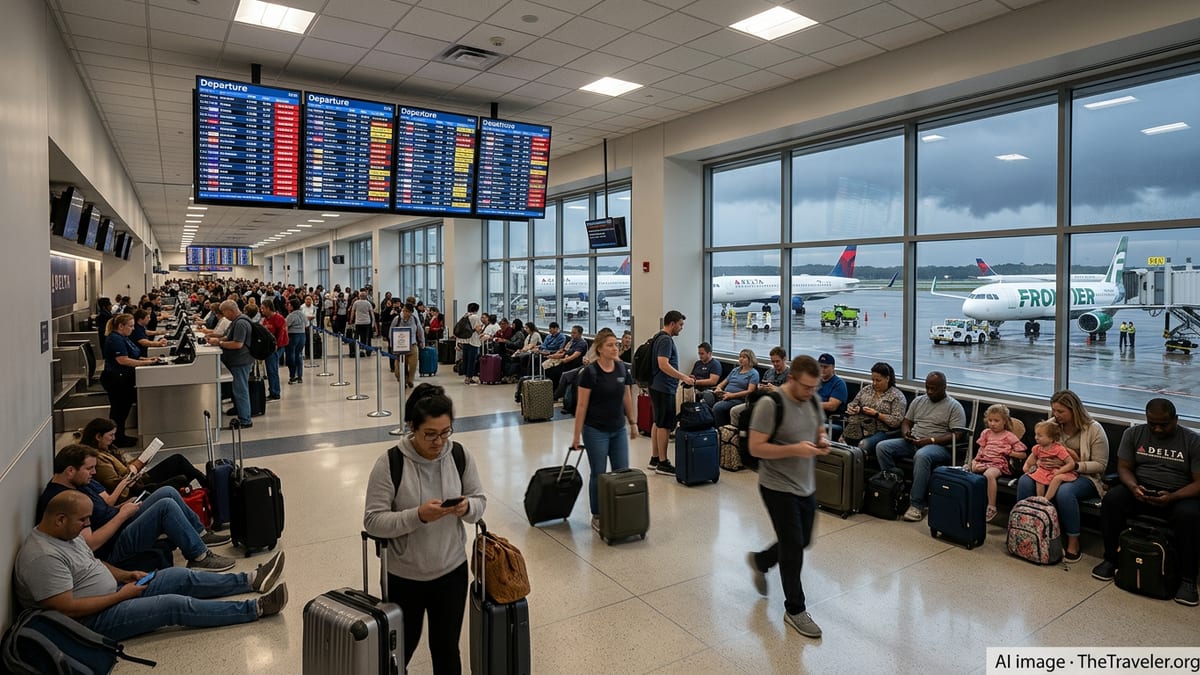
Thousands of travelers across the United States are facing extensive disruption after a wave of more than 1,055 flight cancellations and roughly 7,250 delays rippled through major hubs including Chicago, Boston, Atlanta, Philadelphia, and Newark, heavily impacting operations at American Airlines, United Airlines, Southwest Airlines, Endeavor Air and several regional partners.
Get the latest news straight to your inbox!
Weather, Congestion And Operational Strain Collide
Publicly available aviation data and industry coverage indicate that a volatile mix of severe thunderstorms, heavy air traffic and ongoing operational challenges triggered the latest nationwide disruption. Storm cells sweeping across key corridors in the Northeast and Mid-Atlantic prompted flow-control measures around New York, Boston, Philadelphia and Newark, while convective weather also affected routes into Chicago and Atlanta.
Ground delay programs and rerouting orders lengthened taxi and airborne times, creating further congestion as aircraft and crews fell out of position. Airlines already operating on tight summer schedules struggled to absorb the shock, which translated into rolling delays that extended well beyond the initial weather windows and into the evening peak.
Reports show that the impact was felt not only on long-haul routes, but also on dense short-haul and shuttle flights that feed the nation’s largest hubs. As each cancellation removed an aircraft and crew from the system, carriers had to reshuffle resources, leaving many passengers facing last-minute itinerary changes or overnight stays away from home.
The timing of the disruption, during a busy summer travel period, compounded the difficulties for travelers. Heavier-than-usual passenger loads on most flights limited rebooking options, leaving some customers to wait hours in terminal lines or on customer service channels in search of alternative routes.
Major Hubs From Chicago To Boston Bear The Brunt
Data from flight-tracking platforms shows that some of the country’s busiest airports bore a disproportionate share of the cancellations and delays. Chicago’s O’Hare International, a crucial connecting point for both American and United, experienced waves of disruption as storms and traffic management initiatives cut arrival and departure rates.
In the Northeast, Boston Logan, Newark Liberty and Philadelphia International each reported significant operational slowdowns as weather moved through the region and airspace sectors became constrained. According to aviation dashboards, departures and arrivals at these airports faced extended hold times, with many aircraft waiting on ramps or at gates for updated departure slots.
Atlanta’s Hartsfield-Jackson, which serves as one of the country’s primary domestic and international hubs, also saw elevated delay volumes. While some flights operated close to schedule, a series of schedule adjustments and congestion-related slowdowns affected both mainline and regional operators, contributing to nationwide knock-on effects as connecting passengers missed onward legs.
Secondary hubs and focus cities, including airports around Washington, Charlotte, Fort Lauderdale, Baltimore and Cincinnati, reported additional disruption as they absorbed diverted flights and adjusted to shifting routings. The result was a complex web of delays that extended far beyond the initial storm-affected zones.
American, United, Southwest And Regional Partners Disrupted
The wave of cancellations and delays reverberated through the networks of the largest U.S. carriers and their regional affiliates. Publicly available tallies show that American Airlines and United Airlines, which rely heavily on major hubs such as Chicago, Newark and Philadelphia, logged substantial numbers of disrupted flights throughout the day.
Southwest Airlines, with a network centered on point-to-point routes and large operations at airports such as Chicago Midway and Baltimore, also saw schedules thinned and departure banks slowed as weather and airspace congestion intersected with high demand. Each delay in turn created challenges for aircraft turnaround times and crew duty limits, forcing additional schedule adjustments.
Regional carriers operating under major-brand flags, including Endeavor Air and Republic Airways, featured prominently in cancellation statistics. Industry coverage highlights that Endeavor, which feeds larger hubs for a major legacy airline, recorded dozens of cancellations and delays as cascading disruptions made it difficult to keep aircraft and crews synchronized with rapidly shifting schedules.
Because many regional flights serve smaller communities with limited daily frequencies, cancellations on these routes had an outsized effect on travelers. Passengers flying from or to secondary cities frequently faced long waits for the next available seat or had to connect through alternative hubs, adding hours to their journeys.
Passengers Face Missed Connections, Long Lines And Limited Options
For passengers, the disruption translated into missed connections, extended waits and logistical headaches across the country. Social media posts and travel forums on the day of the incident described crowded terminals, long customer service lines and limited hotel availability near several major airports as travelers scrambled for solutions.
With aircraft running near capacity during the peak summer period, many same-day rebooking options disappeared quickly. Travelers whose flights were canceled or excessively delayed often had to accept itineraries departing the following day, or reroutes involving additional stops and longer total travel times.
Standard airline guidance in such situations typically emphasizes staying closely informed through airline apps and text alerts, arriving at airports earlier than usual, and considering alternative airports within driving distance. Consumer advocates regularly note that passengers can improve their chances of finding workable alternatives by proactively checking for open seats on nearby flights and calmly presenting specific options at service counters.
Families, elderly travelers and those with tight time constraints, such as cruise departures or international connections, were particularly vulnerable to the cascading delays. In some cases, disruptions to a single segment prevented trips from proceeding at all, leaving travelers to negotiate refunds, credits or insurance claims.
Renewed Focus On Resilience Of The U.S. Air Travel System
The scale of the day’s cancellations and delays has renewed scrutiny of how resilient the U.S. air travel system is to weather shocks and peak-season demand. Transportation analysts point out that while severe thunderstorms are a regular feature of summer flying, high load factors and tight scheduling across fleets and crews can leave limited room to recover when storms sweep through multiple hubs in quick succession.
Historical data from federal aviation reports and industry statistics shows that weather, airline operational issues, airspace constraints and late-arriving aircraft are the primary drivers of delays and cancellations. Episodes like this one highlight how those factors can compound, particularly when carriers are operating with minimal spare capacity in an effort to meet strong demand.
Some observers argue that infrastructure and technology upgrades could help ease future disruption by enabling more precise routing around storms and more efficient use of available airspace. Others emphasize the need for robust staffing levels in operations centers, maintenance and ground handling so that carriers can respond more nimbly when schedules begin to unravel.
For now, the immediate focus for airlines and airports remains clearing backlogs, repositioning aircraft and crews, and restoring normal operations after a day in which more than 8,300 flights across the United States were affected. Travelers planning to fly in the coming days are being advised by publicly available airline and aviation guidance to monitor flight status frequently and build additional time into their plans, particularly when connecting through heavily affected hubs.