


More news on this day
Britain’s rail network is facing widespread disruption as an intense July heatwave triggers reduced timetables, suspended regional routes and urgent travel warnings during one of the busiest holiday weeks of the summer.
Get the latest news straight to your inbox!
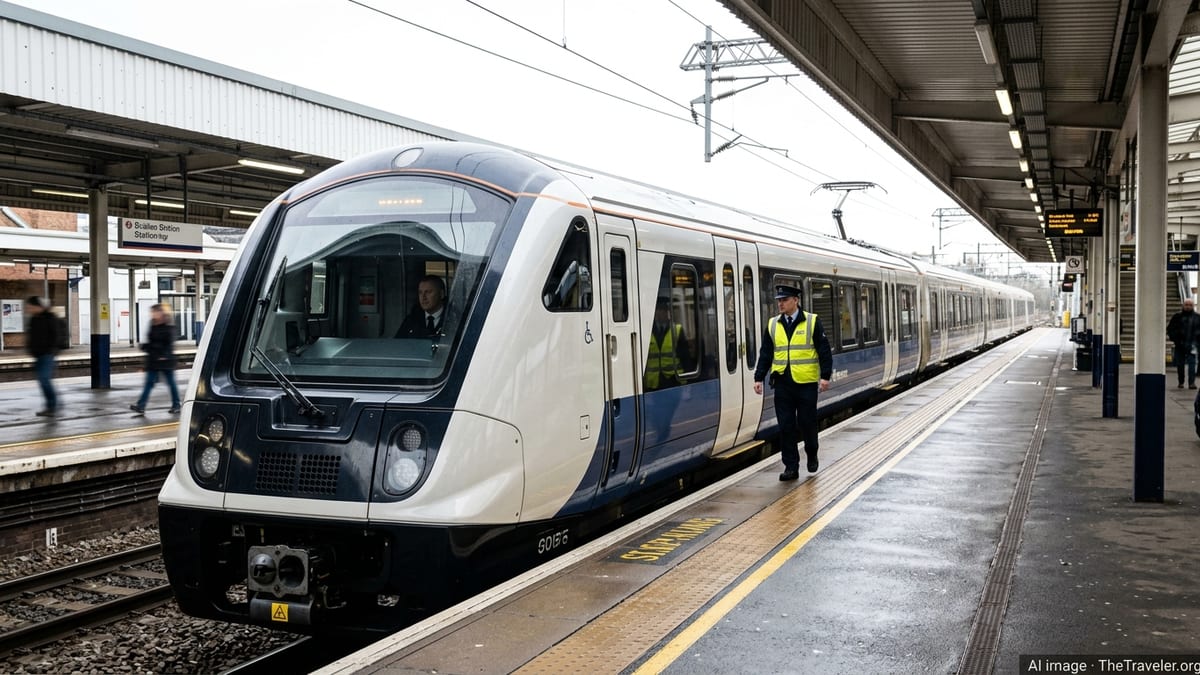
Heatwave and amber alerts coincide with peak holiday travel
The current spell of hot weather is the United Kingdom’s third heatwave of 2026 and is forecast to intensify through the end of the week, with temperatures in parts of southern England projected to climb into the mid 30s Celsius. The Met Office has issued an amber extreme heat warning for large areas of southern and eastern England, while the UK Health Security Agency has activated amber heat health alerts across multiple regions.
The warning period, running from Wednesday 8 July to Sunday 12 July, overlaps with peak summer getaway traffic as families head to coastal resorts and airports at the start of school holidays. Publicly available information indicates that rail demand on key intercity and commuter corridors is already elevated, raising concerns that any timetable cuts or speed restrictions will quickly translate into crowded trains and longer journey times.
Rail industry guidance notes that prolonged high temperatures can cause rails to expand and, in some cases, buckle, while overhead power lines may sag, increasing the risk of damage. To manage these risks, infrastructure managers and train operators typically introduce precautionary speed restrictions and targeted service reductions when forecast temperatures exceed design thresholds for the network.
Regional suspensions and reduced timetables across the network
East Midlands Railway is among the first operators to implement extensive changes, advising passengers to travel only if essential for the rest of the week. According to company statements and regional media coverage on 7 and 8 July, EMR is suspending regional services between Nottingham and Worksop, and between Nottingham and Leicester from midday each day, citing the need to protect the railway from the impact of extreme temperatures.
Intercity services on EMR routes are also being thinned out, with selected trains removed from the timetable to provide additional flexibility and reduce strain on rolling stock. Passengers who must travel are being urged to plan journeys for the morning, before the hottest part of the day, and to expect significant disruption and potential last minute alterations.
In the West Midlands, earlier advisories reported that operators including West Midlands Railway would run “significantly reduced” services during periods of extreme heat, particularly on routes where rail temperatures are expected to be highest. Similar measures have been signalled by regional and commuter operators in southern England and south Wales, where service frequencies are being cut and turn-up-and-go patterns replaced with modified timetables.
National Rail’s central travel information service is highlighting “hot weather” as a live incident, with warnings of delays and cancellations across various routes. The disruption comes just weeks after an earlier June heatwave, during which sections of track in Wales and northern England were damaged by heat and several regional lines were forced to close temporarily.
Technical limits of Britain’s heat‑sensitive rail infrastructure
Britain’s rail infrastructure was largely engineered for a temperate climate, with design standards based on historical temperature ranges that are being frequently exceeded as summers warm. Technical guidance cited by industry bodies explains that steel rails absorb heat quickly and can reach temperatures 15 to 20 degrees higher than the surrounding air. When track temperatures rise, compressive forces build up and increase the risk of buckling, particularly on older sections of continuously welded rail.
To reduce that risk, Network Rail imposes temporary speed restrictions on affected lines when rails approach predetermined temperature thresholds. Slower speeds reduce dynamic forces on the track but also cut capacity, meaning fewer trains can run. In some cases, operators preemptively cancel or shorten services to avoid congestion and allow more recovery time if delays build during the hottest hours of the day.
Overhead power and signalling equipment can also be affected by extreme heat. Contact wires may sag as metal expands, while lineside equipment and cabling can overheat. To mitigate impacts, infrastructure teams are deployed to monitor critical locations, apply protective coatings such as white paint to reflect heat from rails, and carry out spot repairs where stresses appear.
Recent reports and analysis from climate and transport researchers suggest that these kinds of weather‑related restrictions are likely to become more frequent unless the network undergoes substantial adaptation, including track renewals, improved drainage, new materials and operational changes tailored to a warmer, more volatile climate.
Passenger disruption, cancellations and calls to reconsider travel
The latest round of heat‑related timetable cuts is already being felt by passengers across England and Wales. Travellers have reported proactive cancellations of long‑distance services, including cross‑border routes between London and continental Europe, as operators seek to manage capacity and reduce the risk of stranded trains in high temperatures.
Customer advice issued through National Rail and individual operators urges passengers to check journeys before departure, allow extra time and carry water, with some stations setting up additional refill points. Many companies are waiving change fees or offering flexible travel on alternative days, particularly for leisure travellers heading to holiday destinations who may be able to alter plans.
The combination of fewer trains and strong seasonal demand is resulting in busier remaining services, particularly on coastal and airport routes. Publicly available coverage from regional outlets notes concerns about conditions on board, with some older trains lacking modern air‑conditioning and struggling to maintain comfortable temperatures during protracted delays.
Travel industry observers are warning that rail‑dependent holidaymakers could face missed connections, curtailed day trips and longer journey times throughout the heatwave period. Tourism businesses in some areas are preparing for later arrivals and potential last minute cancellations as visitors reassess plans in light of the disruption.
Longer term questions over climate resilience and summer travel
The current disruption is intensifying a wider debate over how well Britain’s transport system is prepared for a future of more frequent and intense heatwaves. Climate assessments referenced by the Met Office and independent researchers indicate that episodes of 30 degrees Celsius and above are becoming more common and are extending further into the traditional shoulder seasons of late spring and early autumn.
Network Rail has previously set out weather resilience and climate change adaptation plans, outlining measures such as targeted track renewals, more sophisticated weather monitoring and revised maintenance regimes for assets vulnerable to heat. However, the pattern of repeated summer disruptions in recent years is prompting renewed scrutiny of whether upgrades are keeping pace with the changing climate.
For travellers, the latest episode is a reminder that extreme weather is now an increasingly significant factor in planning peak season journeys. Consumer groups are encouraging passengers to pay close attention to operator alerts, understand refund and compensation policies, and build greater flexibility into holiday itineraries, especially when booking connecting flights or time‑sensitive trips.
With amber alerts in force and the hottest days of the current heatwave still to come, rail users across Britain are being told to expect ongoing disruption, short notice changes and, on some routes, the possibility of no trains at all during the hottest hours. How the network weathers this latest test is likely to shape both public expectations and policy discussions as the country adjusts to a more heat‑prone future.