

More news on this day
Dozens of flights in and out of Miami International Airport were disrupted Sunday, with publicly available tracking data showing at least 123 delays and five cancellations affecting services operated by major carriers including United, LATAM, American, Air France, Delta and Volaris across North America, Europe and Latin America.
Get the latest news straight to your inbox!
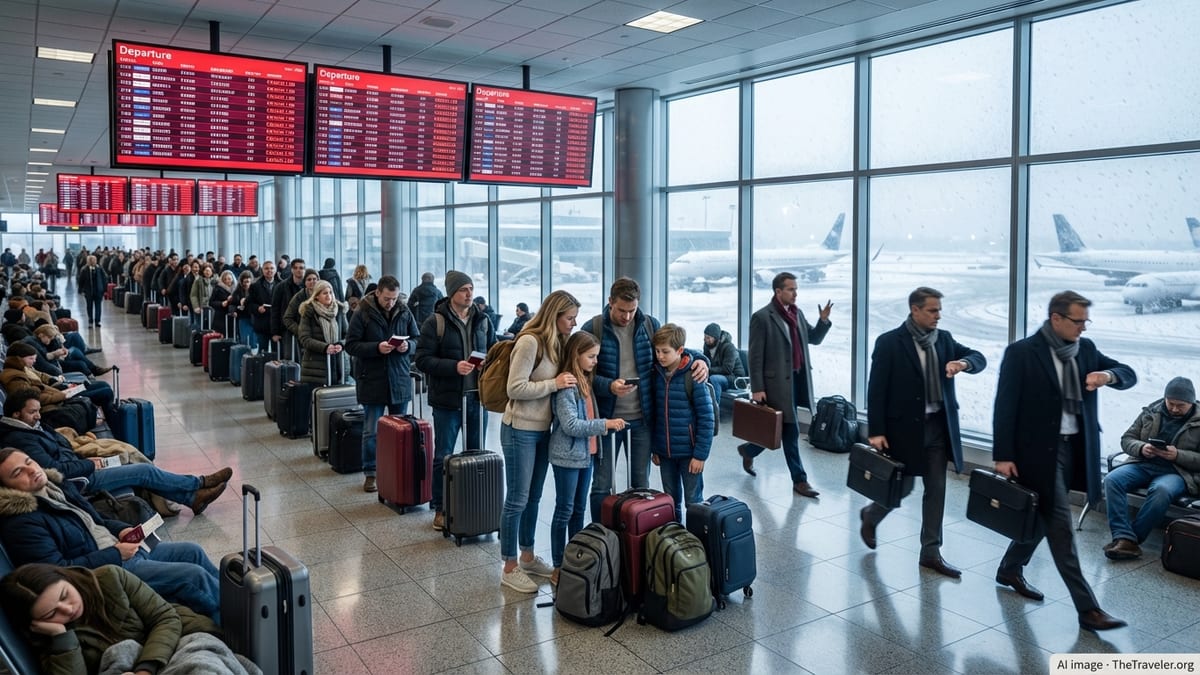
Wide Ripple Effects Across US and International Routes
Tracking boards at Miami International Airport showed a busy start to the summer travel period tipping into disruption, as delayed and canceled flights rippled across key U.S. and overseas routes. Services from Miami to major domestic hubs such as New York, Atlanta, Dallas and Los Angeles were among those reporting late departures, creating knock-on delays for onward connections across the country.
Internationally, the disruption was felt on links to Europe and Latin America. Flights connecting Miami with the United Kingdom, Germany, Spain, France and Italy, as well as Mexico, Colombia, Peru and Panama, were among those listed as delayed. Miami’s role as a primary gateway between the United States and Latin America meant any extended hold-ups on the ground risked affecting aircraft rotations and crew schedules throughout the region.
Publicly available flight status pages for several carriers serving Miami indicated late-running services or schedule changes on routes that typically carry significant leisure and visiting‑friends‑and‑relatives traffic at this time of year. Short‑haul departures into the Caribbean and Central America also recorded delays, compounding pressure on airport operations already stretched by peak‑season volumes.
The disruption added strain for connecting travelers who rely on tight transfer windows through Miami. Late arriving aircraft from Europe or South America can quickly cascade into missed domestic connections, with some passengers facing the prospect of overnight stays or extended rebooking queues inside the terminals.
Multiple Carriers Affected, From US Majors to Latin American Operators
The delays and cancellations were spread across a wide range of airlines. United, American and Delta were among the U.S. majors with late departures or arrivals showing from Miami, while LATAM and Volaris featured among Latin American carriers experiencing schedule disruptions. Long‑haul operator Air France also appeared on the list of affected services, underscoring the breadth of the operational challenges.
Miami International Airport functions as a critical hub for American and a key gateway for LATAM and other Latin American airlines, as well as a busy station for United and Delta. In normal conditions, this concentration of operations allows passengers to connect efficiently across the Americas and to Europe. When irregular operations strike, however, the same concentration can intensify bottlenecks as carriers compete for limited gates, ground staff and available aircraft.
Available operational summaries from the airport and airlines show that Miami regularly handles hundreds of daily movements by a mix of U.S., European and Latin American carriers. On a day with more than 120 delayed flights, even modest average hold‑ups can result in thousands of passengers spending extra hours in gate areas or at check‑in counters while airlines work through revised departure times and crew duty limits.
The disruption at Miami also intersected with broader strains in the aviation system. Recent analyses of national performance indicate that U.S. carriers have been grappling with periods of elevated delays during the early summer, with airlines, airports and air traffic control sharing responsibility for congestion as schedules ramp up toward peak season.
Weather, Congestion and Operational Constraints Combine
Publicly available information suggests a mix of factors were likely behind the disruptions, including seasonal thunderstorms common to South Florida, system congestion and routine operational challenges such as maintenance checks and crew scheduling. Weather‑related ground stops and flow‑control programs in other parts of the network can also reverberate into Miami, where many flights originate or terminate after operating from distant hubs.
Recent coverage of nationwide travel patterns has highlighted how quickly small schedule disturbances can snowball when airports and airlines are operating close to capacity. A late inbound aircraft may force a delayed departure, which in turn affects the availability of that aircraft and its crew for subsequent flights. With Miami serving as a connector between long‑haul international routes and short‑haul regional links, the risk of such knock‑on effects is particularly acute.
Operational data published in recent months by airport authorities for Miami show a robust rebound in traffic and a sustained build‑up in both domestic and international flying. That growth has supported the region’s tourism and trade sectors but has also left limited slack when adverse weather or technical issues arise, especially on peak days when most seats are already sold.
Consumer advocates have noted that, in similar disruption events, travelers can face extended waits for updated departure times and limited options for same‑day rebooking, particularly on tightly scheduled transatlantic and South American services. As aircraft operate near full capacity, securing spare seats on alternative flights becomes more difficult once irregular operations take hold.
Global Passengers Face Missed Connections and Overnight Stays
The wave of delays and cancellations at Miami International Airport translated into very different experiences for travelers depending on their itineraries. Passengers booked on point‑to‑point journeys into or out of South Florida often faced longer‑than‑expected waits in the terminal or on board aircraft, but ultimately reached their destinations on the same day once outbound services departed.
For connecting passengers, the stakes were higher. Late‑running flights from Miami to key European gateways in the United Kingdom, Germany, Spain, France and Italy, as well as to regional hubs in Mexico, Colombia, Peru and Panama, put onward connections at risk. Missed links at those hubs can lead to long rebooking lines, overnight stays and, in some cases, separation from checked baggage that has already been routed onward.
Social media posts and recent online accounts from travelers passing through Miami during previous disruption spells describe long lines at customer service counters and difficulty securing alternative routings when several flights on the same corridor are delayed or canceled. While those earlier episodes occurred on different dates, they illustrate the kind of passenger experience that can emerge when irregular operations coincide with peak travel periods.
With the current disruptions touching numerous carriers, some travelers may find that rebooking on another airline is limited by interline agreements, fare rules or lack of inventory. Others may opt to route through different U.S. hubs to reach Europe or Latin America, adding extra legs to journeys that were initially planned as straightforward one‑stop connections through Miami.
What Travelers Can Do as Disruptions Persist
For those already at Miami International Airport, publicly available guidance from airlines and consumer groups points to several practical steps. Travelers are encouraged to monitor airline apps and flight status tools frequently, as departure times can shift multiple times during periods of operational stress. Gate screens and overhead announcements may lag behind updates pushed directly through digital channels.
Passengers with tight connections can consider speaking with airline staff about rebooking options as soon as a significant delay is posted, particularly when traveling to long‑haul destinations with limited daily frequencies. In some cases, moving to an earlier outbound flight through a different hub may offer a better chance of arriving at a final destination on the same day, even if it adds an extra connection.
Travel experts often recommend packing essential items and a change of clothes in carry‑on bags in case checked baggage is delayed or onward connections are missed. Keeping important medications, travel documents and basic toiletries in hand luggage can reduce the impact of unexpected overnight stays prompted by cancellations or missed connections.
As the summer travel season advances, performance metrics and published analyses suggest that Miami and other major hubs will continue to experience pressure during peak periods. Travelers planning upcoming trips through the airport may wish to allow longer connection times, travel earlier in the day when possible, and stay alert for updated information as airlines adjust schedules in response to weather and demand.