

More news on this day
Passengers transiting Doha’s Hamad International Airport faced hours of disruption as 85 flight delays and two cancellations involving Qatar Airways, Saudia, Kuwait Airways, Royal Jordanian, Middle East Airlines and IndiGo left travelers stranded across regional routes to and from Dubai, Riyadh, Kuwait City, Amman and Beirut.
Get the latest news straight to your inbox!
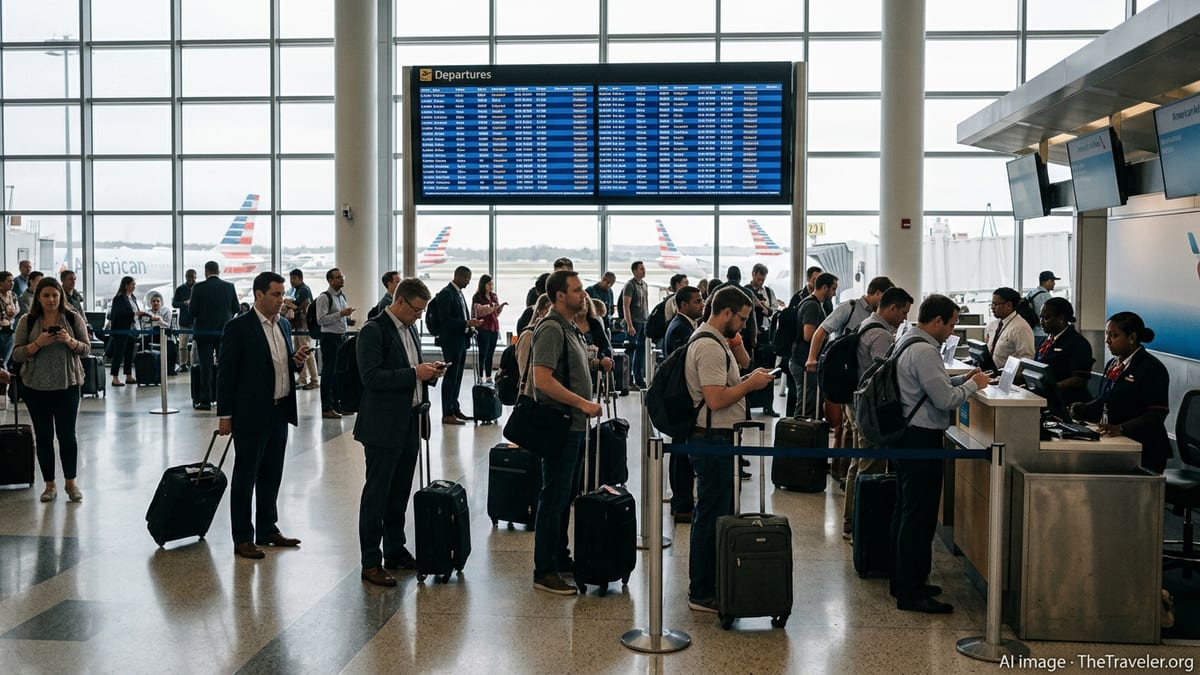
Wide Ripple Effect From Hub Disruption
Publicly available flight-tracking data and airport information on June 21 point to a day of unusually congested operations at Hamad International Airport, one of the Gulf’s main transfer hubs. The pattern shows dozens of departures and arrivals pushed back beyond scheduled times, alongside a small number of outright cancellations, as airlines adjusted schedules in response to regional operational pressures.
The disruption has been most visible on high-density routes connecting Doha with key Middle Eastern capitals and commercial centers. Connections involving Dubai, Riyadh, Kuwait City, Amman and Beirut have seen a succession of delayed departures, turning what are typically swift regional hops into extended waits for passengers, many of them traveling onward to Europe, Asia and Africa.
While the overall volume of cancellations has remained limited, the combination of rolling delays, missed connections and aircraft rotation challenges has produced what travelers describe in online posts and forums as a stop-start experience across the network. For some, extended ground time in Doha has replaced what would normally be a short transit through the airport’s main terminal.
Available operational feeds indicate that the difficulties were concentrated within a single operating window, rather than a full suspension of movements. Flights continued to land and depart, but often significantly behind schedule, contributing to crowding at gates, transfer desks and security checkpoints.
Flag Carriers Under Pressure to Maintain Connectivity
Qatar Airways, the primary operator at Hamad International and one of the region’s largest long haul carriers, has been at the center of the latest disruption. Recent corporate updates show the airline operating a network close to pre-crisis levels, with a dense summer schedule built around tight connection times through Doha. On a day when delays ripple through the system, that density can quickly translate into missed onward flights and rebookings.
Other regional flag carriers, including Saudia, Kuwait Airways, Royal Jordanian and Middle East Airlines, rely heavily on coordination with Doha and other Gulf hubs to maintain connectivity across the Middle East. When turnarounds at Hamad International lengthen, these airlines can face knock-on delays to aircraft heading back to Riyadh, Kuwait City, Amman and Beirut, further amplifying the disruption felt by passengers at both ends of the route.
IndiGo, a major South Asian low cost carrier with a growing presence in Gulf markets, has also been affected on its Doha services. Its business model depends on high aircraft utilization and rapid ground handling, meaning that unscheduled holding patterns and late inbound arrivals in Doha can force schedule changes on onward sectors across its network.
Industry analysts note that the current operating environment for Middle East carriers remains challenging, with airspace restrictions, geopolitical tensions and infrastructure constraints all increasing the difficulty of running a tightly timed hub-and-spoke system without occasional large-scale disruption.
Stranded Transit Passengers and Logistical Challenges
Passenger accounts circulating on social platforms and travel forums describe long waits at transit desks, uncertainty over rebooking options and limited clarity on projected departure times as the delays unfolded. Some travelers reported missing connections from Doha to onward destinations in Europe and Asia after regional feeder flights from Dubai, Riyadh, Kuwait City, Amman and Beirut arrived significantly behind schedule.
For travelers without immediate alternative routings, Hamad International Airport’s role as a major connecting hub has meant unplanned overnight stays and extended layovers. In several cases shared publicly, itineraries originally built around short transfer times stretched into daylong journeys as airlines worked through backlogs and repositioned aircraft.
Logistically, even a modest number of cancellations can create challenges when a hub is already under strain. With aircraft and crews out of position, airlines may be forced to prioritize certain routes or consolidate services, leaving some passengers waiting for the next available seat. The need to accommodate missed connections, reissue boarding passes and manage baggage transfers adds further complexity for ground handling teams.
Travel advisers observing the situation emphasize that the combination of a tight summer schedule and continuing regional uncertainty leaves little margin for recovery once delays start to build. When several carriers are affected at the same hub on the same day, options for rerouting through neighboring airports can quickly become limited.
Knock On Impact Across Regional Gateways
The disruption centered on Doha has had consequences for airports across the Middle East. Dubai, Riyadh, Kuwait City, Amman and Beirut all function as important origin and destination points for travelers connecting through Hamad International. When flights into Doha run late, outbound services from these cities can also face schedule changes as airlines wait for inbound aircraft and crews to complete delayed rotations.
In recent months, several regional airports have already been handling elevated traffic and complex rerouting due to airspace closures and security considerations. Kuwait International Airport, in particular, has experienced previous suspensions and diversions linked to regional tensions, adding another layer of fragility to schedules that depend on seamless coordination between hubs.
According to aviation industry commentary, this web of interdependent operations means that a delay registered in Doha can quickly be reflected on departure boards hundreds of kilometers away. Passengers boarding flights in Dubai or Riyadh, for example, may encounter last minute adjustments as airlines seek to align their schedules with late running Doha arrivals.
Observers also point out that regional carriers are balancing these operational pressures against the commercial imperative to sustain capacity on popular routes. Rather than cutting frequencies, airlines may opt to operate late running services, resulting in large clusters of delayed flights but relatively few outright cancellations, as seen in the latest disruption.
Travel Advice for Passengers Using Doha as a Hub
Travel specialists following the situation recommend that passengers with upcoming journeys through Hamad International build extra buffer time into itineraries, particularly when connecting between short haul regional flights and long haul sectors. Choosing longer layovers can provide additional resilience if an inbound service from Dubai, Riyadh, Kuwait City, Amman or Beirut is affected by rolling delays.
Public guidance from airports and airlines consistently highlights the importance of monitoring real time flight status through official channels and mobile applications. Same day schedule changes have become more common in the current operating climate, and early awareness of a delay can give travelers more options for adjusting ground transport, accommodation and onward bookings.
For those already in transit during episodes of disruption, consumer advocates advise keeping boarding passes, receipts and written records of any extended delays or cancellations. These can be helpful later when seeking compensation or reimbursement under applicable carrier policies or regional passenger protection rules.
While the latest wave of delays and cancellations at Hamad International appears to be operational rather than the result of a full closure, the incident highlights the vulnerability of tightly timed hub networks to regional shocks. As summer travel demand builds, passengers across the Middle East are likely to remain alert to any further signs of disruption affecting one of the region’s most important aviation gateways.