


More news on this day
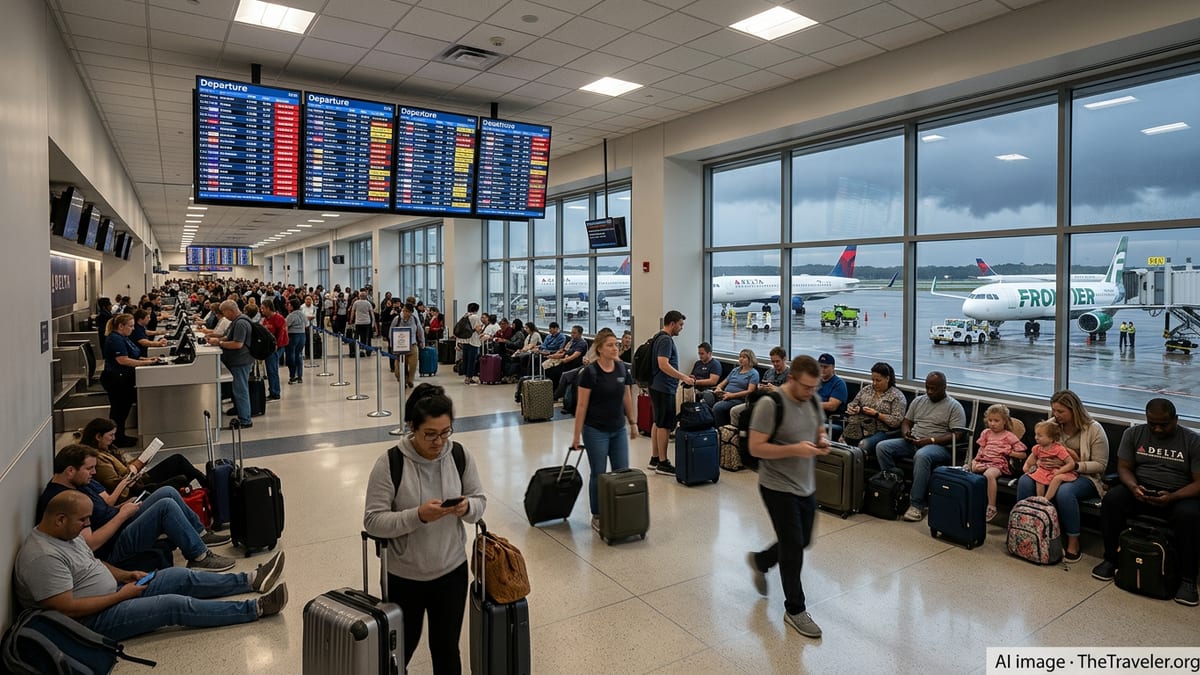
Severe operational disruption at Houston’s George Bush Intercontinental Airport is causing widespread travel chaos, with more than 200 United Airlines and American Airlines flights delayed or canceled as storms and system strains ripple through one of the nation’s busiest hubs.
Get the latest news straight to your inbox!
Weather Turbulence and Network Strain Collide
Publicly available flight-tracking data for Saturday shows Houston’s Bush Intercontinental operating through intermittent thunderstorms, with convective weather around southeast Texas slowing departures and leading to extended ground handling times. When storms move through the Houston area, ramp closures and air-traffic flow programs typically reduce the number of aircraft that can safely land or take off each hour, creating a bottleneck that quickly spreads across tightly timed airline networks.
United Airlines, which uses Bush Intercontinental as one of its primary domestic and international hubs, appears to be bearing the brunt of the disruption. Flight status boards and tracking services indicate that United’s schedule has absorbed the majority of delays and cancellations, reflecting how a weather squeeze in one hub can cascade through a carrier’s entire system. American Airlines, which operates a smaller schedule at the airport, is also reporting a significant number of affected flights as aircraft and crews arrive late from other parts of the country.
Across both carriers, early afternoon totals indicated at least 216 combined delays and cancellations touching Houston, either originating, terminating, or connecting through Bush Intercontinental. That figure reflects the compounding effect of rolling delays, where even brief ground stops and reroutes can push aircraft and crews out of position for subsequent flights.
The situation has been aggravated by heavy early-summer travel demand. Published aviation industry snapshots for June highlight that major U.S. airlines are running near peak capacity, leaving relatively few spare aircraft or crews to absorb weather- and systems-related shocks. When large storms coincide with full flights, relatively small schedule adjustments can quickly translate into significant disruption for thousands of travelers.
United Hub Operations Under Intense Pressure
As the dominant carrier at Bush Intercontinental, United’s hub structure is particularly vulnerable when weather or operational constraints hit Houston. A hub-and-spoke network is designed around tightly sequenced “banks” of arriving and departing flights that feed connections; if one arrival bank is delayed, outbound departures must often wait for connecting passengers and crews, stretching disruption over several hours.
Tracking data and recent public reports on United’s operations show that several Houston-originating flights have departed late or been re-timed following earlier storms in the region this season. When a major hub like Houston experiences repeated lightning ground stops or runway flow restrictions, aircraft rotations can fall behind schedule across multiple routes, including long-haul services to Latin America and transcontinental destinations.
Observers note that United has already issued multiple flexibility and weather waivers tied to Houston in recent months, allowing passengers to rebook around forecast storms without change fees. That pattern, combined with today’s rolling disruptions, underlines how frequently severe weather around the Gulf Coast can intersect with a high-density hub schedule.
As delays accumulate, gate space, crew duty-hour limits, and aircraft maintenance checks all become more difficult to manage. Even when storms move out of the immediate area, it can take several hours of steady operations for a hub of Houston’s size to work through a backlog of delayed departures and inbound diversions.
American Airlines Feels the Ripple Effect
While United’s hub operation has drawn most attention, American Airlines is also contending with knock-on issues at Bush Intercontinental. American’s flights into Houston largely arrive from its own major hubs and focus cities, including Dallas-Fort Worth and other points in the central United States, many of which have been dealing with unsettled weather and traffic-flow constraints of their own.
Industry monitoring platforms show American contending with both primary delays, driven by weather and congestion on specific routes, and secondary delays, where aircraft and crews arrive late from previous flights affected elsewhere. When these late arrivals meet ramp slowdowns in Houston, aircraft can miss their scheduled departure windows, further feeding into the count of delayed or canceled flights.
American’s smaller footprint at Bush Intercontinental limits the number of alternative options it can offer passengers when multiple flights encounter long delays or cancellations on the same day. Travelers who might otherwise be re-routed through other American hubs can find that available seats are scarce during peak weekends in June, stretching recovery timelines and increasing the likelihood of overnight stays.
Published airline-planning documents for this summer point to tight schedules and modest spare capacity across several major U.S. carriers, a strategy that helps manage costs but leaves limited room to maneuver when bad weather strikes multiple hubs in quick succession.
Stranded Passengers Face Long Lines and Limited Options
For travelers on the ground in Houston, the operational picture translates into crowded terminals, long customer-service lines, and a scramble for alternative itineraries. Flight-tracking and consumer reports indicate that many affected passengers are being advised to expect significant delays, with some rebookings pushed to later in the weekend as airlines work through the backlog.
With seat availability tightened by high summer demand, same-day rebooking has become difficult on certain routes, particularly for larger families or groups attempting to travel together. Public advice shared by travel analysts emphasizes that passengers caught in such disruptions should check their carrier’s app or website frequently, as same-day seats may open on short notice when other travelers change plans or misconnect.
The disruption also has ramifications for international connections. Houston’s role as a gateway to Latin America and other long-haul destinations means that missed inbound connections can leave travelers stranded far from home, reliant on the next available flight that may not operate until the following day. For some, hotel accommodation and meal planning become as important as rebooking flights, particularly when severe weather continues to move through the region.
Consumer-rights advocates consistently highlight the importance of keeping documentation of delays, cancellations, and any additional expenses, as airline compensation and reimbursement policies may depend on whether a disruption is classified as weather-related or driven by controllable operational factors.
What Travelers Can Expect in the Coming Days
Operational data suggests that once thunderstorms move out of the Houston area, air traffic at Bush Intercontinental can recover relatively quickly, provided no new weather systems form along key arrival and departure corridors. However, the near-term outlook still points to unstable conditions that could trigger additional ground stops or flow restrictions at short notice.
Travel planners note that even after the initial shock of a major disruption day, residual delays can linger into subsequent mornings as aircraft and crews reposition. Passengers scheduled to travel into or out of Houston over the next 24 to 48 hours are being advised, in publicly available guidance, to monitor their flight status closely and to allow additional connection time when possible.
Across the industry, this latest episode at Bush Intercontinental underscores the growing tension between packed summer schedules and increasingly volatile weather patterns. Airlines have invested in new tools to predict storms and manage crew and fleet assignments more dynamically, but days like this demonstrate that even sophisticated planning can be overwhelmed when intense weather cells collide with already tight operations.
For now, the more than 200 disrupted flights at Houston’s main international gateway stand as a stark reminder that travelers passing through major hubs in storm-prone regions may face sudden and substantial changes to their plans, particularly at the height of the summer travel rush.