


More news on this day
France’s rolling wave of student and cost of living protests has prompted an amber outbound travel alert and a flurry of updated security advisories, raising fresh questions for visitors planning autumn trips to Paris and other French cities.
Get the latest news straight to your inbox!
Amber alert highlights shifting risk landscape
The latest amber outbound travel alert for France, announced on October 20, 2026, reflects growing concern about the spread of protests and sporadic unrest beyond traditional demonstration corridors. Public information from government travel programs describes an amber alert as a signal for travelers to heighten vigilance and carefully review plans, rather than a call to cancel all non essential travel.
The alert follows more than a month of student led demonstrations that have widened into broader anger over education funding, living costs and economic policy. Large marches on October 17 drew hundreds of thousands of people nationwide, with Paris, Marseille, Lyon, Lille and other regional centers reporting property damage and clashes at the edges of otherwise peaceful rallies.
Separately, the United States continues to classify France at Level 2 on its four tier advisory scale, updated on October 21. The advisory encourages travelers to exercise increased caution due to the risk of terrorism and the current unrest, and notes that protests and occasional riots can emerge with limited notice, particularly in urban areas and around symbolic sites.
Travel industry monitoring shows that despite the new amber alert, commercial flights, high speed rail services and most tourism operations are still running. However, security alerts from several embassies advise visitors to avoid demonstration areas, remain alert in crowds and allow extra time for journeys in cities where marches and counter demonstrations are expected.
Protests spread across major cities and tourist districts
Initially centered on high schools and university campuses from late September, the movement has grown into a nationwide series of marches and rallies. Coverage by French and international media describes large turnouts not only in Paris, but also in Marseille, Lyon, Bordeaux, Lille, Nantes, Toulouse and Strasbourg, with some protests converging on central squares and commercial districts popular with visitors.
In Paris, recent marches have passed through areas such as Boulevard Saint Germain, Place de la République, Bastille and Nation. Reports from local outlets indicate that while the bulk of participants have remained peaceful, groups on the fringes have set fire to rubbish containers and vehicles, smashed shopfronts and looted a limited number of businesses, including in shopping streets that attract tourists.
Marseille and Lyon have reported similar patterns, with prefectural notices detailing bans on certain gatherings during the hottest phases of unrest. Local authorities in parts of northern France, including Lille, have temporarily imposed early evening or overnight curfews for minors in specific districts following nights of vandalism and confrontations with police.
Tourism offices and city information portals stress that daily life continues across most neighborhoods and that visitor heavy zones such as the Eiffel Tower district, Montmartre and many museum areas have seen little direct disruption outside of announced protest days. However, travelers may encounter a heavier than usual police presence, street closures or diversions when demonstrations are scheduled nearby.
Curfews, museum closures and transport changes
One of the clearest impacts for travelers has been a patchwork of local restrictions introduced to contain violence and protect property. In Paris, police have issued limited overnight curfews in a small number of districts following looting and arson on recent weekends. In certain Marseille neighborhoods, prefectural orders have temporarily prohibited rallies and public gatherings during afternoon and early evening hours.
Transport agencies report that France’s core rail and metro networks remain operational, but warn that specific stations may close at short notice when large marches are planned. In Paris, visitor information platforms note that central hubs near protest routes, including République and Bastille, have already faced temporary closures or restricted access on major demonstration days, prompting detours for commuters and tourists alike.
Museums and attractions have responded on a case by case basis. Travel and culture media report that the Louvre and other high profile sites have on occasion closed early or limited entries on days when marches or unrest were expected nearby, with visitors offered exchanges or refunds for affected time slots. Smaller museums or neighborhood sites may also adjust hours where staffing or security concerns arise.
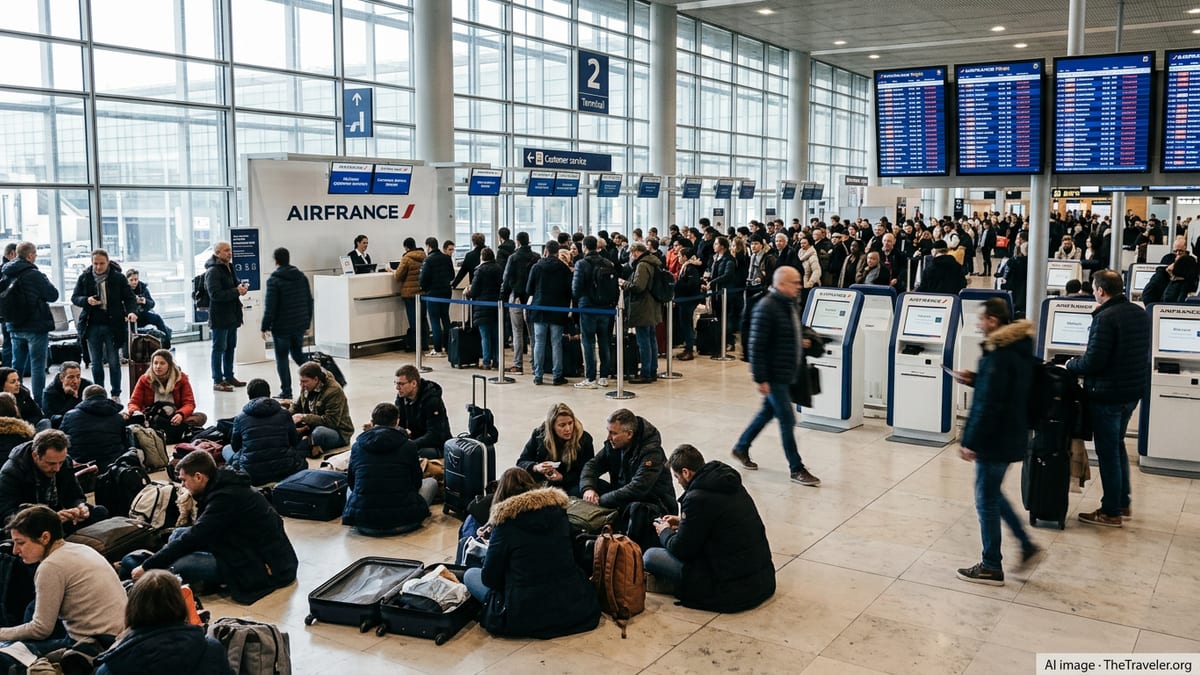
Airport operations at Paris Charles de Gaulle, Orly and major regional gateways have so far seen only limited disruption related directly to the protests. Nonetheless, airline advisories encourage passengers to arrive earlier than usual on days of large demonstrations, particularly when traveling to or from the airports by road, because blocked routes or redirected traffic can lengthen journey times significantly.
Official guidance for travelers heading to France
Publicly available guidance from foreign ministries and consular services emphasizes planning and situational awareness rather than blanket avoidance of France. The US advisory for France, most recently revised on October 21, encourages travelers to keep a low profile, avoid crowds, monitor local media and be prepared for security checks in public spaces, especially around transport hubs and major attractions.
Other governments that reference France’s current unrest also point to longstanding patterns of protest in the country. Background notes from risk assessment reports describe demonstrations as a regular feature of civic life that can, at times, involve property damage and confrontations with police, particularly in the evening or when rival groups converge.
Travel insurers and tour operators quoted in industry coverage recommend that travelers review policy language on civil unrest, trip interruption and missed services. Some policies may cover additional accommodation or transport costs if travelers are unable to reach a departure point due to road closures or curfews, while others exclude disruptions linked to protests. Travelers are advised to confirm coverage in writing before departure.
Universities and corporate travel programs sending students or staff to France this autumn are updating risk assessments to reflect the amber alert and the evolving protest calendar. Many are allowing trips to proceed with added precautions, such as pre trip safety briefings, mandatory local contact details and requirements to avoid demonstration areas, especially after dark.
Practical tips for visitors on the ground
For travelers already in France or due to arrive in the coming days, the main challenge is likely to be disruption rather than direct personal danger. Tourism focused outlets and local travel forums consistently report that visits remain largely manageable when travelers adapt plans around protest schedules and stay flexible with timings.
Visitors are encouraged to track local news in French or English and to confirm the latest information from city tourism sites, transport operators and their accommodation providers. Demonstrations are often announced in advance and tend to follow repeat routes, giving travelers an opportunity to plan museum visits, restaurant bookings or intercity train journeys at quieter times.
On days of major marches, experts recommend allowing additional time to move across the city, carrying identification, and avoiding wearing or displaying partisan symbols that might be misinterpreted in large crowds. Travelers should be prepared for visible policing, bag checks and occasional access restrictions around government buildings, main squares and commercial centers.
For now, international travel demand for France appears to be holding, but booking platforms and industry analysis suggest that some visitors are rescheduling trips outside key protest dates or shifting to smaller destinations away from the largest marches. As the amber alert and updated advisories remain in place, travelers weighing upcoming itineraries are likely to continue balancing France’s enduring appeal with a more cautious, information driven approach to planning.