


More news on this day
Severe thunderstorms sweeping across northwestern Europe on Saturday have triggered major disruption at London Heathrow Airport, with publicly available flight-tracking data indicating hundreds of delayed and cancelled services and widespread knock-on impacts for passengers.
Get the latest news straight to your inbox!
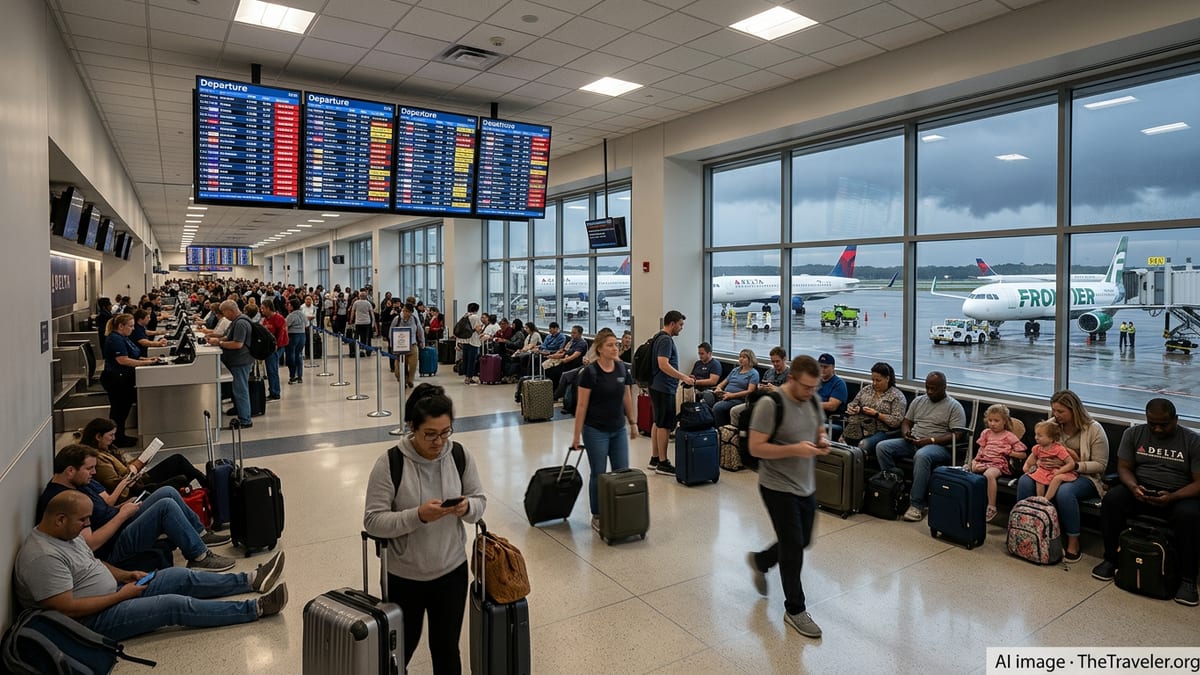
Nearly 800 London Flights Disrupted as Storms Hit
Reports from multiple outlets and real-time aviation trackers on 27 June 2026 indicate that close to 800 flights across London’s two main hubs, Heathrow and Gatwick, have faced disruption as a band of intense storms moved across the region. Data compiled during the afternoon pointed to hundreds of departures and arrivals running late, alongside dozens of cancellations, as air-traffic capacity into southeast England was sharply reduced.
At Heathrow specifically, publicly available information from flight-tracking platforms shows that several hundred services have been delayed, with waiting times on some routes stretching to many hours. A number of long-haul arrivals into the airport have been pushed back significantly, with some aircraft held on the ground at their departure points while airspace over the UK adjusts to the changing storm cells.
Coverage in British and European media describes queues forming at check-in and customer service desks, as travellers attempt to rebook or obtain clarity on revised departure times. Social media posts and travel forums further highlight passengers waiting on board aircraft for extended periods while slots are reassigned and ground operations manage the backlog.
While Heathrow remains open, the level of disruption means that the usual tightly choreographed schedule of arrivals and departures has been heavily compressed, leaving airlines with few options other than delaying, rerouting or cancelling selected services.
Thunderstorms Force Air-Traffic Restrictions Over Northwest Europe
The disruption has been linked to a wide weather system stretching from northern Spain to southern Sweden, with meteorological agencies and Eurocontrol data pointing to a belt of hot, unstable air feeding repeated thunderstorms across northwestern Europe. As the storms intensified over the early hours of Saturday, air-traffic regulators imposed temporary flow restrictions, limiting how many aircraft could safely move through key corridors into and out of the London area.
Under such conditions, aircraft are required to divert around active storm cells, avoid areas of severe turbulence and maintain greater spacing in en‑route and terminal airspace. These measures significantly reduce the number of flights that can be handled at any one time, particularly during peak morning and evening periods when Heathrow typically operates close to its maximum scheduled capacity.
Weather-related constraints have also affected ground operations. Lightning risk and heavy rain can slow baggage handling, ramp activities and refuelling, further extending turnaround times for aircraft already operating within a restricted slot pattern. This combination of constrained airspace and slower ground handling has contributed to long knock-on delays even on flights not directly over the worst of the storms.
Eurocontrol projections cited in news reports suggest that unsettled conditions are likely to persist through the evening, raising the risk that delays at Heathrow could extend into late-night waves and potentially impact early rotations on Sunday as airlines work through the backlog.
Impact on Heathrow Passengers and Airlines
For travellers passing through Heathrow, the storm system has translated into extended waits, missed connections and last-minute itinerary changes. Reports from passengers indicate that some short-haul flights have departed several hours behind schedule, while certain long-haul arrivals have been held or diverted, forcing rebookings on onward connections and overnight stays.
Airlines operating from Heathrow, including major network and low-cost carriers, appear to have adopted a mix of strategies to manage the pressure on schedules. Publicly available information and media coverage show a combination of rolling delays, selective cancellations and aircraft swaps, with carriers prioritising long-haul and high‑demand routes where possible while trimming some frequencies to help stabilise operations.
Travel advice shared through airline updates, airport channels and independent travel sites consistently urges passengers to check their flight status frequently on the day of travel. With slots being reassigned dynamically in response to weather and air-traffic constraints, departure times can shift with relatively short notice, especially for services scheduled to pass through affected airspace later in the day.
Heathrow’s own passenger-information pages continue to emphasise that travellers should contact their airline directly for the latest status, as carriers hold responsibility for implementing contingency plans, arranging rebookings and providing support where required under applicable consumer and aviation regulations.
Rights, Recovery Efforts and What Travellers Can Expect
Guidance available from consumer bodies and aviation regulators notes that when delays are caused by adverse weather and associated air-traffic control measures, they are generally treated as extraordinary circumstances. This typically limits eligibility for financial compensation, although airlines are still expected to provide care and assistance once delays pass certain thresholds, including refreshments, communication access and, where necessary, overnight accommodation.
In practice, the level of support at Heathrow varies by carrier and route, but many airlines publish structured policies outlining what passengers can expect when disruption is triggered by weather outside operational control. During major events such as Saturday’s storms, those policies are often activated at scale, with additional staff directed to customer-service desks and digital self‑service tools pushed to passengers’ phones and email for rebooking and refund options.
Operational recovery from a weather shock of this scale can take time, even after the most severe storms pass. Aircraft and crews frequently end up out of position, creating further constraints on the following day’s schedule. Industry coverage of previous disruption at Heathrow suggests that airlines may need several rotations to fully realign aircraft, particularly on long‑haul networks where duty-time limitations restrict how quickly crews can be redeployed.
Passengers holding itineraries through Heathrow over the next 24 hours are therefore being advised, in widely available travel guidance, to allow additional time at the airport, monitor flight information closely and be prepared for gate or schedule changes at short notice, even if local weather appears to have improved.
Heathrow’s Growing Exposure to Extreme Weather
The latest disruption comes against a backdrop of wider discussion about how large hub airports such as Heathrow are adapting to more frequent episodes of extreme weather. Publicly available planning and sustainability documents from the airport outline a range of climate‑adaptation measures, including investments intended to improve resilience to heavy rainfall, strong winds and storm activity.
Nonetheless, the events of 27 June underscore the particular vulnerability of a high‑density hub that operates close to its capacity in normal conditions. When storms constrain approach and departure flows over southeast England, there is relatively little spare room in the schedule to absorb delays before they cascade into missed connections and cancellations.
Aviation analysts cited in recent coverage of European weather events note that highly connected hubs face rising operational risk as climate patterns shift, even as airports and air-traffic providers refine procedures and invest in more sophisticated forecasting. Saturday’s thunderstorms, with their rapid development over several countries and wide geographic footprint, illustrate the challenge of maintaining smooth flows through one of the world’s busiest international airports when the atmosphere becomes highly unstable.
For now, publicly available information suggests that Heathrow’s focus remains on clearing the current backlog and restoring as much of the schedule as possible ahead of the next working week, while airlines and passengers alike watch the evolving weather picture over Europe for signs of further disruption.