


More news on this day
Travelers moving through Chicago O’Hare International Airport on June 15 faced another day of mounting disruption, with publicly available tracking data showing 257 delayed flights and 24 cancellations rippling through domestic and international routes operated by United Airlines, Finnair, VivaAerobus, Air Canada, Emirates, British Airways and other carriers serving the United States, Canada, the United Kingdom, Germany, France and the United Arab Emirates.
Get the latest news straight to your inbox!
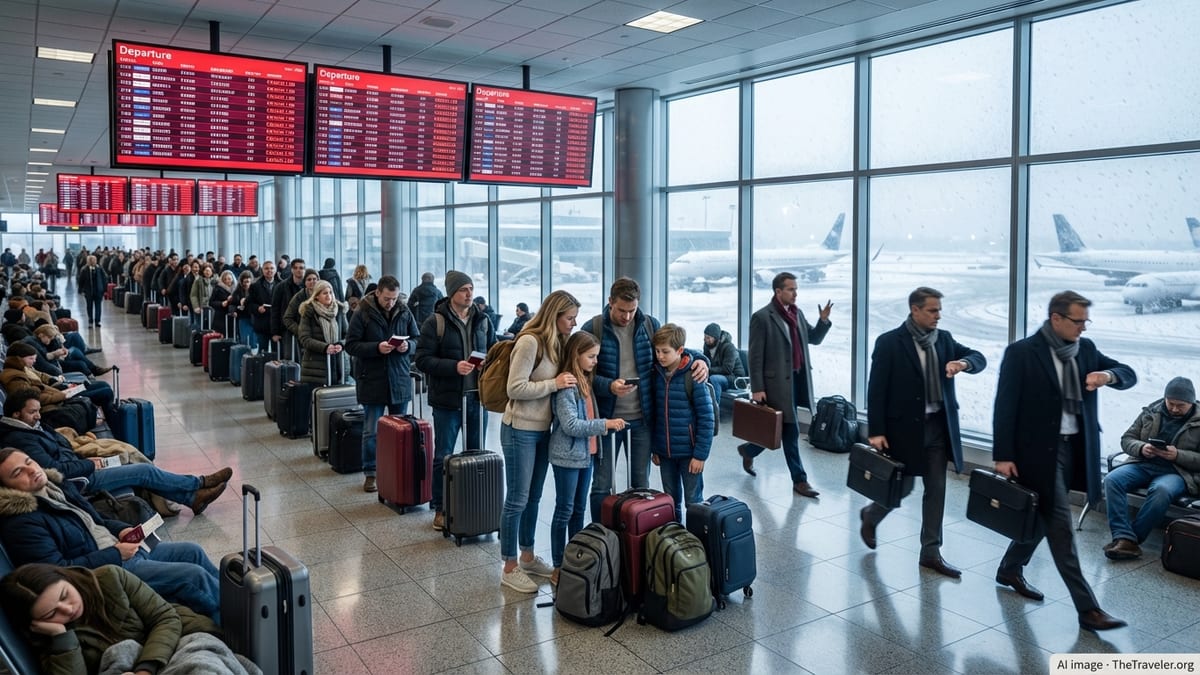
Storms and Congestion Drive a Difficult Day at a Major Hub
Operational data and airline trackers indicate that a mix of unsettled weather over the Midwest and broader air traffic congestion contributed to the latest round of schedule problems at Chicago O’Hare. The airport, one of the busiest connecting hubs in North America, is particularly sensitive to thunderstorms and low clouds that can quickly reduce the number of arrivals and departures allowed per hour.
Regional aviation advisories and delay-monitoring platforms on June 15 pointed to weather-related flow restrictions at several large hubs, including airports in the Great Lakes and Northeast regions. When arrival rates are cut, aircraft already in the system can face extended holding patterns or ground delays, and those constraints quickly back up across an airline’s network.
Industry disruption over the spring has underscored how quickly O’Hare’s schedule can unravel when storm systems move through the area. Earlier episodes this year saw thousands of flights disrupted across the United States after ground stops and delay programs were implemented in Chicago, with knock-on effects continuing for days on long-haul and regional routes.
On June 15, the 257 delays and 24 cancellations at O’Hare represented a smaller but still significant wave of interruptions, forcing many travelers into missed connections, unplanned overnight stays and rebooked itineraries across multiple continents.
United Leads List of Affected Carriers
As O’Hare’s largest tenant, United Airlines again appeared prominently in delay and cancellation tallies. Publicly accessible schedules show United operating an extensive mix of domestic and international services out of the airport, from short regional hops to Washington and New York through to long-haul departures toward Europe and Asia.
Tracking boards on June 15 showed United flights experiencing a variety of issues, from minor delays of 30 to 45 minutes on regional routes to more substantial disruptions on transatlantic services linking Chicago with key European gateways such as Frankfurt and London. Each delayed departure from O’Hare can cascade into missed onward connections in both directions, compounding inconvenience for travelers well beyond the United States.
O’Hare’s status as a connecting hub for joint ventures and alliance partners means that disruptions to a United-operated leg can also affect itinerary segments flown by partner airlines based in Europe, Canada and Asia. Passengers booked on multi-stop journeys between smaller cities may therefore experience multiple changes before finally reaching their destinations.
Transatlantic and Transborder Flights Hit Across Six Countries
The day’s disruption was not limited to United. Finnair, British Airways, Air Canada, Emirates, VivaAerobus and other foreign carriers that rely on Chicago as a primary U.S. gateway also saw their operations affected by the constrained schedule.
Public scheduling data shows that airlines such as Finnair and British Airways connect Chicago with major European hubs used by travelers heading to or from the United Kingdom, Germany and France. Even modest delays on these long-haul sectors can complicate evening bank connections in Europe, where passengers transfer to short-haul flights serving cities across the continent.
Transborder services linking O’Hare with Canadian cities operated by Air Canada also faced pressure from the day’s irregular operations. Canada-bound travelers reported extended airport waits as aircraft and crews rotated through delayed inbound segments. Similar patterns emerged on routes to Mexico, where VivaAerobus and other carriers operate high-demand leisure and visiting-friends-and-relatives traffic.
On long-haul routes to the Middle East, O’Hare’s services to the United Arab Emirates, including flights marketed by Emirates, were among those subject to close monitoring by passengers and travel agents. According to airline customer information channels, travelers were encouraged to check the latest flight status and remain alert for potential rebookings onto alternative departures.
Knock-on Effects for Connections in Europe, Canada and the Middle East
Because many of O’Hare’s disrupted flights on June 15 were feeding major hubs abroad, the effects of the 257 delays and 24 cancellations extended well beyond the Chicago area. Passengers connecting in London, Frankfurt, Paris, Helsinki, Toronto and Dubai faced reshuffled itineraries as arrival times drifted later into the day or into the following morning.
In Europe, late-arriving services from Chicago can cause travelers to miss final evening departures to secondary cities, particularly those served only once per day. When that occurs, passengers often must wait for the next day’s flight or be rerouted through an entirely different hub, adding further complexity and travel time.
In Canada, congestion on key transborder routes can undermine carefully timed winter and summer schedules that rely on tight connection windows. This can be especially challenging for travelers heading onward to smaller communities that are served by a limited number of daily flights, where rebooking options are inherently constrained.
In the Middle East, disrupted arrivals from North America can misalign with banked departures to Asia and Africa, forcing airlines to juggle aircraft assignments and negotiate new routings for through passengers. As a result, a delay in Chicago can reverberate as schedule changes many time zones away.
What Travelers Can Do When O’Hare Operations Unravel
Consumer advocates and travel industry analysts often point to several practical steps that can mitigate the impact of days like June 15 at a major hub. Public guidance typically emphasizes checking flight status frequently, as departure times can shift multiple times over the course of a weather event or air traffic program.
Airlines serving O’Hare, including United, Air Canada, Emirates, Finnair, VivaAerobus and British Airways, provide real-time updates through their apps and booking platforms. When substantial schedule changes occur, many carriers offer travelers the opportunity to rebook without additional change fees, particularly when irregular operations are widespread across the network.
Travel planners recommend that passengers with onward international connections build additional buffer time into itineraries that pass through weather-sensitive hubs such as Chicago. Early-day departures and longer connection windows can improve the chances of arriving on time when storms or system-wide congestion develop.
While the 257 delays and 24 cancellations recorded at O’Hare on June 15 represent only a fraction of the airport’s daily activity, they highlight the ongoing vulnerability of tightly timed global networks to local weather and airspace constraints. For travelers crossing multiple regions in a single day, even a short delay at Chicago can mean a much longer journey than originally planned.