


More news on this day
Montreal’s main international gateway is grappling with a wave of flight disruptions, as dozens of delays and cancellations at Montréal–Trudeau International Airport on Monday left passengers stranded and key international carriers scrambling to restore normal operations.
Get the latest news straight to your inbox!
Wave of Delays and Cancellations Hits Key Carriers
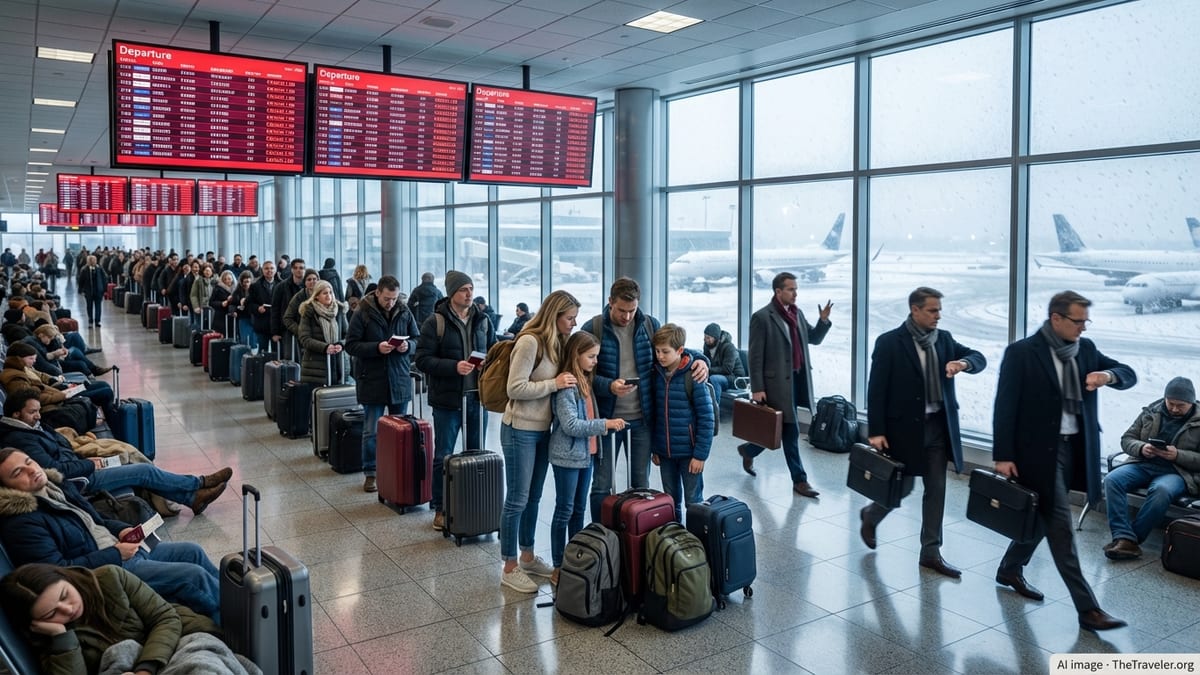
Publicly available tracking data early Monday indicated that Montréal–Trudeau International Airport was facing at least 92 delayed departures and arrivals and 15 outright cancellations, creating bottlenecks across terminals and departure lounges. The disruption affected a mix of domestic, transborder, and long-haul routes at one of Canada’s busiest hubs.
Air Canada, the airport’s dominant carrier, absorbed the brunt of the turmoil, with many of its morning and midday flights showing late departures or extended ground holds. International partners Lufthansa and Air France also appeared on lists of delayed and canceled services, adding to the pressure on transatlantic connections during the peak summer travel build-up.
Operational dashboards used by travelers showed knock-on effects across the schedule, with some aircraft arriving late from other Canadian cities and then departing late again from Montreal. Passengers reported tight or missed connections, longer time in security and check-in lines, and crowded gate areas as the disruptions mounted.
While the precise breakdown of delays by airline continued to shift throughout the morning, the overall pattern highlighted how quickly congestion at a single hub can ripple through global networks when several major carriers are affected at once.
Technology Strains and Weather Add to Passenger Frustration
Travelers regularly passing through Montreal have become accustomed to occasional bottlenecks, but Monday’s situation stood out for its scale and concentration in a short window. Recent history at the airport has included technology glitches at check-in and security that slowed passenger processing for carriers such as Air Canada, and industry observers note that even minor system hiccups can quickly cascade into widespread disruption when terminals are already busy.
Weather conditions around Montreal on Monday included periods of rain and low cloud, which can require additional spacing between aircraft and more conservative departure rates. While not extreme, such conditions can exacerbate congestion when combined with heavy schedules and any underlying staffing or equipment constraints on the ground.
Aviation analysts point out that delays rarely stem from a single cause. Factors can include late-arriving aircraft from other airports, crew scheduling limits, air traffic control flow restrictions, and ground handling bottlenecks. The 92 delays reported at Montréal–Trudeau fit into a broader pattern seen at major hubs where high utilization leaves little margin to absorb even short-lived disruptions.
As operations continued through the day, publicly available information suggested airlines were adjusting schedules, swapping aircraft, and rerouting some passengers in an effort to reduce backlogs and protect key long-haul departures later in the afternoon and evening.
Pressure on Air Canada, Lufthansa, and Air France Networks
The disruption at Montreal carried implications far beyond a single airport, given the role the city plays in the route maps of Air Canada, Lufthansa, and Air France. Each airline links Montréal–Trudeau with major European hubs, feeding onward connections across the continent, the Middle East, and Africa.
For Air Canada, Montreal is both an origin and connection point for domestic and international itineraries, meaning delays on short-haul segments can quickly affect passengers traveling onward to Europe and beyond. Missed connections may require overnight accommodation, rebooking on later flights, or rerouting through other Canadian airports such as Toronto Pearson and Vancouver.
Lufthansa and Air France, meanwhile, rely on their Montreal services to feed flagship hubs in Frankfurt, Munich, and Paris. When departures from Montreal are significantly delayed or canceled, connecting banks in Europe can be disrupted, forcing schedule adjustments and last-minute reaccommodation for travelers who began their journeys in Canada or the United States.
Industry commentary emphasizes that these knock-on effects can persist for days. Aircraft and crews may end up out of position, and subsequent rotations can run late until networks gradually realign. For passengers, that often means residual delays even after the initial crisis at the departure airport appears to have eased.
Rise of Montreal’s Second Airport Highlights Capacity Tensions
The turbulence at Montréal–Trudeau comes as the Greater Montreal region officially opens a second passenger hub on the South Shore. The MET – Montreal Metropolitan Airport at Saint-Hubert began commercial operations on Monday, with Porter Airlines launching domestic services and terminal operators touting the new facility as a pressure valve for the region’s overstretched aviation system.
Airport developers and regional tourism organizations have promoted MET as a more accessible, passenger-focused alternative for select domestic routes, noting that a significant share of the metropolitan population can reach the Longueuil facility more quickly than Montréal–Trudeau. The goal is to shift some short-haul traffic away from the main international airport and create additional flexibility within the overall network.
Planning documents and industry coverage in recent years have repeatedly underscored concerns about congestion at Montréal–Trudeau, particularly during peak holiday periods and in the busy summer season. The simultaneous launch of MET and the latest disruption at the main airport highlight both the demand for air travel in the region and the challenges of managing growth without compromising reliability.
Analysts note that while the new airport will not immediately absorb a large share of existing traffic, its gradual ramp-up could help reduce pressure at the primary hub over time, especially if more carriers add services and ground access to the South Shore terminal continues to improve.
What Travelers Can Expect in the Coming Days
Based on patterns seen in previous episodes of large-scale disruption at Canadian hubs, travelers using Montréal–Trudeau over the next 24 to 48 hours are likely to see lingering schedule changes even if the immediate wave of delays subsides. Aircraft rotations may remain out of sync, and some flights could be retimed or combined as airlines work to restore normal operations.
Publicly accessible guidance from regulators and consumer advocates suggests that passengers facing significant delays or cancellations should closely monitor airline notifications, verify rebooking options, and keep documentation of disruption-related expenses. For flights governed by Canadian or European passenger protection rules, travelers may in some cases be eligible for refunds, re-routing, or financial compensation, depending on the cause and length of the disruption and the jurisdiction in which their journey began.
Passenger groups also recommend allowing extra time at the airport, especially for early morning and late afternoon departures when traffic typically peaks. Even modest check-in or security delays can have bigger consequences when terminals are already dealing with the aftershocks of a disruptive morning.
For Montreal’s aviation system, Monday’s difficulties at the main international gateway and the simultaneous inauguration of a second passenger airport underscore a pivotal moment. As demand for air travel continues to rebound and grow, the region’s carriers and airport operators face mounting pressure to balance expansion with the resilience travelers increasingly expect.