


More news on this day
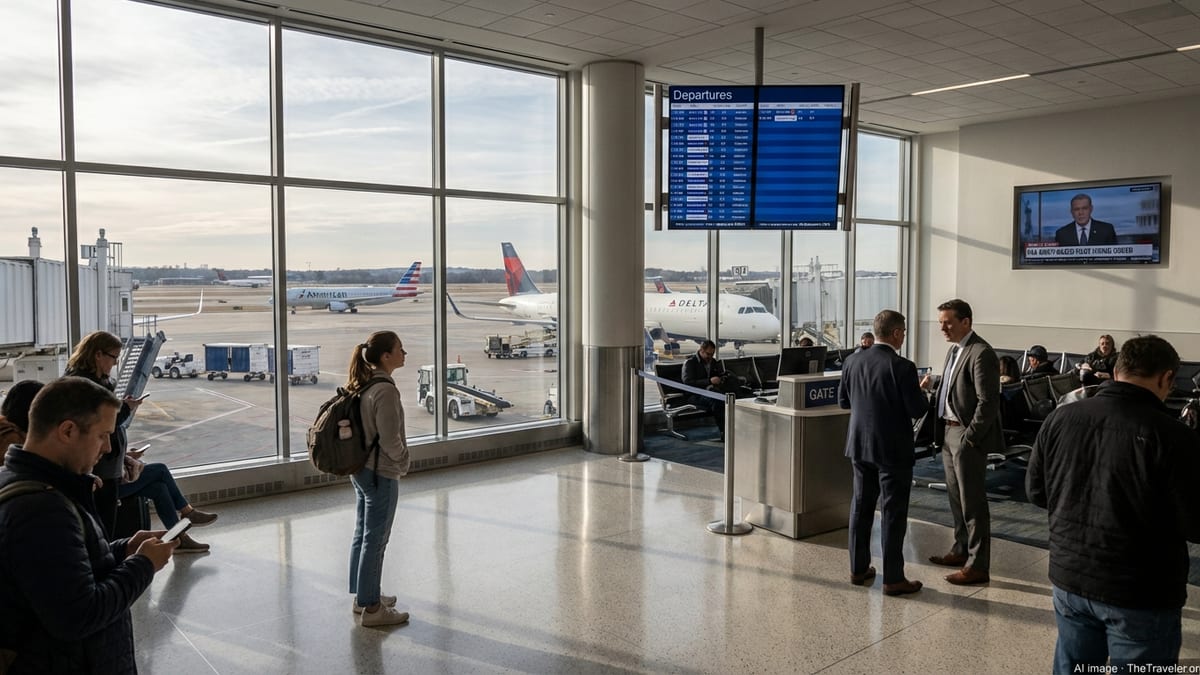
Travelers moving through Ronald Reagan Washington National Airport in Washington, D.C., faced significant disruptions as 93 delayed departures and 54 canceled flights rippled through airline networks, affecting routes across the United States and into Canada.
Get the latest news straight to your inbox!
Delays And Cancellations Mount At Key Washington Hub
The elevated disruption at Reagan National, a primary gateway for domestic business and government travel, created extended wait times, missed connections, and last-minute rebookings for passengers. Publicly available flight tracking data for the day show dozens of Reagan National departures pushed back well beyond their scheduled times, with additional cancellations recorded across multiple carriers.
The 93 delayed flights reflect departures that operated late compared with published schedules, while 54 services were removed entirely, forcing passengers onto later departures or alternate routings. The scale of disruption was noteworthy for a midweek travel period, particularly given Reagan National’s role as a constrained, slot-controlled airport where schedule changes often have knock-on effects throughout airline networks.
Operational interruptions at a hub of this size can reduce on-time performance metrics for carriers and airports, straining recovery plans as aircraft and crews fall out of their planned rotations. The result for travelers is longer days, tighter connections at onward hubs, and increased risk of misrouted baggage.
PSA, Alaska, Republic And Regional Partners Feel The Strain
The impact was spread across several airlines, with regional operators PSA Airlines and Republic Airways, along with Alaska Airlines and other carriers, all registering disrupted flights touching Reagan National. These operators serve a mix of short-haul business routes and longer domestic links that are critical for connecting smaller U.S. cities to the national capital and beyond.
PSA and Republic, which operate many flights under major-brand codes on short- and medium-haul routes, are particularly sensitive to schedule disruptions because of tight turn times and high aircraft utilization. When a single departure from Reagan National is delayed or canceled, it can affect multiple subsequent segments on that aircraft throughout the day, spreading disruption across the eastern United States and into cross-border markets.
Alaska Airlines, which links Reagan National to key West Coast and transcontinental destinations, also contended with irregular operations that placed pressure on already busy long-haul corridors. For travelers heading to or from Canada via U.S. hubs, missed connections and equipment swaps added uncertainty, with some passengers needing to overnight or reroute through alternative airports.
Network Effects Reach Across United States And Canada
Reagan National’s disruptions did not remain contained to the Washington region. Because the airport feeds a dense web of connections, delays and cancellations quickly propagated through hubs such as Charlotte, Chicago, New York, and major Canadian gateways served via U.S. connections. Passengers originating in smaller communities who rely on single daily flights to link into the broader system were among those most exposed.
According to publicly available operational data, a combination of late arriving aircraft and congestion-related constraints contributed to the irregular operations. Once early flights slip out of their assigned time slots, airlines often face a choice between compressing ground times or canceling select departures to stabilize the schedule, a process that can reverberate into evening waves of traffic.
Travelers reported extended waits at boarding gates and crowding around departure boards as airlines updated schedules and reassignments throughout the day. For some, the disruption meant rebooked itineraries through secondary hubs, while others were left to contend with overnight stays or significant detours to reach final destinations.
Traveler Options And Consumer Protections In Focus
The scale of delays and cancellations at Reagan National has renewed attention on what rights and options air travelers have when schedules unravel. U.S. Department of Transportation consumer reports and policy dashboards describe how airlines typically handle controllable delays and cancellations, including rebooking rules, hotel and meal support, and refund eligibility when a flight is not operated at all.
Publicly available government data show that in recent reporting periods, U.S. carriers have collectively canceled a relatively small percentage of flights, but even a limited number of cancellations can significantly affect individual passengers when they cluster at a capacity-constrained airport such as Reagan National. For regional operators including PSA and Republic, the high proportion of short-haul segments in their schedules amplifies the operational consequences of each disruption.
Travel advocacy groups routinely advise passengers to monitor flight status through airline apps and airport displays, keep contact information updated in reservations to receive notifications, and understand each carrier’s published policies for irregular operations. During events like the Reagan National disruption, travelers who can adjust plans early or accept alternative routings frequently secure seats on replacement flights before later waves of rebooking demand build.
Operational Pressures Ahead Of Peak Summer Travel
The episode at Reagan National comes as U.S. aviation heads into the core summer travel season, a period when thunderstorms, high demand, and tight staffing can combine to strain airline operations. Federal aviation guidance on summer travel has highlighted that while cancellation rates have generally trended lower than during recent years, even modest levels of disruption can create outsized impacts during peak travel days.
For Reagan National and its mix of mainline and regional traffic, maintaining buffer in schedules, managing gate and runway congestion, and ensuring adequate staffing remain critical to limiting the spread of delays. Any operational challenge, from weather to airspace flow restrictions, can quickly cascade through carriers that rely on high aircraft utilization and frequent departures.
As airlines refine their summer plans, analysts will be watching closely to see whether the Reagan National disruptions are a one-day anomaly or an early signal of wider operational stress. For travelers planning to connect through Washington in the coming weeks, the experience serves as a reminder to build extra time into itineraries and to stay alert to changing flight information on the day of travel.