


More news on this day
A fast-moving line of storms across the Northeast is causing severe disruption for air travelers, with reports indicating that American Airlines Flight 5282 diverted to Philadelphia as delays, diversions and cancellations ripple through some of the country’s busiest airports.
Get the latest news straight to your inbox!
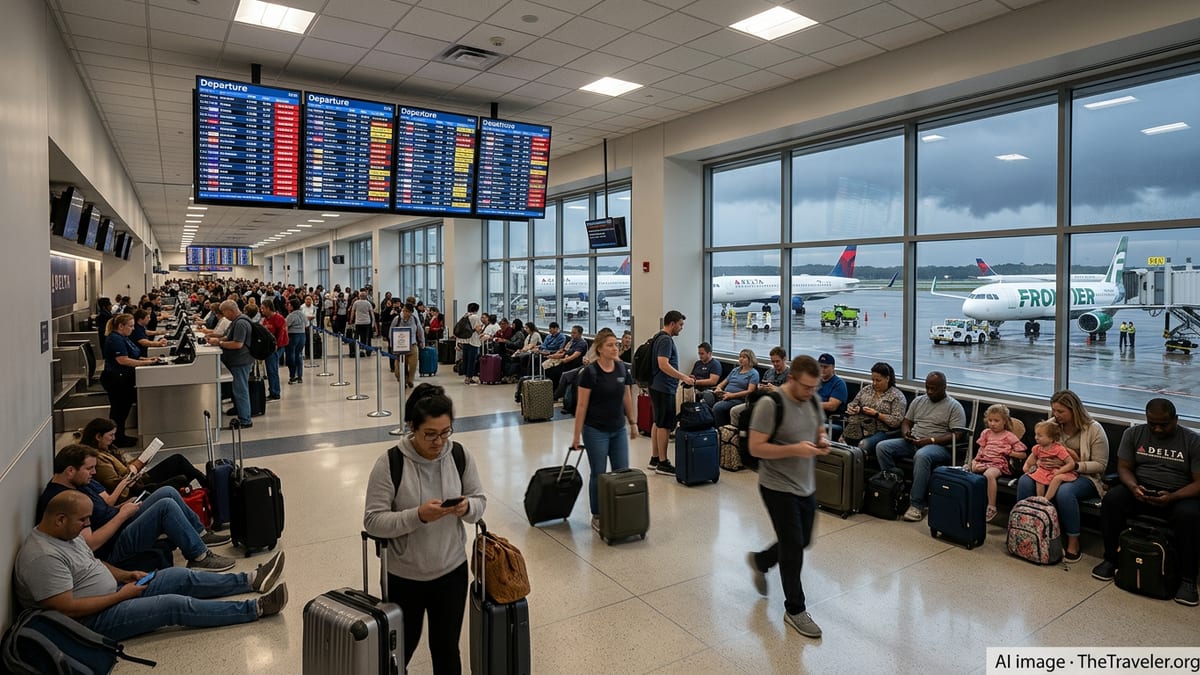
American Eagle Flight Diverts to Philadelphia Amid Turbulent Evening
Preliminary tracking data and passenger accounts indicate that American Airlines Flight 5282, operated by American Eagle, was forced to divert to Philadelphia International Airport after encountering weather and congestion problems in the Northeast corridor. The regional jet, which had been scheduled to operate a short-haul route in the region, changed course as convective storms intensified along its planned path.
Publicly available flight boards showed a cluster of holding patterns and diversions into Philadelphia on Friday evening, consistent with broader disruption affecting nearby hubs. Travelers posting on social media and online forums described extended periods in holding stacks, sudden changes in flight paths and updated arrival times that repeatedly slipped later into the night.
According to operational summaries from flight-tracking platforms, Flight 5282 joined a growing number of aircraft rerouted to airports with available runway capacity and gate space as the storm line moved over parts of Pennsylvania, New Jersey and New York. Diversions of this type are typically attributed to a combination of weather, air traffic control flow restrictions and crew duty-time limits, all of which have been under pressure across the network this week.
Passengers onboard the diverted service reported confusion over onward connections and limited information as crew members waited for revised instructions from dispatch. Many connected travelers faced missed onward flights and unplanned overnight stays in the Philadelphia area, adding to the sense of chaos at the terminal.
Storm System Compounds Existing Strain on Northeast Airports
The disruption linked to Flight 5282 is unfolding against a backdrop of a difficult early summer for the Northeast aviation system. Travel advisories issued over recent weeks for snow, heavy rain and strong thunderstorms have highlighted the vulnerability of dense air corridors to even short-lived bouts of bad weather, with one February storm alone canceling thousands of flights at major airports from New York to Philadelphia.
Industry analyses produced earlier this month pointed out that some airports in the region have nonetheless improved their on-time performance in 2026, with Newark Liberty leading major Northeast hubs for punctuality. Even so, the same reports noted that any intense weather event can quickly erode those gains when traffic levels are high and runway capacity is constrained.
In recent days, informal operations alerts shared in pilot and frequent flyer communities had already flagged the possibility of “probable” multi-airport ground stops in the Northeast as storm forecasts worsened. Travelers on several airlines, not just American, described crowded terminals, long security lines and rolling departure time changes as carriers tried to keep at least part of their schedules intact.
Observers of the aviation system point out that the Northeast corridor combines some of the nation’s most congested airspace with aging infrastructure and limited spare runway capacity. When weather cells park over this region, flow restrictions from air traffic control can ripple far beyond a single city, affecting flights as far away as Dallas, Chicago or Miami that are feeding into or out of the corridor.
Airlines Struggle to Recover as Delays Cascade Through Networks
The diversion of American Airlines Flight 5282 illustrates how quickly an isolated weather issue can snowball into wider network disruption. When one flight diverts, the aircraft and crew are no longer in position for their next scheduled departure, setting off a domino effect that can last into the following day. Internal scheduling documents and training materials circulated within the industry stress that once crews begin to “time out” under federal duty limits, the ability to run the timetable as planned can erode rapidly.
Throughout June, travelers on American Airlines and other major carriers have described extended ground delays, frequent gate changes and overnight strandings as storms and air traffic constraints combine. Accounts shared publicly include passengers waiting many hours for replacement crews, only to see flights ultimately canceled when pilots or flight attendants exceed their maximum duty windows.
Guides produced this year to help travelers navigate mass disruptions emphasize that such events may be labeled as weather-related, even when the most visible impact comes in the form of crew or equipment shortages. Once a storm system has snarled a hub for several hours, the resulting imbalance of aircraft and crews can continue to generate cancellations long after skies have cleared.
For carriers, rapid recovery is complicated by high summer load factors, which leave few empty seats on alternative flights. Even when airlines attempt to rebook affected travelers, many face significant delays before new itineraries become available, particularly on short-haul regional routes where frequency has been trimmed in recent years.
Passengers Face Long Lines, Limited Options and Frustration
For passengers passing through the Northeast on Friday, the combination of diversions, cancellations and lengthy delays created a difficult travel environment. Online forums tracking American Airlines operations show a rising volume of complaints over the past week, with travelers recounting missed events, unexpected hotel costs and a struggle to obtain clear information at crowded service desks.
At Philadelphia, travelers arriving from diverted flights such as AA5282 encountered packed concourses and long lines at customer service counters as they sought rebooking options. Some passengers reported being advised to use airline apps or websites rather than wait for in-person assistance, only to find that replacement flights were already full or several days away.
Industry observers note that these scenes are increasingly common during significant weather events, as airlines rely more heavily on digital tools and centralized call centers to manage disruptions. While these systems can help some travelers secure new itineraries quickly, they can also leave others feeling disconnected from support when connectivity is poor or when complex, multi-city trips need manual intervention.
Consumer advocates regularly advise travelers to anticipate such scenarios during peak travel periods by carrying essentials in their hand luggage, keeping battery power available for phones, and understanding their airline’s rebooking and hotel policies before they fly. In severe disruptions, many passengers also turn to third-party travel insurance or credit card protections to recoup out-of-pocket expenses that carriers may not cover.
What Travelers Should Expect in the Coming Days
While the storm system responsible for the latest round of diversions and delays is expected to move out of the region within a relatively short period, operational knock-on effects can persist. Schedules for the next one to two days may continue to show irregular gaps, especially on shorter regional links that depend on aircraft circulating multiple times per day.
Travel planning advisories published this year repeatedly encourage passengers to monitor their flights closely in the 24 hours before departure, particularly when traveling through weather-prone hubs such as New York, Philadelphia, Boston or Washington. Early information about schedule changes can give travelers more time to adjust connections, consider alternate airports or request voluntary changes under temporary flexibility policies.
Analysts expect airlines, including American, to keep a close watch on crew availability, aircraft positioning and forecast conditions as they work to stabilize operations after the latest disruptions. For now, the diversion of American Airlines Flight 5282 stands as just one example of how fragile the system can become when storms, staffing and saturated schedules collide over the Northeast.