


More news on this day
Britons eyeing winter‑sun breaks and stopovers in Dubai and Abu Dhabi have been handed a cautious boost, as the United Kingdom has moved away from its blanket warning against non‑essential travel to the United Arab Emirates while keeping tougher guidance in place across much of the wider Middle East.
Get the latest news straight to your inbox!
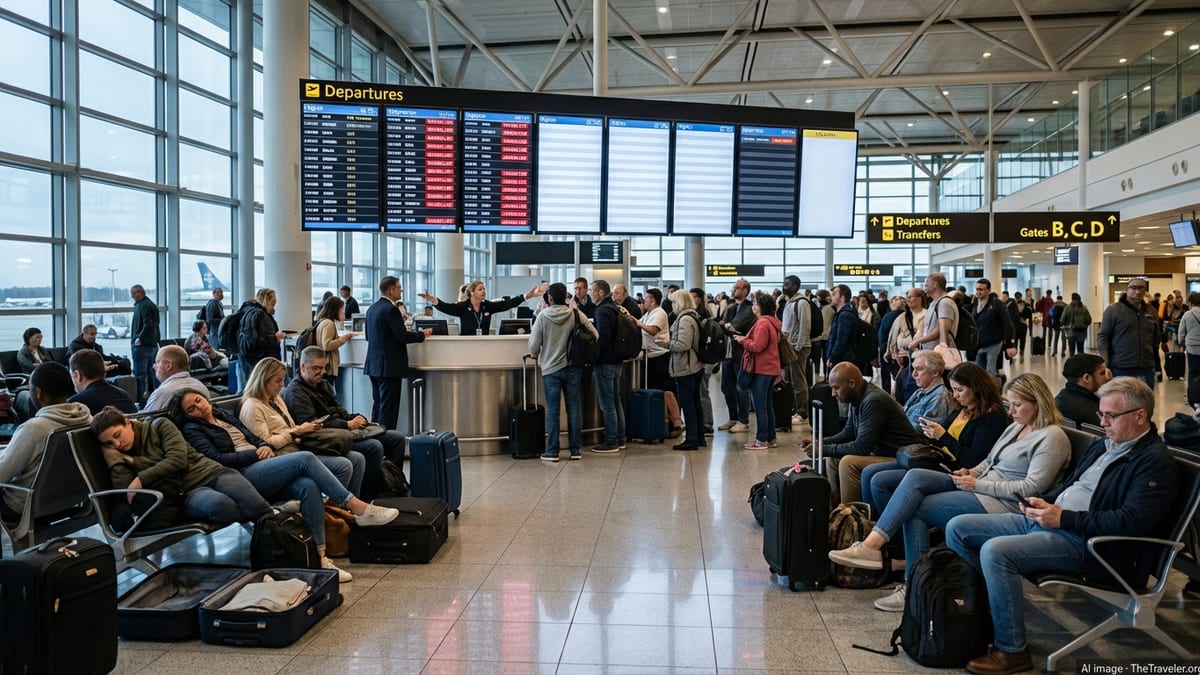
UK travel advice softens for the UAE after months of "all but essential" guidance
Publicly available Foreign, Commonwealth and Development Office (FCDO) updates indicate that the United Kingdom no longer advises against all but essential travel to the United Arab Emirates, reversing a high level warning that had been in force since the early stages of the regional crisis triggered by the 2026 Iran conflict. Until this week, the UAE appeared in official summaries alongside other Gulf states under an amber category that effectively discouraged leisure trips.
The earlier stance followed a series of missile and drone incidents and a broader deterioration in regional security, which prompted the FCDO to advise against non essential travel to several Gulf destinations including the UAE, Qatar, Bahrain and Kuwait. That position fed directly into airline risk assessments and insurance decisions, with many UK based travellers reporting they were unable to secure comprehensive cover while the advisory remained in place.
The removal of the broad non essential warning marks a notable shift, although the FCDO system remains calibrated to reflect a persistent underlying terrorism and regional conflict risk. The government emphasises in its general guidance that advice can change quickly and that it only issues formal warnings where it judges the danger to British nationals to be unacceptably high.
For the tourism industry, the change is being interpreted as a step toward normalisation of travel to the UAE, even as the security situation in the wider region remains volatile. Industry analysts describe the move as an attempt to bring travel advice back into line with the de facto operating environment in the Gulf, where flights and hotel operations have largely continued, albeit with higher levels of contingency planning.
Regional picture: Israel, Iran and neighbouring states remain heavily restricted
While the UAE has seen its blanket warning eased, the UK continues to apply some of its toughest language elsewhere in the Middle East. Recent changes to the FCDO pages for Israel and the Palestinian territories confirm that the government still advises against all but essential travel to Israel and the Occupied Palestinian Territories, following successive updates earlier in 2026 as the conflict escalated.
Separate digests of government travel advice and industry risk briefings show that Iran, Iraq, Syria and Lebanon remain under the most severe restrictions, with large areas subject to advice against all travel and the remainder covered by all but essential guidance. Neighbouring countries such as Oman, Qatar and Saudi Arabia are still treated cautiously, with specific border regions and zones near the Yemen frontier singled out for heightened warnings.
External travel advisory systems paint a similarly challenging picture. The latest overview from the United States keeps several Middle Eastern destinations at Level 3 or Level 4 on its four step scale, ranging from "Reconsider travel" to "Do not travel," citing a mix of conflict, terrorism and wrongful detention risks. Australia’s Smartraveller service has, in recent weeks, continued to recommend that citizens avoid travel to parts of the Gulf entirely.
Collectively, these advisories underline that the downgrading of the UAE warning does not signal a broader relaxation across the region. Instead, it illustrates how governments are beginning to differentiate more sharply between front line conflict zones and hubs where tensions are high but day to day life and tourism have shown resilience.
Airlines, insurance and travellers adjust to a shifting risk map
The change in UK guidance for the UAE comes against a backdrop of ongoing disruption in the aviation sector. British Airways and other European carriers have already trimmed or temporarily suspended some Middle East routes in response to security assessments earlier this year, focusing on destinations judged to be closest to active flashpoints or most exposed to missile activity and airspace restrictions.
Even where schedules are operating, airlines have been routing around sensitive areas, adding time and cost to flights linking Europe and Asia. Trade publications report that some carriers have built additional fuel and crew buffers into rosters to cope with potential diversions, while airport operators across the Gulf have stepped up contingency planning for temporary closures or airspace constraints.
Insurance remains a critical piece of the puzzle. Travel policies sold in the UK typically reference FCDO advice, and consumer groups have repeatedly warned that cover can be invalidated if travellers choose to visit destinations where the government advises against all or all but essential travel. As the UAE’s status improves, insurers are expected to reassess their stance, but early feedback from travel forums suggests that underwriting policies are lagging behind the latest change.
Specialist risk consultancies argue that this disconnect can create a grey area for travellers whose trips transit through, rather than terminate in, higher risk regions. In some previous advisories, airside transit at specific airports has been treated differently from entry into a country, but there is no automatic exemption and passengers are being urged by consumer advocates to check policy wording carefully.
Tourism rebound in the Gulf contrasts with caution elsewhere
Within the Gulf, local media report that outbound and inbound demand through hubs such as Dubai has begun to recover following the announcement of a peace agreement between the United States and Iran and a partial easing of airspace tensions. Travel agencies in the UAE describe strong interest in summer departures despite elevated airfares, attributing the trend to pent up demand and a perception that the country’s internal security remains robust.
Hotel operators in Dubai and Abu Dhabi are responding with targeted offers aimed at regional visitors and long haul guests connecting from Europe and Asia. Industry commentary notes that discounted room rates and flexible booking conditions have been used to stimulate demand during previous periods of geopolitical stress, and similar strategies are now reappearing, particularly for stays through the quieter late summer months.
By contrast, destinations closer to the core of the conflict continue to see suppressed international arrivals, with tour operators in Jordan, Egypt and parts of the eastern Mediterranean highlighting cancellations and rebookings into 2027. Many are focusing on domestic and regional tourism to offset weaker long haul demand, while keeping a close eye on the language used in Western travel advisories.
Analysts caution that any renewed escalation involving missile activity or cross border incidents could quickly feed back into government warnings, airline route maps and insurance availability. For now, however, the improved wording for the UAE is being treated as a tentative sign that parts of the Gulf are edging back toward a more familiar risk environment, even if a full return to pre crisis conditions remains distant.
What UK travellers should watch next
For British travellers, the downgrading of the UAE alert does not remove the need for careful planning. Specialists in travel risk point out that the FCDO framework is designed for rapid adjustment, and that further changes are possible if the security picture deteriorates or improves. Travellers are being advised by consumer advocates to monitor updates in the days before departure rather than relying on advice at the time of booking.
Practical considerations include confirming airline schedules, checking whether tour operators are treating the UAE as fully open, and reviewing insurance documents to ensure that medical, cancellation and repatriation cover remain valid under the new advisory level. Passengers with complex itineraries that connect through Gulf hubs on their way to higher risk destinations are being encouraged to examine each segment separately.
Industry bodies representing travel agents in the UK say that demand for information has spiked following the latest shift in guidance, with many customers seeking clarity on the distinction between the UAE and neighbouring states that remain under stronger warnings. Agents report that some holidaymakers are switching from trips to countries closer to the conflict to Dubai and Abu Dhabi, while others are waiting to see whether additional downgrades follow in the coming weeks.
With the peak summer season approaching, the way travellers, insurers and airlines respond to the updated UAE guidance is likely to serve as an early test of confidence in the wider region. The outcome will help determine whether the Gulf can capitalise on its role as a global aviation and tourism hub at a time when large parts of the Middle East remain off limits to mainstream leisure travel.