


More news on this day
Heavy rain and slow-moving thunderstorms over the Boston area in late July 2026 triggered widespread disruption at Logan International Airport, with hundreds of delayed flights and more than 300 cancellations rippling through one of New England’s busiest travel hubs.
Get the latest news straight to your inbox!
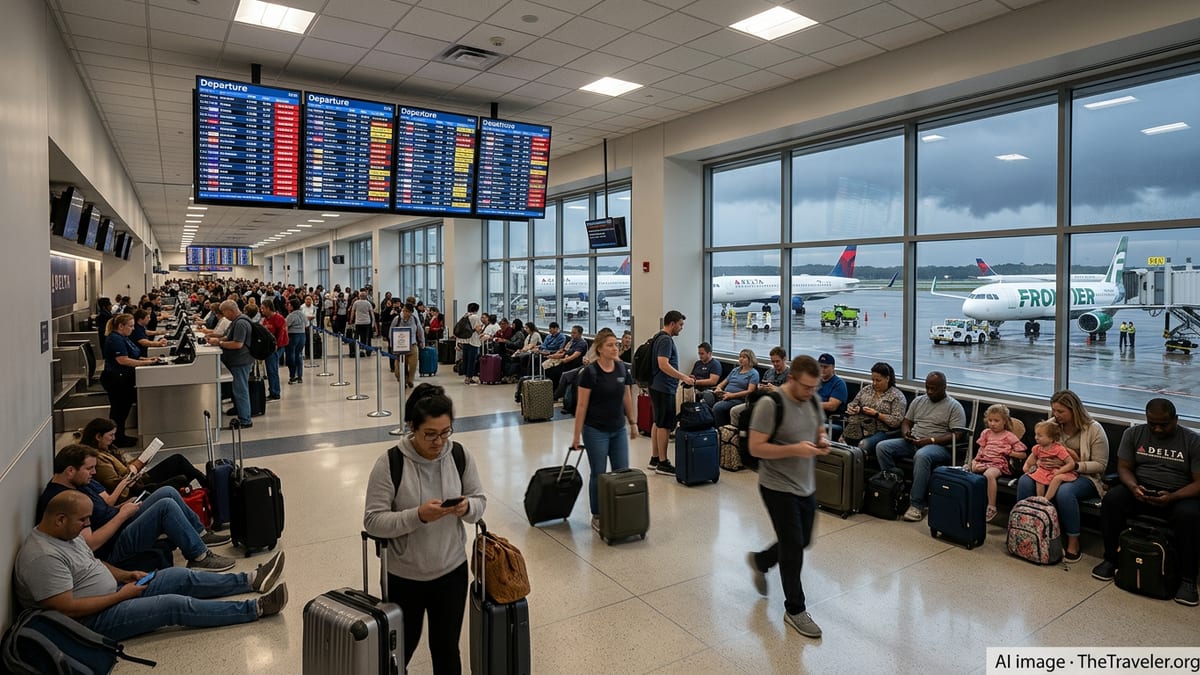
Thunderstorms, Heavy Rain Stall Operations
Thunderstorms and intense downpours moved across eastern Massachusetts on the evening of July 21, creating low ceilings, lightning and reduced visibility around Boston Harbor and Logan International Airport. Publicly available flight-tracking data and local coverage indicate that the combination of heavy rain and embedded thunderstorms severely constrained arrivals and departures, forcing aircraft to wait on taxiways and divert to other airports.
Reports show that the Federal Aviation Administration implemented a ground stop for portions of the evening, temporarily pausing many departures while storms passed directly over key approach and departure corridors. Runway capacity was reduced as controllers spaced aircraft farther apart in the unstable weather, leading to a backlog of flights waiting for takeoff clearance.
By late that night, data compiled by multiple outlets pointed to more than 300 cancellations and upward of 400 delays at Logan alone, with impacts spreading across the domestic network as planes and crews fell out of position. Airlines operating large schedules from Boston, including JetBlue, Delta, American and United, were among those heavily affected as the storm system lingered over the Northeast.
The July disruption followed an already stormy summer pattern along the East Coast, where repeated rounds of showers and thunderstorms have periodically slowed air traffic from Washington and New York to Boston.
Hundreds of Flights Disrupted Across the Network
On the evening of July 21, flight-status boards at Logan showed rows of late departures and arrivals as thunderstorms stalled operations. Flight-tracking services cited by Boston-area media indicated that cancellations climbed past 300 flights into and out of Boston, with delays surpassing 400 as the night wore on.
Short-haul routes along the Interstate 95 corridor were particularly vulnerable, since weather moved through multiple major hubs at once. When thunderstorms affected airports such as Newark and New York’s LaGuardia at the same time as Boston, it limited options to reroute aircraft around the worst of the storms, amplifying knock-on effects for New England travelers.
Longer-haul services also felt the impact. Reports from travelers described extended tarmac waits, diversions, and late-night cancellations that left some passengers overnighting in terminals or nearby hotels. International flights scheduled to depart from Logan’s Terminal E faced rolling delays as airlines waited for weather windows and updated air traffic control programs.
The combination of cancellations and long delays meant that disruptions continued into the following day, with early-morning flights operating with limited spare aircraft and crews. Some carriers issued flexible rebooking policies for Boston and other affected East Coast airports as the storm line moved through the region.
FAA Traffic Management Programs and Ground Stops
Weather-related traffic management is a regular feature of peak summer travel, but the July storms over Boston prompted especially tight restrictions. According to publicly available Federal Aviation Administration advisories, traffic management programs for Logan in July included tools such as ground delays and arrival spacing when thunderstorms reduced usable airspace.
During a ground stop, flights destined for the affected airport are held on the ground at origin until conditions improve. While this measure can prevent airborne holding around a congested airport, it also pushes delays back into the national system and can cascade into missed connections and crew scheduling challenges.
In the case of Boston’s July storms, the intense band of rain and lightning passing directly over the airport reduced safe operating windows on multiple runways. That forced controllers to intermittently suspend operations, even as demand remained high during the busy summer period. The resulting queues took hours to unwind once the most severe cells had moved offshore.
Advisories from the FAA and airport operators emphasized that travelers should consult airline channels for the most current status information, as conditions could change rapidly with each new storm cell moving through the area.
Travelers Face a Challenging Summer at Logan
The late-July washout was not the first time in 2026 that passengers at Boston Logan have faced large-scale disruption. Earlier in the month, a fueling system issue prompted a separate ground stop and led to dozens of delays and cancellations around the Independence Day holiday, compounding frustration for travelers who have already navigated a series of weather and operational setbacks this year.
For many passengers, the July 21 storms were another reminder of how quickly conditions can deteriorate in the peak summer season. Social media posts from stranded travelers described repeated rolling delay notifications before flights were ultimately canceled, as airlines waited for updated forecasts and crew-availability assessments.
Industry data and academic research point out that weather remains one of the primary drivers of flight disruption at major U.S. airports, alongside airline scheduling practices and airspace congestion. Boston’s coastal location and dense traffic patterns in the surrounding Northeast corridor make it particularly sensitive to summer thunderstorms that can form and intensify with relatively little lead time.
With school holidays and tourism driving strong demand, relatively small windows of severe weather can therefore translate into hundreds of disrupted flights, as occurred during the heavy rain and thunderstorms that swept the region in late July.
What Passengers Can Do Ahead of Stormy Forecasts
The July disruptions at Logan offer a number of practical lessons for travelers planning trips through Boston during the remainder of the summer. Public-facing guidance from airlines and aviation analysts consistently recommends closely monitoring weather forecasts and flight status in the 24 hours leading up to departure, particularly when thunderstorms are in the forecast for the Northeast.
Same-day communication tools such as airline apps and text alerts can help passengers respond more quickly if a flight is canceled or significantly delayed. In situations like the July storms, some travelers were able to rebook on earlier flights ahead of the worst weather or adjust connections to avoid the most congested hubs.
Flexible booking policies, which airlines often activate when major storms are expected, may also give passengers the option to move trips to a different day or time without incurring change fees. For those with critical connections or time-sensitive itineraries, building in longer layovers or considering early-morning departures, when thunderstorms are less common, can reduce the risk of major disruption.
As heavy rain and severe weather episodes become more familiar features of peak travel seasons, the experience at Boston Logan in July 2026 underscores how quickly conditions can shift from routine operations to widespread disruption, and how important preparation and real-time information have become for today’s air travelers.