


More news on this day
Passengers traveling through Dallas Love Field on June 20 are facing widespread disruption, with publicly available tracking data indicating more than 100 delayed departures and at least one cancellation affecting domestic routes across the Southwest Airlines network and other carriers.
Get the latest news straight to your inbox!
Widespread Delays Hit a Key Dallas Hub
Dallas Love Field, one of the primary hubs for Southwest Airlines, is experiencing a significant spike in delays on Saturday as summer travel demand converges with unsettled weather across Texas and the broader region. Flight-tracking boards show around 105 flights running behind schedule and one cancellation, affecting a large share of the day’s departures and arrivals.
Operational data and traveler reports indicate that the disruption is concentrated in short and medium haul domestic services, particularly those feeding other busy airports. Love Field, which operates from a single terminal with 20 gates, typically leans on quick turns and high aircraft utilization, leaving little slack in the system when delays begin to compound.
The current pattern reflects broader strains in the U.S. air travel system as carriers manage full planes, afternoon thunderstorms, and congestion at multiple hubs. Even a relatively small number of ground stops or flow-control measures can create a cascade of late departures and missed connections by mid to late day.
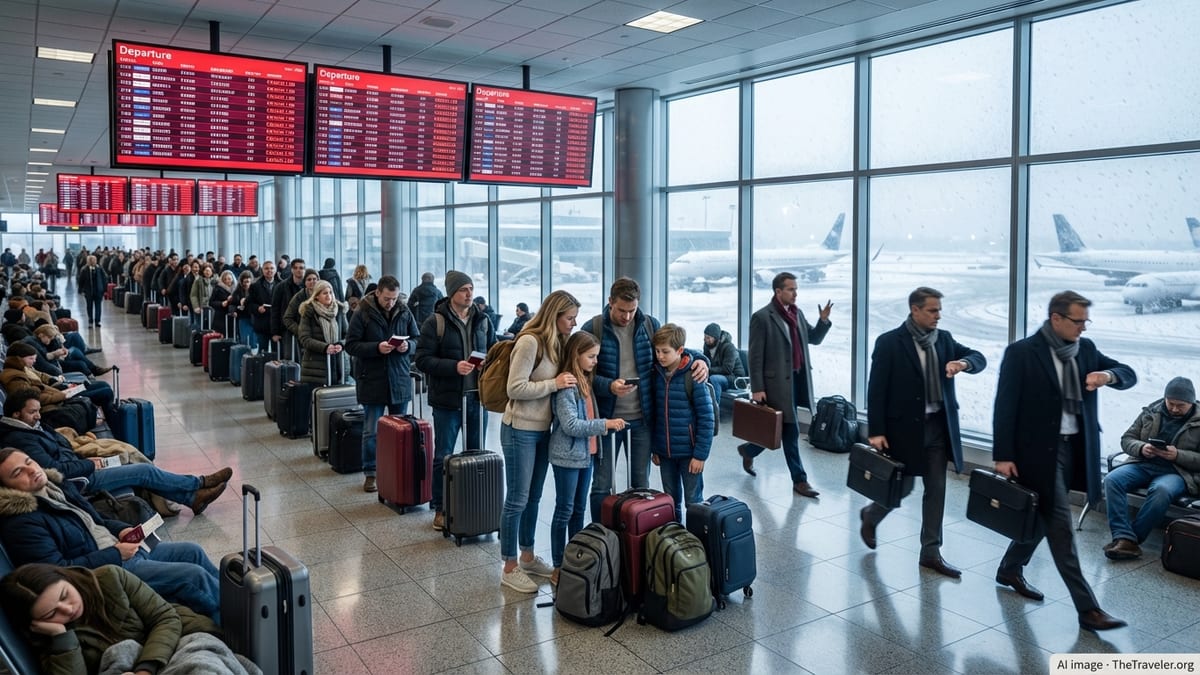
While some flights are departing close to schedule, the overall effect for travelers at Dallas Love Field is one of long lines at check in and security, crowded gate areas, and rolling departure times that can change with little notice.
Southwest Airlines Routes Bear the Brunt
As the dominant carrier at Dallas Love Field, Southwest Airlines is absorbing most of the disruption. A large share of the 105 delayed flights are operated by Southwest, particularly on heavily used point to point routes to Houston, Denver, Chicago, Atlanta, Las Vegas, and Phoenix.
Publicly available flight status pages show multiple Dallas Love Field departures on these routes pushed back by 30 minutes or more, with some services facing significantly longer waits. The single reported cancellation further tightens an already busy schedule, as passengers from that flight must be rebooked onto later departures that are themselves subject to delay.
Because Southwest operates a high frequency schedule on routes such as Dallas to Houston and Dallas to Denver, prolonged disruptions can quickly compound. Aircraft arriving late from weather affected cities can knock subsequent flights off schedule, while crew duty limits and the need for aircraft repositioning can force further adjustments throughout the day.
Other carriers at Love Field, which operate a smaller number of daily flights, are also experiencing knock-on effects, though the delays appear most visible on the larger Southwest network that links multiple busy airports across the central and western United States.
Storms, Congestion and Summer Travel Demand
The disruption at Dallas Love Field coincides with a stretch of unsettled weather across North Texas and other parts of the country, a familiar pattern in the early summer travel season. Thunderstorms and low clouds can trigger ground stops or slowdowns that sharply reduce the number of arrivals and departures an airport can handle in a given hour.
Reports from recent days describe delays building at major airports such as Dallas Fort Worth and Las Vegas when storms or staffing constraints limit airspace capacity. When these conditions develop, flights bound for the affected airports may be held on the ground at their origin, diverted, or forced into airborne holding patterns that lead to late arrivals and missed departure slots.
At the same time, airlines are operating near peak summer capacity, with many flights sold out or close to full. In this environment, even modest weather related interruptions can cause extended waits for rebooking and limited options for same day travel. Travelers at Dallas Love Field are encountering this reality as they contend with delayed departures and fuller standby lists.
Industry data on flight performance indicates that short haul routes are particularly vulnerable when storms roll through multiple hub airports on the same day. Dallas Love Field’s heavy reliance on these short, frequent flights means that a short burst of turbulence in the system can quickly translate into dozens of late departures.
Impact Across Key Domestic Markets
The disruption at Dallas Love Field is being felt across several important domestic corridors. Routes to Houston, Denver, Chicago, Atlanta, Las Vegas, and Phoenix feature prominently in Saturday’s list of delayed flights, reflecting their role as vital connections for both business and leisure travelers.
Houston, Denver, and Chicago serve as major onward gateways, so delays on these legs can cause missed connections deeper into airline networks. Travelers heading to or through these cities from Dallas face a heightened risk of schedule changes and extended travel times.
Flights to leisure focused destinations such as Las Vegas and Phoenix are also experiencing schedule pressures. Publicly available delay maps and status boards for airports in the Southwest and Mountain West regions reflect heavier traffic and weather related slowdowns in recent days, which can feed back into operations at Dallas Love Field when aircraft and crews circulate through these cities.
For passengers, the impact is not limited to time spent waiting at the gate. Extended delays can affect ground transportation and hotel plans at the destination, while same day changes may force travelers to adjust everything from rental car pickups to event tickets and tours.
What Travelers Can Expect for the Rest of the Day
Given the scale of Saturday’s disruption at Dallas Love Field, conditions may remain challenging into the evening as airlines work to reset their schedules. When delays accumulate early in the day, it can be difficult to fully recover until overnight hours allow for aircraft repositioning and crew changes.
Public guidance from airline and airport operations over recent years suggests that travelers facing similar disruption patterns can expect continued rolling delays rather than a quick return to normal, especially when weather remains unstable in Texas or at key downline airports such as Denver and Chicago.
Passengers who have not yet departed for the airport are likely to benefit from closely monitoring flight status tools and mobile apps before leaving home, as departure times may shift repeatedly. Those already at the terminal can usually find updated estimates on gate displays and in airline notifications, but should be prepared for further adjustments as air traffic control programs and weather forecasts evolve.
While the current tally of 105 delays and one cancellation may change throughout the day, the underlying pressures of summer demand, constrained airspace, and limited spare aircraft suggest that travelers using Dallas Love Field on June 20 should plan for extra time, flexible connections, and the possibility of arriving later than originally scheduled.