

More news on this day
Travelers at Warsaw Frederic Chopin Airport faced severe disruption today as multiple departures, including at least two Finnair services and other key European flights, were grounded, leaving passengers stranded and forcing last minute rebookings across already busy summer routes.
Get the latest news straight to your inbox!
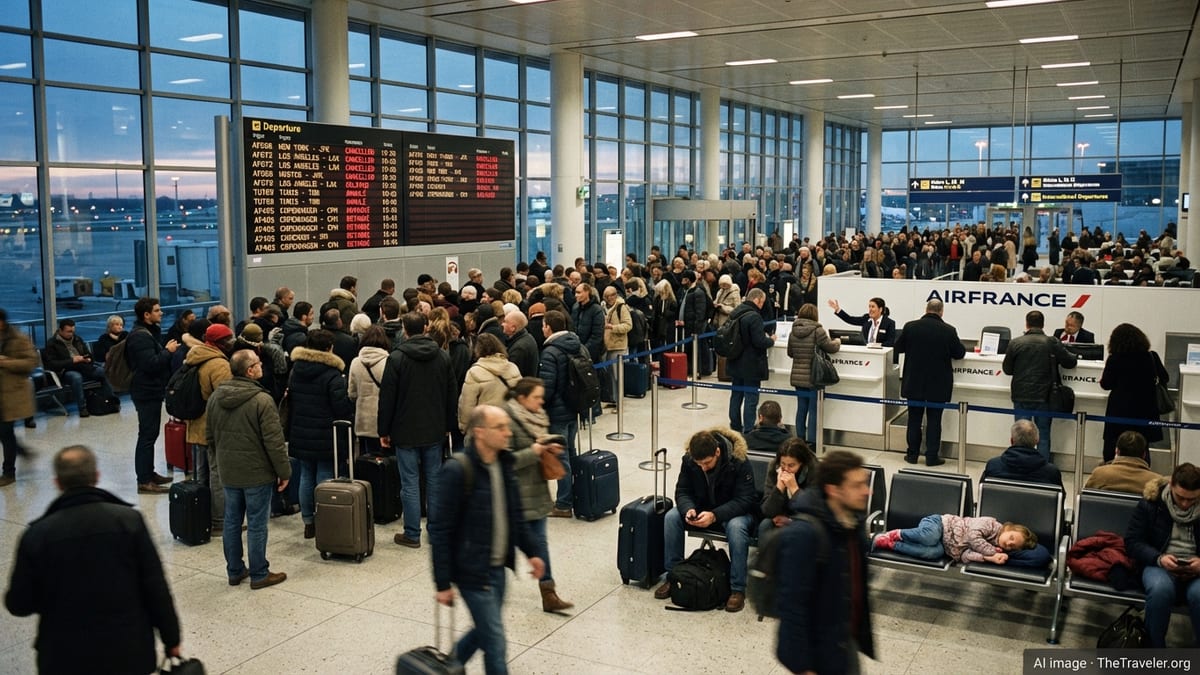
Grounded Flights Disrupt Nordic and European Connections
Reports from live flight tracking services and schedule boards on 23 June indicate that operations at Warsaw Frederic Chopin Airport were hit by targeted cancellations affecting links to major northern European hubs, notably Copenhagen and Helsinki. While the wider airport remained open, a cluster of grounded services on these routes caused knock on disruption for passengers using Warsaw as both an origin and a transfer point.
Publicly available information shows that departures to Copenhagen from Warsaw are typically operated by a mix of legacy and low cost carriers, forming an important bridge between Poland and Scandinavia. When even one or two of these rotations are withdrawn from the schedule at short notice, the limited seat availability on alternative flights can quickly vanish, particularly during the high demand summer period.
Finnair operates a key link between Helsinki Vantaa and Warsaw Chopin, a route that feeds passengers from Central and Eastern Europe into the airline’s Nordic long haul network. According to recent travel industry data, services on this corridor are an important part of how travelers from Poland, the Baltics, and further south connect to Asia and North America via Finland. Grounding one or more flights on this route therefore affects not only local point to point traffic, but also connecting itineraries extending across multiple continents.
Initial indications suggest that two Finnair operated flights touching Warsaw were among those pulled from today’s rotation, effectively cutting capacity on the Helsinki corridor during key daytime hours. With other European carriers already running near full loads in late June, many stranded travelers were left waiting in terminal queues to see whether they could be accommodated on later departures or rerouted through alternative hubs such as Frankfurt, Munich, or Amsterdam.
Passenger Experience: Long Queues, Limited Information
Accounts shared on aviation tracking platforms and social media describe scenes familiar from other recent disruption events across Europe: long lines at check in desks, crowded customer service counters, and confusion over which flights were operating as planned. Some passengers reported only discovering that their departure had been cancelled when they attempted to check the latest status shortly before heading to the airport.
Given the role of Warsaw Chopin as Poland’s busiest airport and a leading regional hub, even a relatively modest number of cancellations can translate into hundreds of affected travelers. Industry statistics for 2025 show the airport handling more than 20 million passengers annually, with a large share traveling on multi leg journeys that depend on tight connections through Warsaw. When a feeder flight to Copenhagen or Helsinki is grounded, downstream connections to secondary Scandinavian cities or long haul destinations can quickly unravel.
Travel forums focused on Finnair and Nordic travel have, over recent months, highlighted a series of operational challenges for the airline, including aircraft availability issues and earlier waves of cancellations during May. Today’s disruption appears to have compounded an already stretched summer schedule, leaving some passengers struggling to secure same day alternatives. With many peak season flights to northern Europe already heavily booked, the usual options of rebooking a few hours later or rerouting via another hub were not always available.
For travelers stranded in Warsaw, standard passenger rights under European Union rules continue to apply, including care obligations such as refreshments and, when necessary, hotel accommodation. However, as seen in other recent European disruption cases, the practical delivery of that support on the ground often depends on local staffing levels, the time of day, and the availability of nearby hotel rooms when large numbers of passengers are impacted simultaneously.
Finnair’s Broader Disruption Context
Finnair has been under sustained operational pressure in 2026, with several public advisories and independent guides noting multiple waves of cancellations in the spring and early summer. Earlier documentation focusing on May 2026 outlined how one sequence of schedule cuts affected “hundreds” of flights across the network, particularly around Nordic hubs. These patterns have contributed to a perception among some frequent flyers that the carrier’s timetable this year is less predictable than in previous seasons.
Analysis of recent passenger rights discussions and consumer guidance related to Finnair indicates growing scrutiny of how the airline handles last minute disruptions. Travelers have shared examples of both successful rerouting on partner airlines and more problematic cases in which compensation or reimbursement disputes arose, especially where the carrier cited technical or operational reasons as extraordinary circumstances.
Today’s Warsaw events will likely feed into that ongoing debate. If the grounded flights are eventually recorded as cancellations rather than extended delays, affected passengers may seek compensation alongside refunds and rerouting, particularly if their onward travel plans, including hotel bookings or connecting flights with other carriers, were significantly disrupted.
At the same time, industry observers note that Finnair is not alone in facing operational stress. Capacity constraints, aircraft maintenance bottlenecks, and staffing challenges have contributed to a patchwork of disruptions at several European airlines in recent months. The situation at Warsaw Chopin therefore fits into a wider pattern of pressure on Europe’s aviation system at the start of the 2026 peak travel season.
Impact on Wider European Travel Routes
The grounding of key Warsaw flights to Copenhagen and Helsinki has ramifications beyond the immediate city pairs. Both Scandinavian hubs function as gateways to a web of intra Nordic and long haul services, and disruptions at the feeder level can cascade into missed connections, no show seats, and imbalanced passenger flows further down the line.
Copenhagen serves as a major node for connections across Denmark, Sweden, and Norway, linking to regional airports that may only see a handful of daily services. When a Warsaw passenger misses a Copenhagen connection to, for example, a smaller Norwegian or Swedish city, there may be no same day alternative, forcing an overnight stay or a complete reconfiguration of the trip. Similar dynamics apply to Helsinki, which is widely used as a transfer point to northern Finland and to long haul routes toward East Asia.
Travel industry analysts often emphasize how quickly these kinds of localized disruptions can spread through the European network. One cancelled Warsaw–Helsinki departure can translate into empty seats on an onward long haul flight, while at the same time leaving stranded passengers to be accommodated on later services that were already near capacity. As airlines seek to optimize load factors, spare capacity that could absorb irregular operations has, in many cases, become more limited.
Rail and road alternatives from Warsaw to key northern destinations are comparatively time consuming, meaning that many travelers affected today had little choice but to wait in the terminal, accept rerouting via another hub, or postpone their trips entirely. For business travelers and those with time sensitive commitments, the disruption to what are normally considered reliable short haul shuttle routes across the Baltic and into Scandinavia may reinforce a perception that summer air travel in Europe now carries a greater risk of unexpected delays and cancellations.
What Travelers Can Do Next
For passengers still in Warsaw or holding upcoming tickets on Finnair or other carriers serving Copenhagen and Helsinki, consumer advocates typically recommend monitoring flight status closely in the hours before departure. Airline mobile apps, airport information boards, and independent flight tracking tools can provide early indications of schedule changes, even before formal notifications are pushed through.
In the event of cancellation, travelers are generally advised to proceed directly to the operating carrier’s service desk inside the terminal, while simultaneously using digital channels such as apps and call centers to seek rerouting. Experience from previous disruption events suggests that those who act early have better chances of securing seats on the limited number of remaining flights, especially on busy summer days when spare capacity is scarce.
Passengers should also familiarize themselves with their rights under European air passenger regulations, including entitlements to meals, refreshments, accommodation, and financial compensation in certain circumstances. While the exact applicability depends on the cause of the cancellation and the length of the delay, having a clear understanding of the framework can help travelers document their case and follow up with formal claims if needed.
As investigations into today’s disruptions at Warsaw Chopin continue and airlines update their schedules, travelers planning to use the airport as a gateway to Copenhagen, Helsinki, or other key European hubs may wish to build additional buffer time into their itineraries. With the 2026 summer season already showing signs of strain across the continent’s air transport network, cautious planning is likely to remain a prudent strategy for the weeks ahead.