

More news on this day
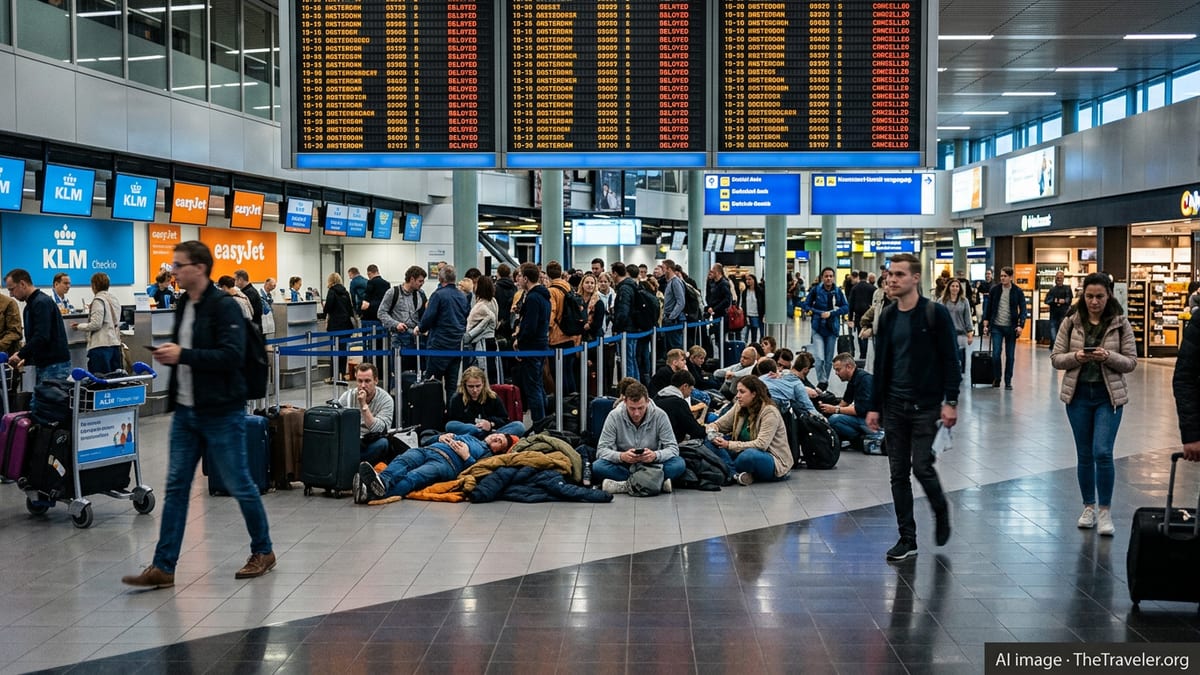
Passengers connecting through Amsterdam Schiphol are facing a new wave of disruption as multiple airlines, including KLM, easyJet and Vueling, cancel flights on short notice, stranding travelers and unsettling links between the Dutch hub and major cities such as New York, Washington, Tokyo, Rio de Janeiro, Barcelona, Manchester and Milan.
Get the latest news straight to your inbox!
Fresh Cancellations Renew Pressure on Amsterdam Hub
Publicly available flight information for late June 2026 shows a renewed pattern of cancellations at Amsterdam Schiphol, affecting services operated by KLM and several European low cost and leisure carriers. While individual flights can be canceled for a range of operational or weather related reasons, the clustering of disrupted departures and arrivals has again highlighted the vulnerability of one of Europe’s busiest transfer airports.
Recent schedules indicate that services between Amsterdam and key intercontinental markets, including New York and Washington, continue to operate but with select rotations removed from timetables or retimed, complicating connections for long haul passengers. Travelers report last minute changes to itineraries that had relied on Schiphol as a same day transfer point to destinations in North America, Asia and South America.
Within Europe, data from recent days shows cancellations and irregular operations on routes linking Amsterdam with Barcelona, Manchester and Milan. A Vueling service from Amsterdam to Barcelona listed as canceled on a recent Friday illustrates how point to point leisure traffic is also being disrupted, with passengers forced to rebook on later departures or choose alternative airlines and routings.
Global Routes Affected from North America to Asia
The latest disruptions have resonated far beyond the Netherlands because Schiphol functions as a linchpin for KLM’s global network and an important base for carriers such as easyJet and Vueling. Long haul passengers traveling between North America and Europe rely heavily on Amsterdam as a transfer point, especially on sectors linking New York, Washington and other U.S. cities with onward flights into Europe, the Middle East and Africa.
KLM’s published network still shows frequent connections from New York and Washington to Amsterdam, with onward services to Tokyo and other Asian hubs. However, travelers attempting to maintain tight connections face heightened uncertainty when preceding or onward segments are canceled or substantially delayed. Even when the long haul flight ultimately operates, a missed link in Amsterdam can leave passengers unexpectedly overnighting in the Netherlands or rerouted via alternative hubs.
In Asia, current schedules confirm that KLM continues to serve both Tokyo Narita and Haneda in cooperation with partners, yet disruptions on feeder legs into Amsterdam or on European spokes such as Barcelona and Manchester can break itineraries long before passengers reach Japan. For travelers booked on multi segment journeys involving Rio de Janeiro, Tokyo or other distant destinations, a canceled short haul segment into Schiphol can unravel complex long haul plans.
Schiphol’s Ongoing Struggle With Capacity and Reliability
Schiphol has spent much of 2026 under scrutiny as a series of disruption events have tested the resilience of airport operations and airline scheduling. Earlier in the year, winter weather and capacity constraints prompted large scale proactive cancellations, with KLM and other airlines cutting hundreds of flights over several days to preserve remaining operations. More recently, operational adjustments and schedule thinning have continued as carriers respond to tight runway slots, staffing limitations and higher operating costs.
Documentation circulating online about KLM’s 2026 cancellation patterns describes a strategy of proactive flight cuts at Schiphol to prevent cascading delays and slot losses, particularly on days when bad weather or air traffic restrictions are anticipated. These measures can reduce the risk of wider network disruption but also mean that some travelers see their flights canceled even when conditions seem relatively stable at their point of departure.
For other carriers using Amsterdam as a focus city, including easyJet and Vueling, the airport’s tight capacity environment can also translate into short notice schedule changes. Low cost operators that run dense, quick turn programs are especially sensitive to minor operational issues, which can rapidly lead to cancellations when there is limited slack in the timetable and constrained room for retiming within Schiphol’s slot system.
Passengers Confront Missed Connections and Limited Alternatives
Reports from recent weeks on traveler forums describe passengers dealing with missed connections, long lines at service desks and difficulty reaching airline call centers after their Schiphol flights were canceled or heavily delayed. Some travelers recount being rebooked on flights many hours later or even on the following day, while others have turned to trains or alternative airports to salvage trips.
Accounts shared by affected customers indicate that passengers connecting to long haul services, including flights to New York, Washington and Tokyo, may face the most disruptive consequences when a European feeder leg is dropped. In several instances described online, travelers were moved to later departures or rerouted via other hubs, adding extra stops and travel time to journeys that were originally built around a single Amsterdam connection.
Short haul disruptions are also taking a toll on leisure travelers heading to and from destinations such as Barcelona, Manchester and Milan. When services are canceled on busy days, remaining flights can quickly sell out, limiting same day alternatives. Some passengers have described choosing to book with competing carriers, including other low cost airlines, at their own expense and later seeking reimbursement or compensation from the original operator.
Rebooking, Refunds and What Travelers Can Do Now
Airlines operating at Schiphol, led by KLM, continue to publish guidance for passengers affected by cancellations or long delays, outlining options for rebooking, refund requests and, in some cases, travel vouchers. KLM’s own travel alerts emphasize the use of digital self service tools, encouraging customers to manage disrupted bookings online or via mobile apps whenever possible rather than queuing at airport counters.
European consumer rules generally give passengers rights to rebooking or reimbursement when flights are canceled, and in specific circumstances, additional compensation. Reports from recent disruption episodes at Schiphol show that travelers have been able to obtain refunds for unused segments, rebook on later dates or switch to alternative routes, though outcomes can vary based on fare type, operating carrier and the stated reason for the cancellation.
For travelers currently planning itineraries through Amsterdam, industry commentators suggest allowing extra connection time, monitoring flight status closely in the 24 hours before departure and considering backup plans, particularly on days forecast to be busy or affected by adverse weather. With Schiphol once again experiencing clusters of cancellations across multiple airlines, passengers bound for New York, Washington, Tokyo, Rio de Janeiro, Barcelona, Manchester, Milan and other key destinations via the Dutch hub are being urged to stay flexible as summer travel intensifies.